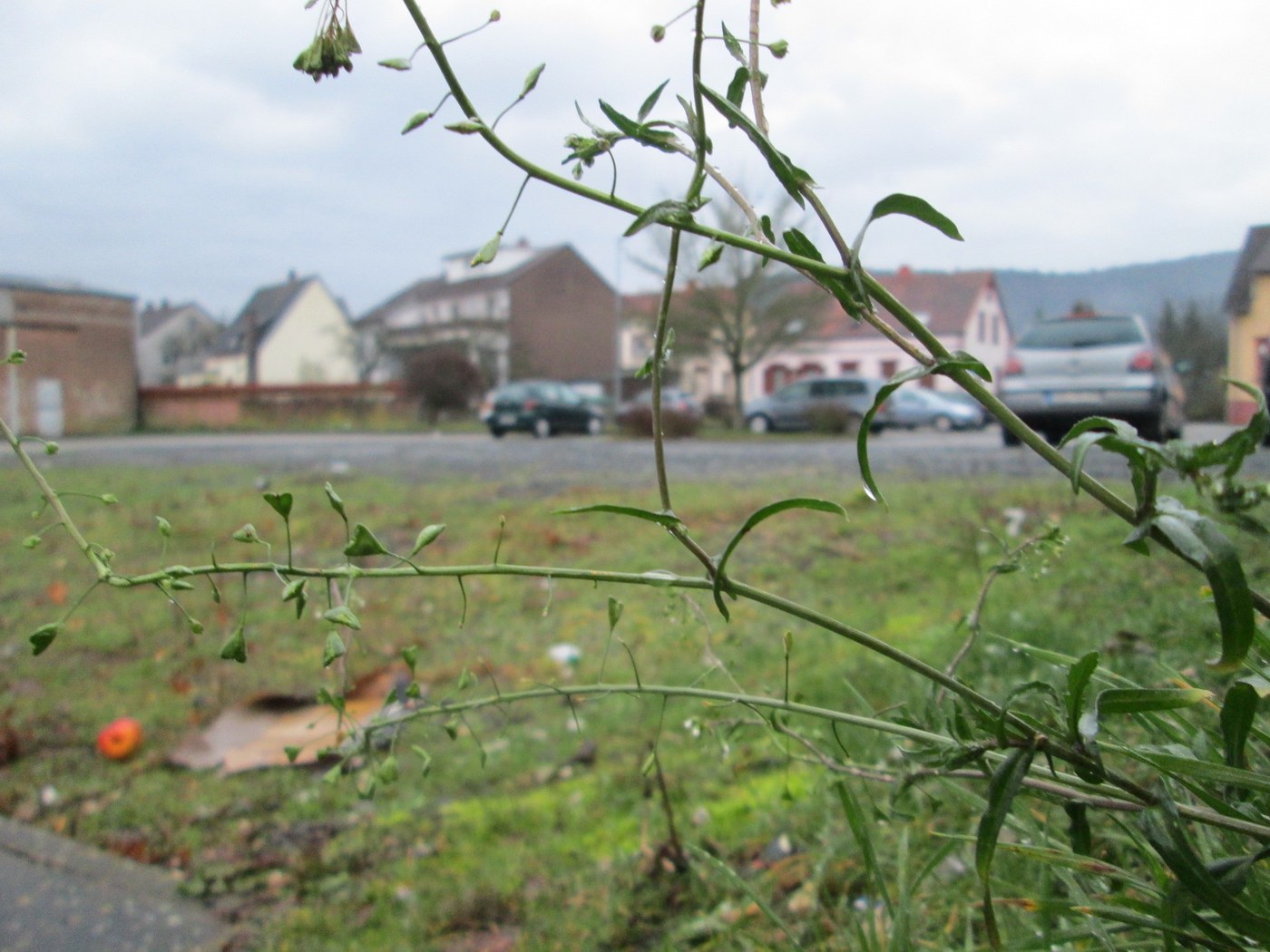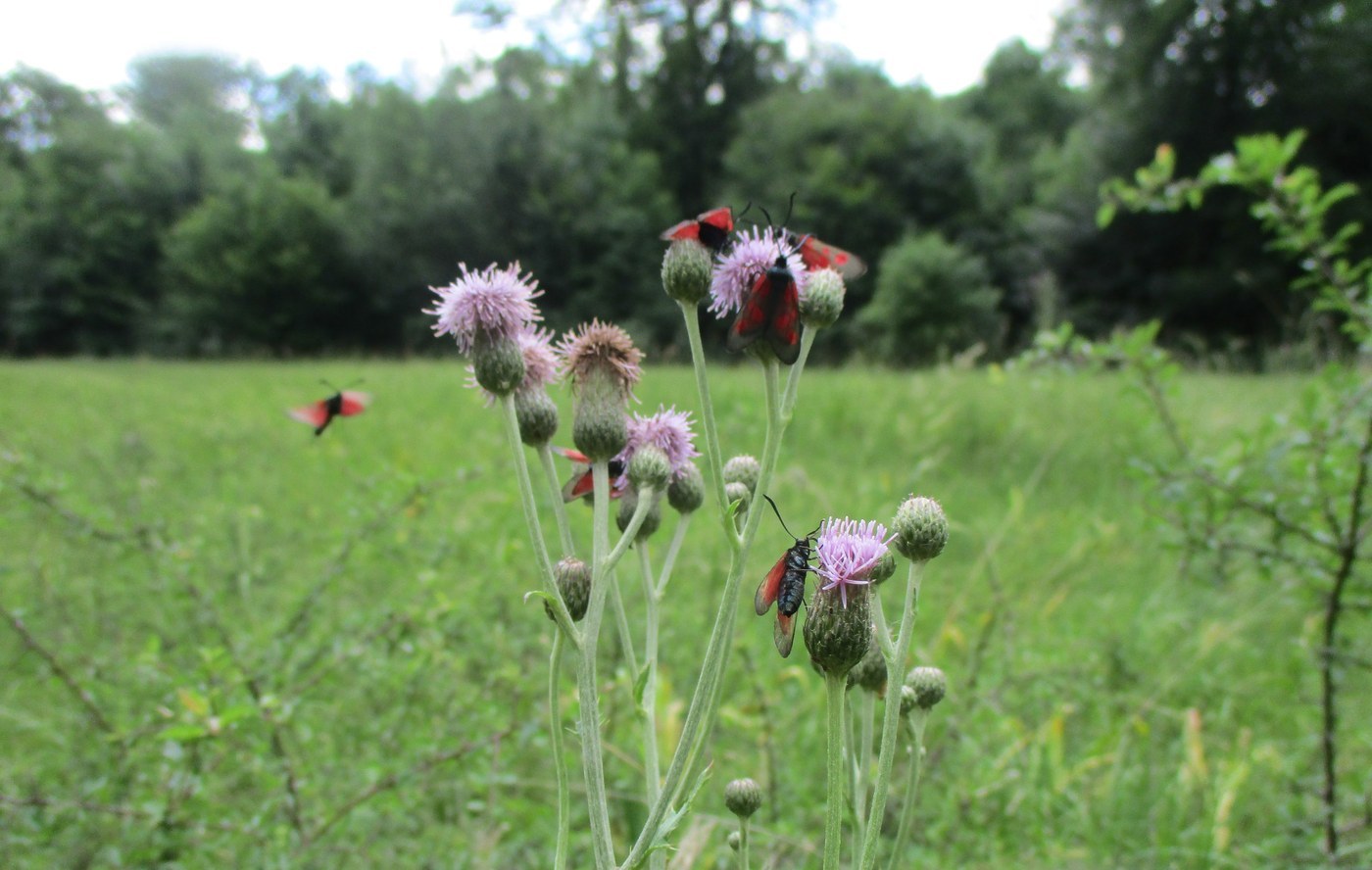
Canada Thistle
Cirsium arvense
Canada thistle is an aggressive perennial weed with spiny leaves and small pink-purple flower heads that spreads relentlessly through deep, creeping roots. Despite its name it is native to Europe and Asia, and it is one of the most difficult agricultural weeds to control.
- Light
- Full sun
- Water
- Drought tolerant once established
- Difficulty
- Easy
Got a plant like this?
Identify any plant from a photo, free.
Overview
Canada thistle (Cirsium arvense), more accurately called creeping thistle, is a perennial in the daisy family native to Europe and western Asia, not Canada. The misleading name reflects its early spread through North America, where it is now a widespread and legally noxious weed.
What makes it so persistent is its extensive horizontal root system, which can spread many feet per year and resprout from tiny root fragments. It also produces wind-borne seeds carried on fluffy parachutes. Colonies are usually all male or all female clones.
It is a serious problem in pastures, croplands and disturbed ground, where its dense, spiny stands crowd out forage and crops.
How to identify it
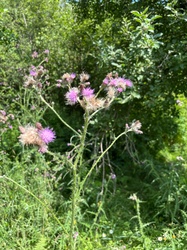
An erect perennial 1-4 ft tall, spreading into dense colonies from creeping roots.
- Leaves: alternate, lance-shaped, deeply lobed and crinkled, with sharp spiny margins; smooth or nearly hairless green
- Stems: slender, grooved, branched above; lacking the broad spiny wings found on some other thistles
- Flowers: numerous small heads (about 1/2-3/4 in) of pink to lavender-purple disc florets, smaller than most thistles
- Seeds: light brown with a feathery, tan pappus for wind dispersal
- Roots: extensive deep and horizontal creeping root system (the key to its persistence)
Care & growing
A noxious weed in many regions; the focus is control, not cultivation.
- Light: Full sun; thrives in open, disturbed sites
- Water: Drought tolerant once its deep roots establish
- Soil: Adaptable, favoring fertile, disturbed ground
- Control (mechanical): Repeated cutting/mowing before flowering, over several seasons, to starve the roots; tilling alone can worsen it by fragmenting roots
- Control (chemical): Systemic herbicides (e.g. glyphosate, clopyralid, aminopyralid) applied at the bud-to-bloom stage or in fall to reach the roots; usually requires repeated treatment
- Prevention: Remove plants before seed set; clean equipment to avoid spreading root and seed
Habitat & origin
Native to Europe and western Asia, Canada thistle has naturalized across North America, and temperate parts of Asia, Africa, Australia and New Zealand, where it is widely listed as noxious or invasive.
It invades cultivated fields, pastures, rangeland, roadsides, ditch banks, waste areas and disturbed ground, thriving in open, sunny, regularly disturbed sites.
Frequently asked questions
Is Canada thistle actually from Canada?
No. It is native to Europe and western Asia. The name comes from its early spread in North America; 'creeping thistle' is the more accurate name.
Why is it so hard to kill?
It has a deep, far-spreading root system that resprouts from small fragments, so cutting or tilling often multiplies it. Control needs persistent, repeated effort over years.
How do I control Canada thistle?
Combine repeated mowing before flowering with systemic herbicides applied at bud-to-bloom or in fall, and prevent seed set, sustained over multiple seasons.
Does it support any wildlife?
Its flowers feed pollinators and its seeds and down feed and shelter birds like goldfinches, but it is still a legally noxious weed in many areas.
Canada Thistle guides
In-depth guides for identifying, growing, and caring for Canada Thistle.
How to Care for Canada Thistle
Canada Thistle is an extremely vigorous, spreading perennial with spiny leaves and lilac flower heads that thrives with almost no care.
Canada Thistle Identification Guide
How to identify Canada thistle (Cirsium arvense), a colony-forming perennial weed with spiny lobed leaves and small lavender flower heads.
Canada Thistle identified by the community
Real specimens identified with Plant Identifier.