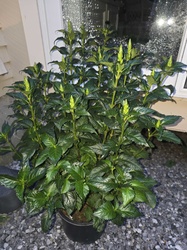
Cardinal Flower Identification Guide
How to identify Cardinal Flower (Lobelia cardinalis) by its brilliant scarlet-red, tubular two-lipped flowers on tall upright spikes in moist habitats.
Read the full Cardinal Flower encyclopedia entry →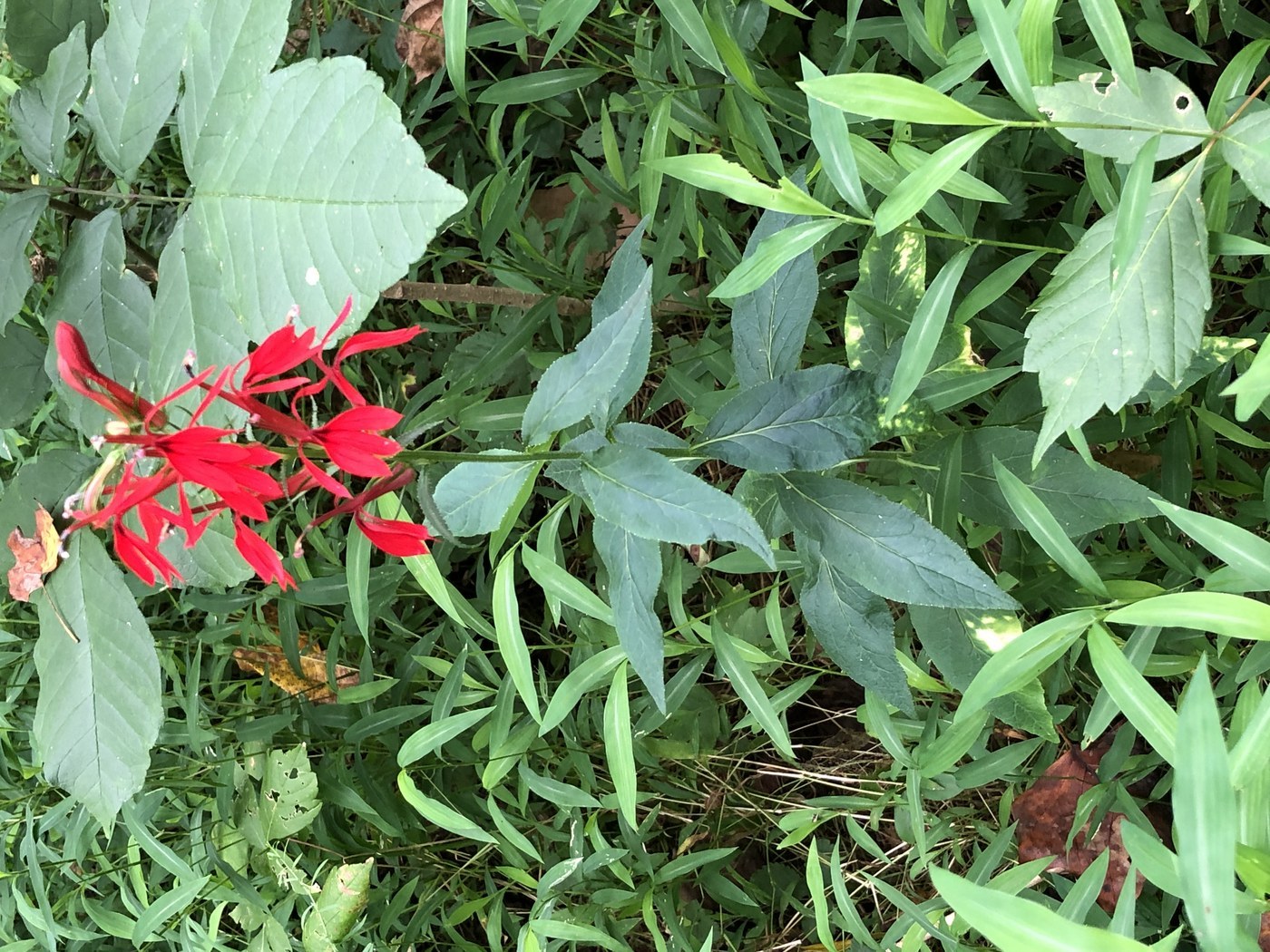
Key Identifying Features
Cardinal Flower (Lobelia cardinalis) is one of North America's most vividly colored wildflowers, named for the intense scarlet red of its blooms, matching a cardinal's robes. It's a tall, upright perennial of wet places, pollinated by hummingbirds.
- Tall spikes of brilliant red, tubular, two-lipped flowers
- Grows 2-4 feet tall, mostly unbranched
- Found in wet, sunny to part-shade habitats
- Blooms mid to late summer into early fall
Leaves & Stems
Stems are erect, leafy, and usually unbranched, often with a reddish tinge. Leaves are arranged alternately, are lance-shaped to oblong, 2-6 inches long, with finely toothed margins and a pointed tip. The foliage is dark green, sometimes bronze-flushed. There is no leaf stalk worth noting; leaves sit close to the stem.
Flowers & Fruit
The flowers are the whole story. They are densely packed in a terminal raceme (spike) at the top of the stem, opening from the bottom up. Each flower is a tube about 1.5 inches long, split into a two-lobed upper lip and a three-lobed lower lip in glowing scarlet. A distinctive feature: the stamens are fused into a tube that protrudes through the notch in the upper lip, tipped with gray-white anthers. After bloom, small two-celled capsules release tiny seeds.
How to Tell It Apart from Look-Alikes
- Great blue lobelia (Lobelia siphilitica): same plant shape and flower structure, but blue to violet, not red; the two often grow together.
- Bee balm (Monarda didyma): also red and hummingbird-pollinated, but flowers form a rounded head of curving tubes, leaves are opposite, stems are square, and the foliage is minty-aromatic.
- Trumpet honeysuckle / trumpet vine: red tubular flowers but woody climbing vines, not erect herbs.
No other red wildflower combines this tall single spike, fused stamen tube poking through the upper lip, and wet habitat.
Where You'll Find It
Cardinal Flower loves constantly moist to wet soil: stream banks, pond and ditch margins, wet meadows, swamp edges, and low spots in gardens. It tolerates full sun to part shade as long as roots stay damp. Look for its red spikes lighting up green wetland edges in late summer, frequently with hummingbirds working the flowers.
Quick ID Checklist
- Intense scarlet-red tubular flowers in a tall spike
- Flower has two-lobed upper, three-lobed lower lip
- Stamen tube protrudes through the upper lip
- Unbranched stem 2-4 ft, alternate toothed lance leaves
- Growing in wet ground, blooming late summer
A tall, single red spike in a wet, sunny spot with hummingbirds visiting is almost certainly Cardinal Flower.
Frequently asked questions
What pollinates cardinal flower?
Hummingbirds are the main pollinators. The long red tubular flowers are perfectly shaped for their bills, and most insects can't reach the nectar.
How do I tell cardinal flower from bee balm?
Cardinal flower has a tall single spike of red two-lipped tubes with a protruding stamen tube and alternate leaves, while bee balm has a rounded head of curving tubes, opposite leaves, square stems, and minty foliage.
Where does cardinal flower grow?
It grows in consistently moist to wet ground such as stream banks, pond edges, wet meadows, and ditches, in full sun to part shade.
Is the blue version the same plant?
No. Great blue lobelia (Lobelia siphilitica) is a closely related species with the same structure but blue-violet flowers; cardinal flower is always red.
Cardinal Flower identified by the community
Recent Cardinal Flower specimens identified with Plant Identifier.