Chaste Tree Identification Guide
How to identify the Chaste Tree (Vitex agnus-castus) by its aromatic palmate leaves, spikes of lavender-blue flowers, and peppery dark fruits.
Read the full Chaste Tree encyclopedia entry →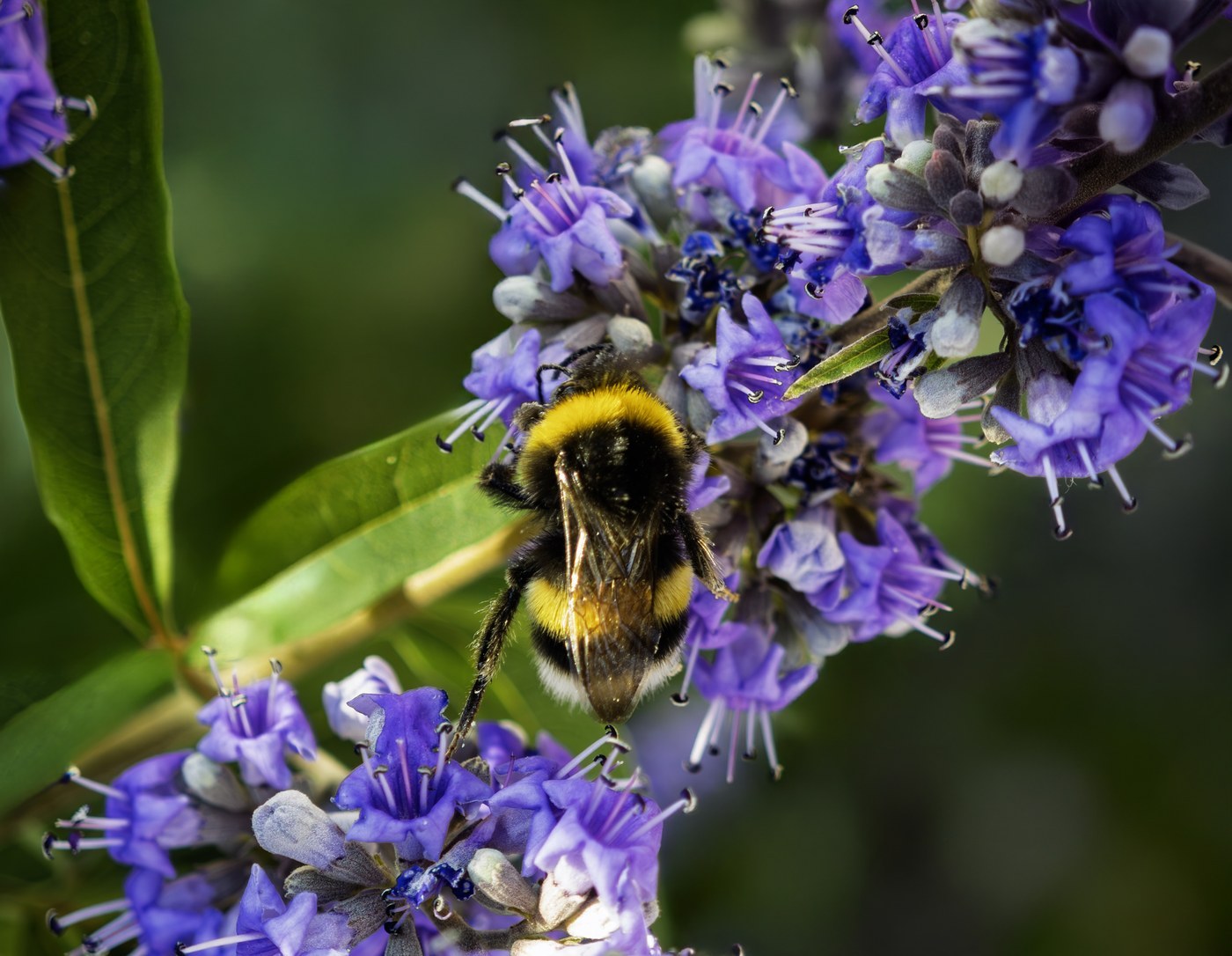
Key Identifying Features
The Chaste Tree (Vitex agnus-castus), also called vitex or monk's pepper, is a large aromatic shrub or small tree recognized by its hand-shaped gray-green leaves and upright spikes of small lavender-blue flowers in summer.
- Palmate, finger-like leaves with a sage-like aroma when crushed
- Slender spikes of fragrant lavender to violet-blue flowers
- Small round peppercorn-like fruits
- Multi-stemmed shrub/small tree, usually 2-8 m tall
Leaves & Stems
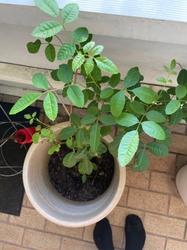
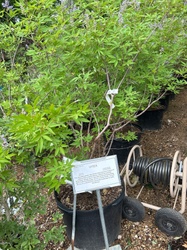
Leaves are opposite and palmately compound, with 5-7 (occasionally 3-9) narrow, lance-shaped leaflets radiating from a central point like fingers. Leaflets are dark gray-green above, paler and finely hairy beneath, with smooth margins, and the whole leaf releases a distinctive spicy, sage- or pepper-like scent when crushed — a strong ID clue.
The plant is typically multi-stemmed with slender, gray, four-angled (square) young twigs. It is deciduous, leafing out late in spring. Bark is thin and gray-brown.
Flowers & Fruit
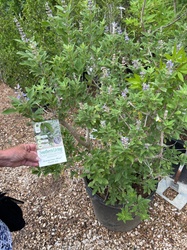
- Flowers appear in summer (and often re-bloom into autumn) in slender, branched, upright spikes (panicles) 10-30 cm long at the tips of new growth. Each tiny tubular flower is lavender, violet-blue, pink, or white and fragrant, drawing bees and butterflies in abundance.
- Fruit is a small, round, dark reddish-brown to black berry-like drupe about 3-4 mm wide, with a peppery taste and aroma. These "monk's pepper" fruits have a long history of herbal use.
How to Tell It Apart from Look-Alikes
- Cannabis is sometimes confused at a glance because of the palmate leaves, but Vitex leaflets are smooth-edged or only slightly toothed, gray-green, and aromatic of sage/pepper, and the flower spikes and woody habit are completely different.
- Butterfly Bush (Buddleja) also has lavender flower spikes but has simple, undivided opposite leaves, not palmate compound ones.
- The combination of palmate aromatic leaves + slim blue flower spikes + peppercorn fruits is diagnostic for Vitex agnus-castus.
Where You'll Find It
Native to the Mediterranean region and western Asia, the Chaste Tree is widely grown as an ornamental and pollinator plant in warm-temperate and subtropical gardens across the southern US, the Mediterranean, and Australia. It thrives in full sun, heat, and well-drained soil and tolerates drought.
Quick ID Checklist
- Palmate leaves with 5-7 narrow finger-like leaflets, gray-green
- Aromatic foliage (sage/pepper scent) when crushed
- Slender upright spikes of lavender-blue flowers in summer
- Small peppercorn-like dark fruits
- Multi-stemmed shrub/small tree with square young twigs
Frequently asked questions
Why is it called the Chaste Tree or monk's pepper?
Historically the peppery fruits were believed to suppress libido and were reportedly used by monks, giving rise to the names chaste tree, monk's pepper, and the species epithet agnus-castus ('chaste lamb').
Could I confuse the leaves with cannabis?
The palmate shape is superficially similar, but Vitex leaflets are smooth-edged, gray-green, and strongly aromatic of sage and pepper, and the plant is a woody shrub with blue flower spikes and peppercorn fruits, which cannabis never has.
When does the Chaste Tree bloom?
It flowers in summer, typically from June into early autumn, and often reblooms if spent flower spikes are pruned. The long bloom season makes it a favorite for bees and butterflies.
Is it a tree or a shrub?
It can be either. Left unpruned it grows as a large multi-stemmed shrub, but it is often trained to a single trunk as a small tree. In cold climates it may die back and regrow as a shrub each year.
Chaste Tree identified by the community
Recent Chaste Tree specimens identified with Plant Identifier.