Chinese Money Plant Identification Guide
Identify the Chinese money plant (Pilea peperomioides) by its round, coin-shaped leaves on long petioles attached at the leaf center, and separate it from other 'money plants'.
Read the full Chinese Money Plant encyclopedia entry →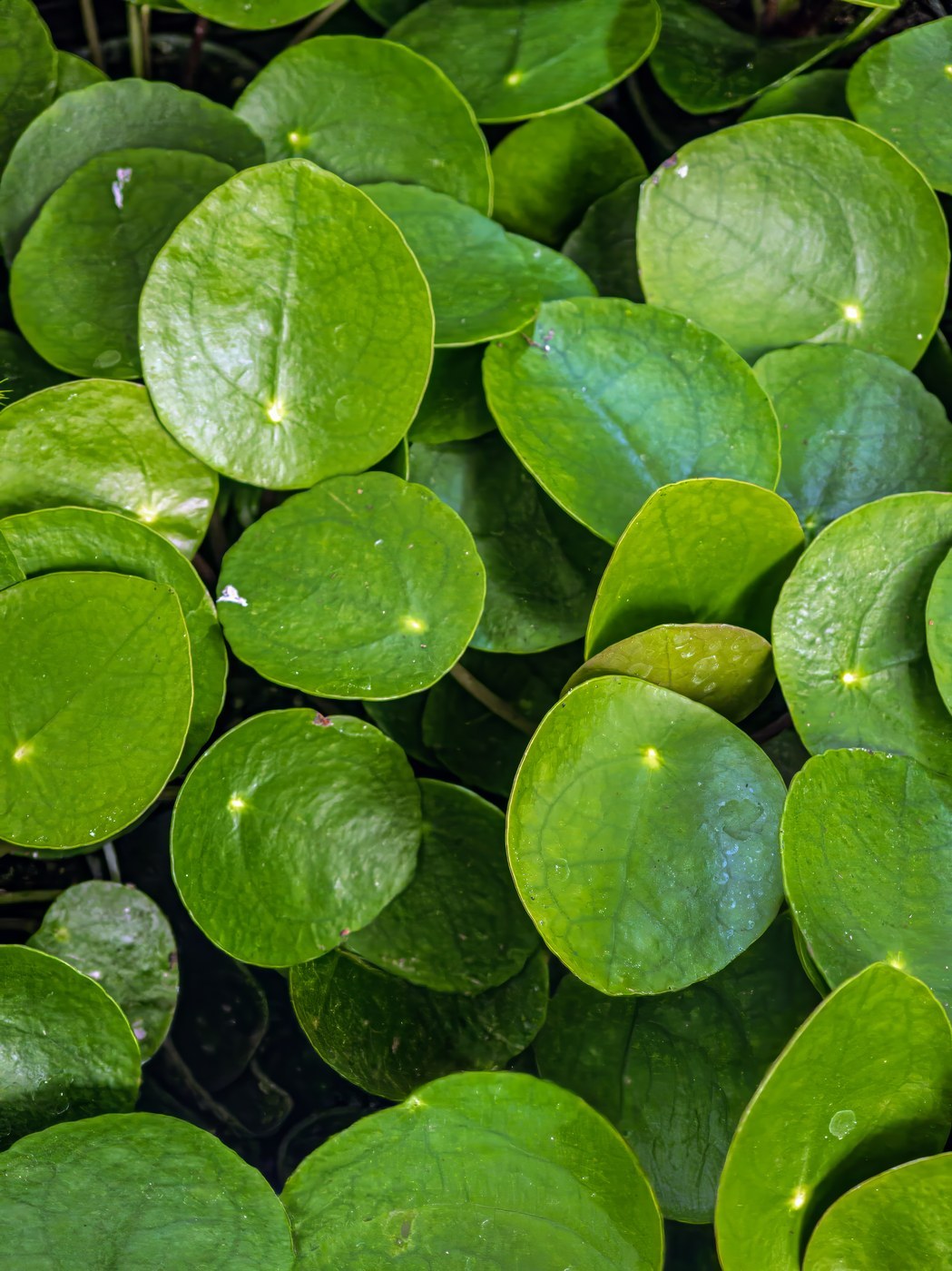
Key Identifying Features
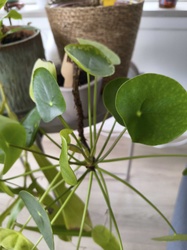
The Chinese money plant (Pilea peperomioides) is unmistakable thanks to its coin-shaped leaves:
- Round, flat, dark green leaves like little lily pads or coins.
- Each leaf stalk (petiole) attaches to the center of the underside of the leaf — a peltate arrangement.
- An upright central stem that becomes a small trunk with age.
This center-attached round leaf is the single best ID feature.
Leaves & Stems
Leaves are circular, smooth, slightly convex, and glossy, typically 4–10 cm (1.5–4 in) across, on long reddish-to-green petioles. The peltate attachment (stalk joining the middle of the blade rather than the edge) is diagnostic — few houseplants share it.
The plant grows a single upright green stem that turns woody and brown as it ages, with old leaf scars marking the trunk. From the base and along the stem it produces numerous offshoots/pups, making it easy to share (its nickname "pass-it-on plant").
Flowers & Fruit
Mature plants may produce small, inconspicuous flowers on pinkish stalks — tiny white-to-pale-green blooms clustered at leaf axils. They're minor and easily overlooked; the leaf shape, not the flowers, drives identification. The plant is in the nettle family (Urticaceae) but lacks stinging hairs.
How to Tell It Apart from Look-Alikes
Several unrelated plants share the name "money plant," so leaf attachment is key:
- Jade plant (Crassula ovata): also called money plant but has thick succulent oval leaves in pairs, not flat round coins.
- Pothos (Epipremnum aureum): sometimes "money plant" in Asia, but it's a heart-leaved trailing vine, not a round-leaved upright.
- Lunaria (honesty): "money plant" for its coin-like seed pods, a totally different garden biennial.
- Peperomia species: some have rounded leaves but petioles attach at the leaf edge, not the center.
The clincher: flat, round, coin-like leaf with the stalk joined at its center = Pilea peperomioides.
Where You'll Find It
Native to the foothills of the Himalayas in southwestern China (Yunnan/Sichuan), growing on shaded, mossy rocks. Worldwide it's a trendy windowsill houseplant spread largely by passed-along offsets. Outdoors it needs mild, frost-free, shaded conditions.
Quick ID Checklist
- Round, coin-shaped flat green leaves
- Petiole attaches to the center of the leaf (peltate)
- Long stalks; upright stem becoming a small trunk
- Produces many pups/offsets at base and on stem
- Tiny inconspicuous flowers (when present)
An upright plant covered in round, coin-like leaves whose stalks join at the leaf center is the Chinese money plant.
Frequently asked questions
Why are the leaf stalks attached in the middle of the leaf?
That center attachment is called a peltate leaf, and it's the defining feature of Pilea peperomioides. It gives the leaves their lily-pad or coin-like appearance and distinguishes it from nearly all other houseplants.
There are several 'money plants' — which one is this?
The Chinese money plant is Pilea peperomioides, with flat round coin-shaped leaves. Other plants called money plant include the succulent jade plant, the trailing pothos vine, and the garden biennial Lunaria, all of which look quite different.
What are the little plants growing around the base?
Those are offsets or pups that the plant readily produces from its roots and stem. You can separate and pot them, which is why it's also nicknamed the 'pass-it-on' or 'friendship' plant.
Chinese Money Plant identified by the community
Recent Chinese Money Plant specimens identified with Plant Identifier.