Chinese Money Plant
Pilea peperomioides
The Chinese money plant is a charming houseplant with round, coin-shaped leaves on slender stalks. It is easy to grow and readily produces baby offshoots to share with friends.
- Light
- Bright indirect light
- Water
- When top inch is dry
- Difficulty
- Easy
Got a plant like this?
Identify any plant from a photo, free.
Overview
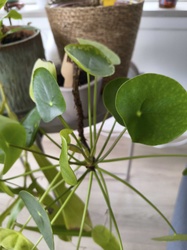
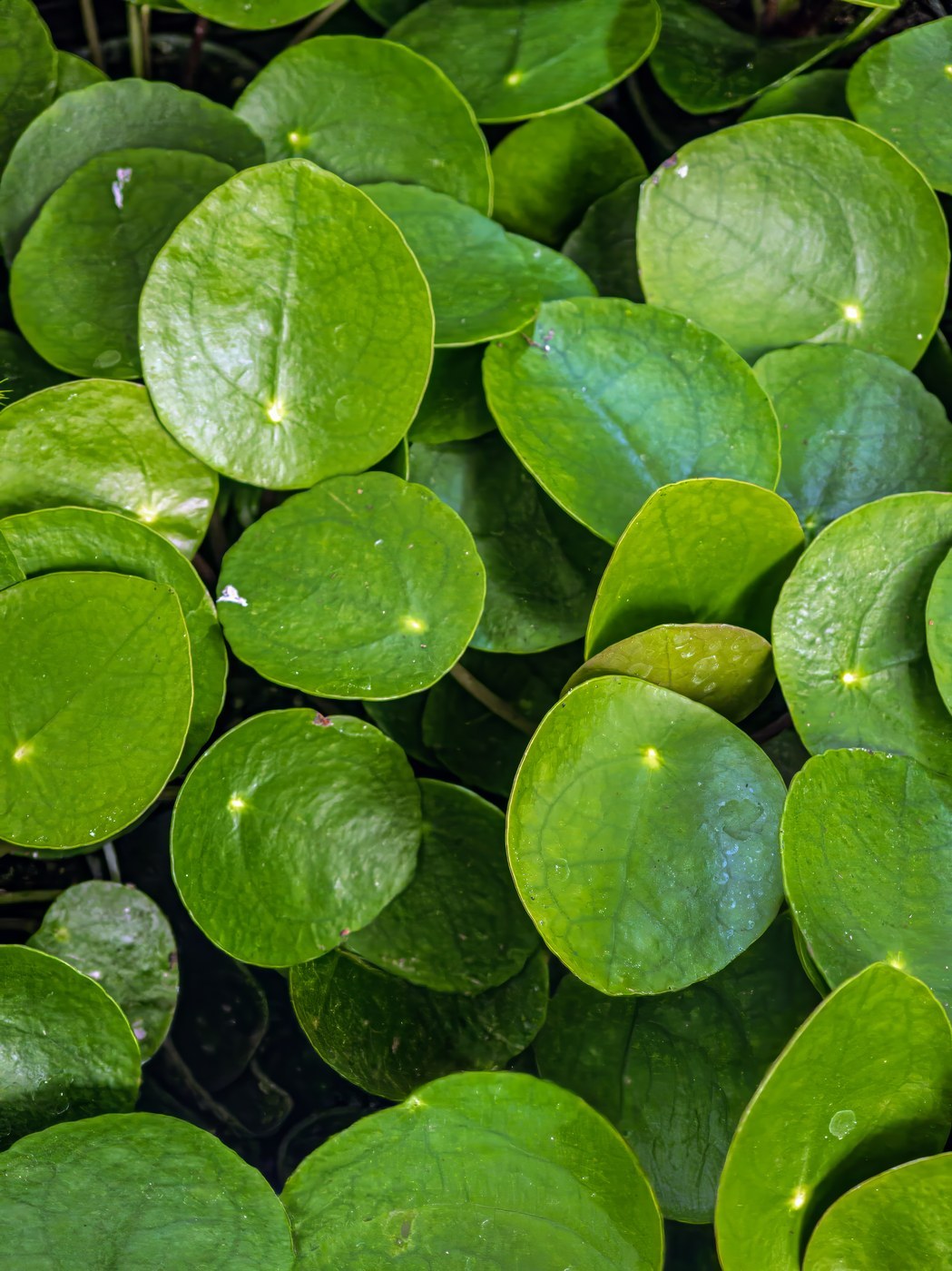
The Chinese money plant (Pilea peperomioides) is an evergreen perennial native to southern China, in the nettle family. It is instantly recognizable by its round, flat, coin-like leaves held on long petioles that attach to the center of each leaf.
It has an unusual history as a houseplant: it was spread person-to-person through cuttings, largely by a Norwegian missionary, long before it became commercially available — hence nicknames like 'missionary plant' and 'pass-it-on plant.'
Easy to grow and quick to produce offsets, it has become a beloved, photogenic houseplant.
How to identify it
- Leaves: Round, flat, coin-shaped, glossy green leaves (peltate — the stalk joins the center of the underside)
- Stems: Long, slender petioles rising from a central stem that thickens with age
- Offsets: Readily produces baby plantlets ('pups') from the base and along the stem
- Habit: Upright mounding, typically under 12 inches tall
- Flowers: Occasionally small whitish flowers on pinkish stems
Care & growing
Light: Bright, indirect light. Rotate regularly because it leans toward the light. Avoid harsh direct sun.
Water: Water when the top inch of soil dries. It is somewhat thirsty but dislikes soggy soil; leaves droop when too dry or too wet.
Soil: Well-draining potting mix.
Temperature: Prefers 60-75°F (15-24°C).
Feeding: Light monthly feeding during the growing season.
Propagation: Extremely easy — detach the rooted pups that emerge from the soil or stem and replant them.
Habitat & origin
Pilea peperomioides is native to the forests of the foothills of the Himalayas in Yunnan and Sichuan provinces of southern China, where it grows in shaded, rocky, moist habitats.
It is now grown worldwide as a houseplant, popularized through cuttings shared among gardeners before becoming widely commercially available.
Frequently asked questions
How do I recognize a Chinese money plant?
Look for round, flat, coin-shaped glossy green leaves whose stalks join the center of the leaf underside, rising on long petioles from a central stem.
Why is my Pilea leggy with a bare stem?
A tall bare stem usually results from low light. Give it brighter indirect light and rotate it regularly for even, compact growth.
How do I propagate the babies?
Wait until the pups have a few leaves and roots, then gently separate them from the parent and pot them up — they root very easily.
Why are the leaves curling or drooping?
Curling can signal too much light or temperature stress, while drooping often means it needs water or, conversely, is overwatered.
Chinese Money Plant guides
In-depth guides for identifying, growing, and caring for Chinese Money Plant.
How to Care for Chinese Money Plant
Grow the Chinese Money Plant (Pilea peperomioides) in bright indirect light, water when the top inch dries, and rotate it for even, coin-shaped foliage.
Chinese Money Plant Identification Guide
Identify the Chinese money plant (Pilea peperomioides) by its round, coin-shaped leaves on long petioles attached at the leaf center, and separate it from other 'money plants'.
Chinese Money Plant identified by the community
Real specimens identified with Plant Identifier.