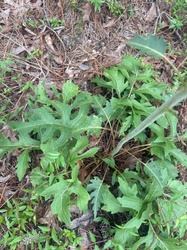
Compass Plant Identification Guide
Identify the towering Compass Plant by its huge deeply lobed basal leaves that align north-south, its resinous stem, and its sunflower-like yellow heads atop a tall prairie stalk.
Read the full Compass Plant encyclopedia entry →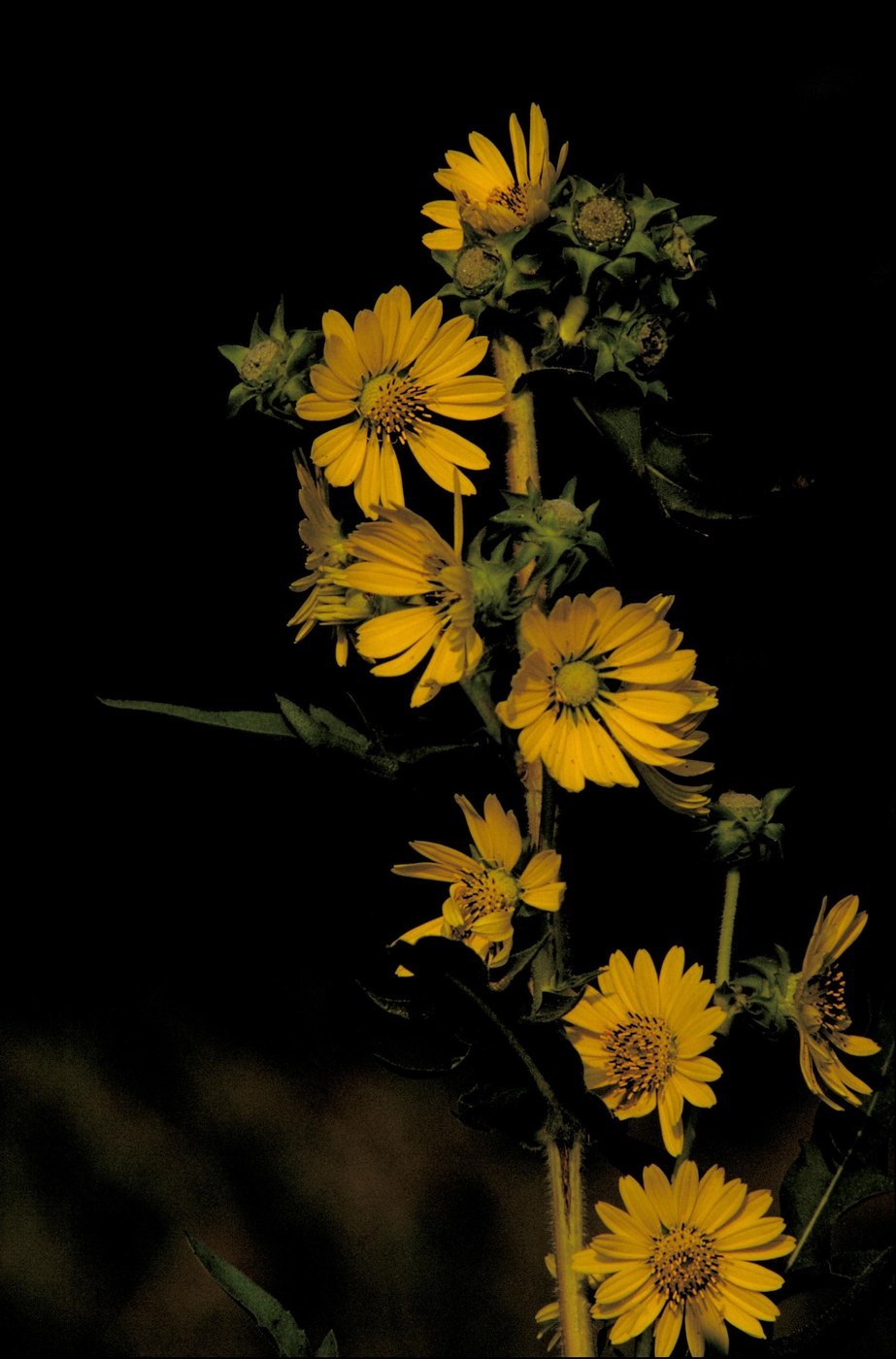
Key Identifying Features
Compass Plant (Silphium laciniatum) is a towering tallgrass-prairie perennial named for its leaves' habit of orienting north-south. Recognize it by:
- Enormous, deeply lobed, fern-like basal leaves up to 1-2 feet long
- Lower leaves that align their edges roughly north-south (the "compass" trait)
- A tall, stout, rough flowering stalk 5-9 feet tall (sometimes taller)
- Yellow sunflower-like flower heads along the upper stem
Leaves & Stems
The leaves are spectacular: deeply pinnately lobed (almost dissected), rough-textured, and very large, especially at the base. In strong sun, the big lower leaves turn so their blades face east-west and their edges point north-south, reducing midday heat, a genuine field clue early settlers used for direction. Leaves become smaller and clasp the stem upward. The stem is thick, coarse-hairy, and exudes a sticky resin when cut (chewed historically as a gum). A deep taproot can reach many feet down, anchoring the plant for decades.
Flowers & Fruit
The flower heads look like small sunflowers, 3-5 inches across, with yellow ray florets surrounding a yellow-to-brownish center disk, borne in a loose spike along the top of the stem. As in true sunflowers (Helianthus), it is in the aster family; in Silphium the ray florets are the fertile, seed-producing ones (the reverse of many composites). Bloom time is mid to late summer (July-September). Seeds are flat and winged. The plant is a favorite of bees, and goldfinches eat the seeds.
How to Tell It Apart from Look-Alikes
- Cup Plant (Silphium perfoliatum): related, but has smooth opposite leaves fused around a square stem forming water-holding cups; Compass Plant's leaves are deeply lobed and not cup-forming.
- Prairie Dock (Silphium terebinthinaceum): has large, undivided, heart-shaped basal leaves held vertically, not deeply lobed.
- Sunflowers (Helianthus): have toothed but not deeply dissected leaves and lack the north-south leaf orientation.
The giant deeply lobed north-south-oriented basal leaves on a very tall resinous stalk are diagnostic.
Where You'll Find It
Compass Plant is a signature species of tallgrass prairie, savanna, and prairie restorations in the central U.S., favoring deep, rich soils in full sun. Its great height and bold leaves make it stand out above prairie grasses.
Quick ID Checklist
- Huge, deeply lobed, rough basal leaves
- Lower leaves oriented north-south in sun
- Tall, stout, resinous, coarse-hairy stalk 5-9 ft
- Yellow sunflower-like heads along the upper stem
- Deep taproot; tallgrass prairie habitat
- Blooms mid to late summer
Frequently asked questions
Do Compass Plant leaves really point north-south?
Yes. In full sun the large lower leaves orient their flat faces toward east and west, so their edges line up roughly north-south. This reduces heat stress and gave the plant its name, and the alignment is a genuine field clue.
How is Compass Plant different from Cup Plant and Prairie Dock?
All three are Silphium. Compass Plant has huge deeply lobed leaves, Cup Plant has fused opposite leaves forming water-catching cups on a square stem, and Prairie Dock has large undivided heart-shaped vertical leaves.
Is it the same as a sunflower?
It is in the same aster family and has sunflower-like yellow heads, but it is a Silphium, not a Helianthus. A key botanical difference is that in Silphium the ray florets produce the seeds, unlike true sunflowers.
Why is the stem sticky?
The coarse stem exudes a resinous sap when broken, which dries into a gum that prairie peoples and settlers chewed. The resin is another identifying characteristic of the plant.
Compass Plant identified by the community
Recent Compass Plant specimens identified with Plant Identifier.