Crabapple Tree Identification Guide
How to recognize a crabapple (Malus species) by its spring blossoms, small fruit, and rounded form, and how to separate it from domestic apples and ornamental cherries.
Read the full Crabapple Tree encyclopedia entry →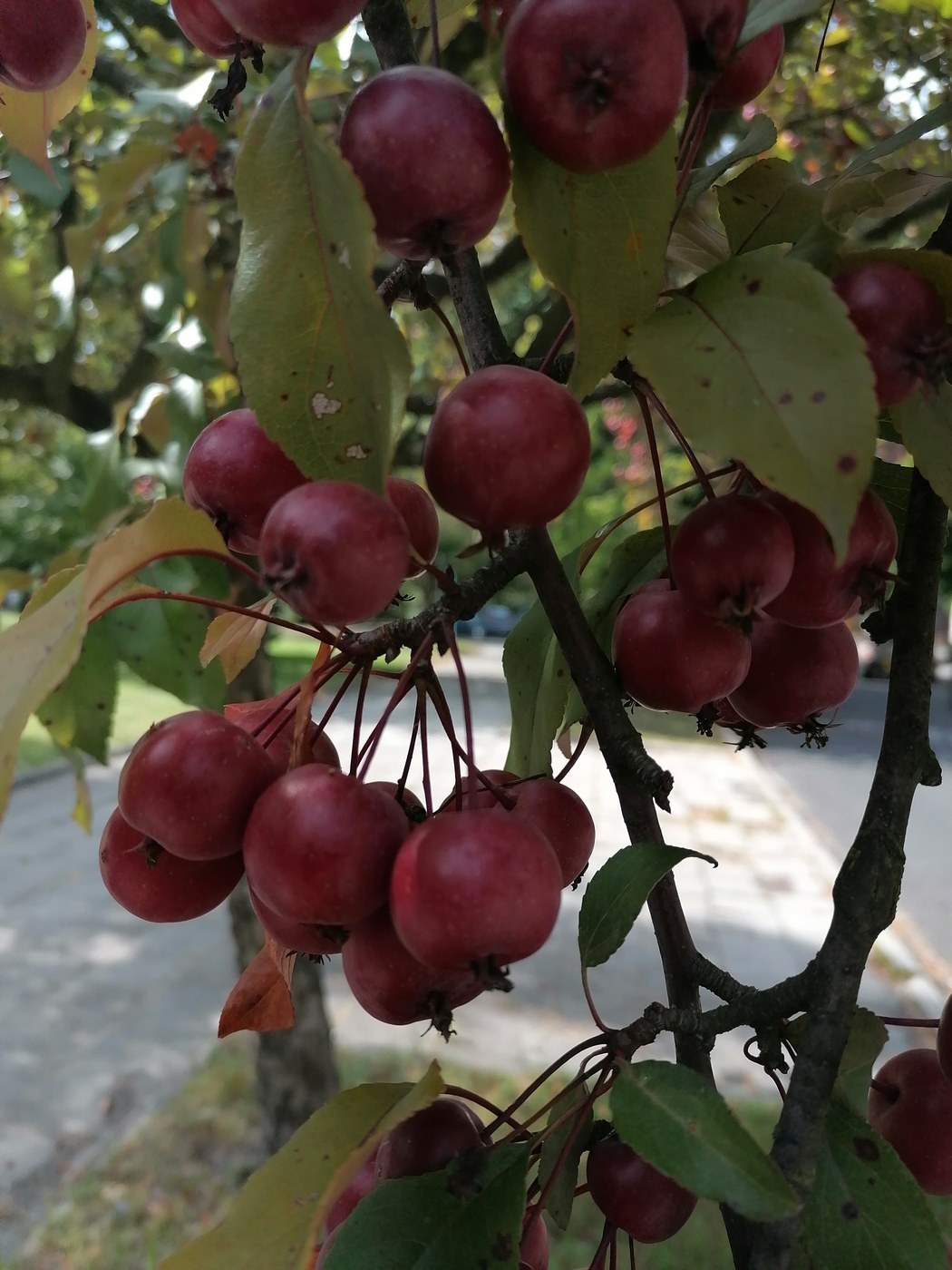
Key Identifying Features
Crabapples are small deciduous trees in the genus Malus, the same genus as the orchard apple. The single most reliable rule of thumb: a crabapple bears fruit 2 inches (5 cm) or less in diameter, while true apples bear larger fruit. They are prized as ornamentals for their dense, showy spring bloom and persistent colorful fruit.
- Size & form: Usually 15–25 ft tall with a rounded, spreading, often dense crown; some cultivars are weeping or upright.
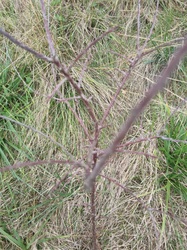
- Twigs: Slender, often with short spur shoots that carry clusters of flowers and fruit.
- Bark: Gray-brown, becoming scaly and slightly flaky with age.
Leaves & Stems
Leaves are simple, alternate, and oval to elliptical with finely serrated (toothed) margins and a pointed tip. They run roughly 1.5–4 inches long. Many ornamental cultivars have bronze, purple, or reddish young foliage that matures to green or stays purplish all season. The undersides and young twigs are often slightly downy. Look for the alternate arrangement and toothed edges to separate Malus from smooth-edged or opposite-leaved trees.
Flowers & Fruit
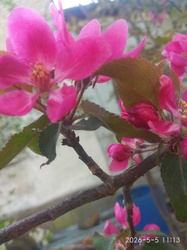
- Flowers (April–May): Showy 5-petaled blossoms about 1–1.5 inches across, borne in clusters. Colors range from white to pink to deep rose-red; buds are often a darker shade than the open flower. Many cultivars are fragrant.
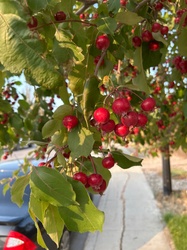
- Fruit (late summer–fall): Small pomes under 2 inches—the diagnostic feature. They come in yellow, orange, red, or purple and often persist into winter, providing food for birds. Cut one open and you'll see the familiar apple-like star of seeds at the core.
How to Tell It Apart from Look-Alikes
- Domestic apple (Malus domestica): Fruit larger than 2 inches; trees usually coarser and grown in orchards.
- Flowering cherry (Prunus): Cherry bark has horizontal lenticels (breathing pores) in bands, and cherries produce a single round drupe with one stone, not a many-seeded pome. Cherry flowers often have notched petals.
- Hawthorn (Crataegus): Bears thorns and similar small fruit, but leaves are often lobed and the haws have several hard nutlets.
- Pear (Pyrus): Glossier leaves, white-only flowers, and gritty-fleshed fruit.
Where You'll Find It
Crabapples are planted across temperate North America, Europe, and Asia in yards, parks, street plantings, and campuses. A few wild species occur in woodland edges and old homesteads. They thrive in full sun and well-drained soil in USDA zones 4–8.
Quick ID Checklist
- Small tree, rounded crown, 15–25 ft
- Alternate, toothed, oval leaves (often bronze when young)
- Clustered 5-petaled spring flowers, white to red
- Fruit under 2 inches—the defining trait
- Apple-like seed core; fruit often persists into winter
Frequently asked questions
What's the difference between a crabapple and an apple?
It comes down to fruit size: a crabapple produces pomes 2 inches in diameter or smaller, while a true apple produces larger fruit. Both are in the genus Malus and look very similar in flower and leaf.
How big is a crabapple's fruit?
By definition a crabapple bears pomes 2 inches (5 cm) in diameter or smaller, in yellow, orange, red, or purple. Cut one open and it shows the familiar apple-like star of seeds at the core. Larger fruit points to a true apple.
How can I tell a crabapple from a flowering cherry?
Check the bark and fruit. Cherries have shiny bark with horizontal banded lenticels and produce single-stoned drupes, while crabapples have scaly gray bark and many-seeded apple-like pomes.
Why does my crabapple keep its fruit all winter?
Many ornamental crabapple cultivars are bred for small persistent fruit that clings to the branches through winter, offering color and a food source for birds.
Crabapple Tree identified by the community
Recent Crabapple Tree specimens identified with Plant Identifier.