Crabapple Tree
Malus spp.
A small ornamental tree prized for its profuse spring blossoms and colorful, persistent miniature apples. Flowering crabapples are among the most popular landscape trees in temperate climates.
- Light
- Full sun
- Water
- Weekly when young; drought-tolerant once established
- Difficulty
- Easy
Got a plant like this?
Identify any plant from a photo, free.
Overview
Crabapples are small, deciduous trees in the genus Malus, distinguished from domestic apples mainly by fruit size: by definition crabapples bear fruit 2 inches (5 cm) or less in diameter. Hundreds of cultivars exist, bred chiefly for flower color, fruit display, and disease resistance.
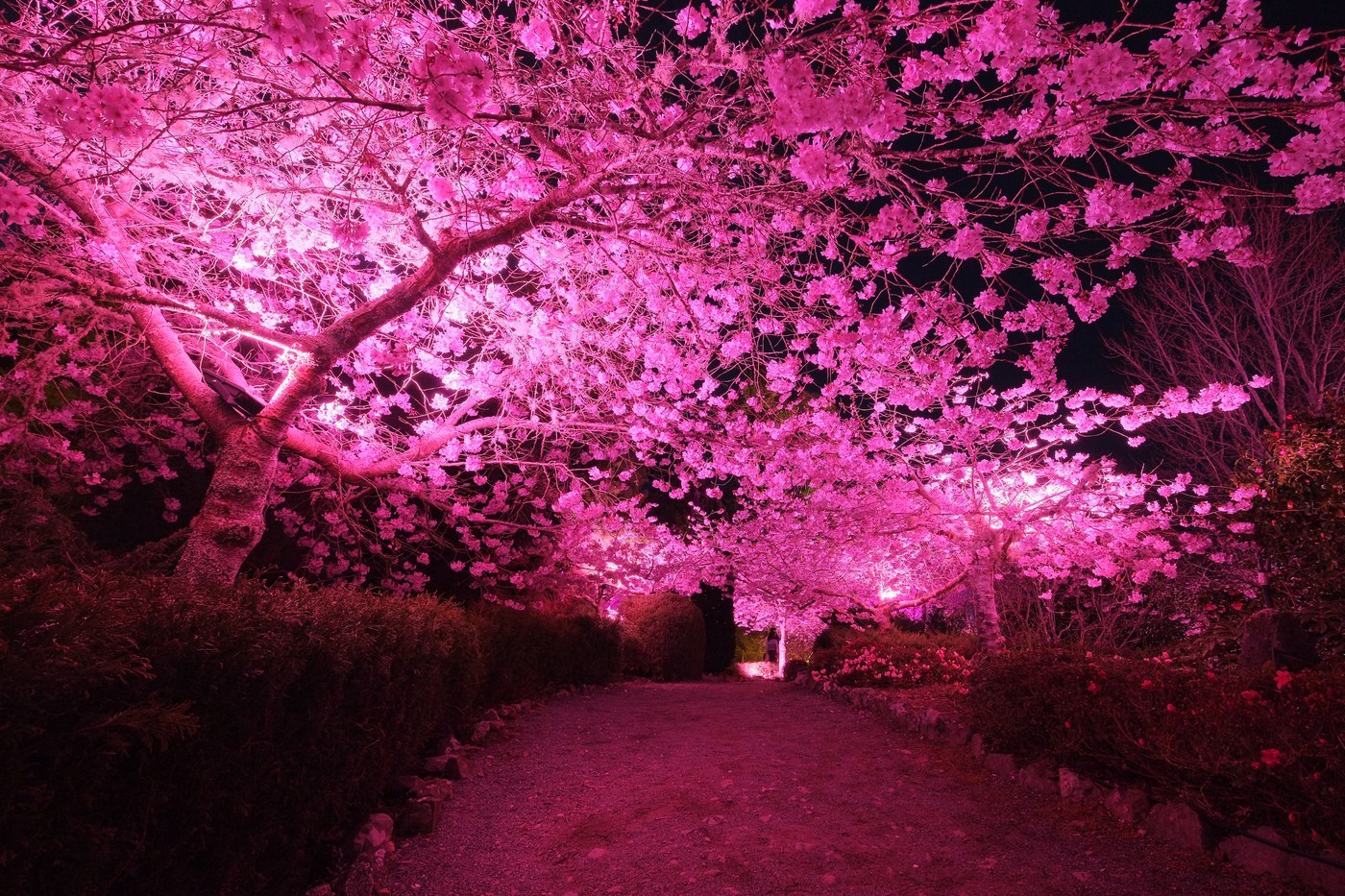
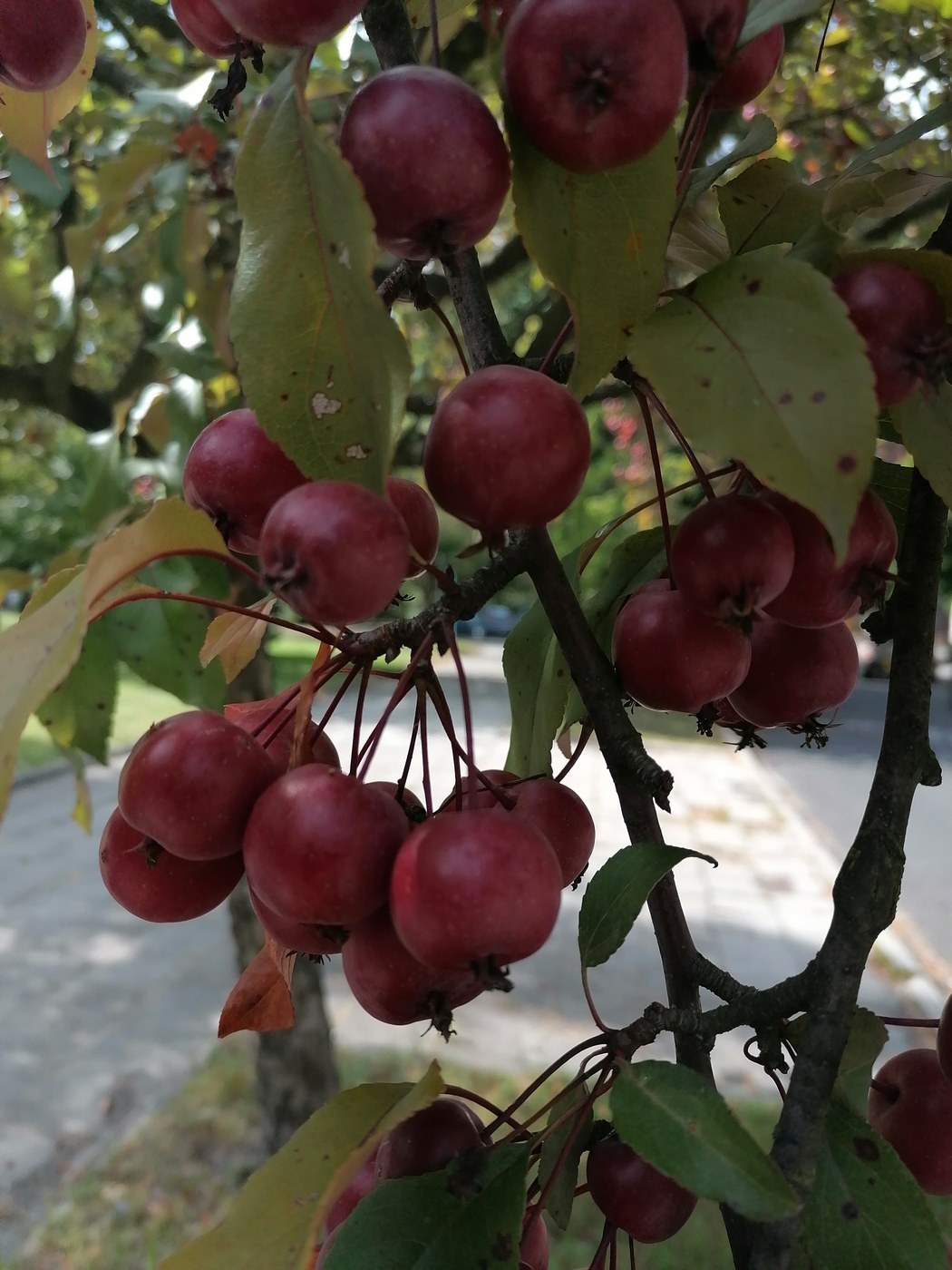
In spring the trees erupt in clouds of white, pink, or rose-red blossoms, often opening from darker buds. The small pome fruits that follow ripen in late summer and autumn and frequently cling well into winter, feeding birds.
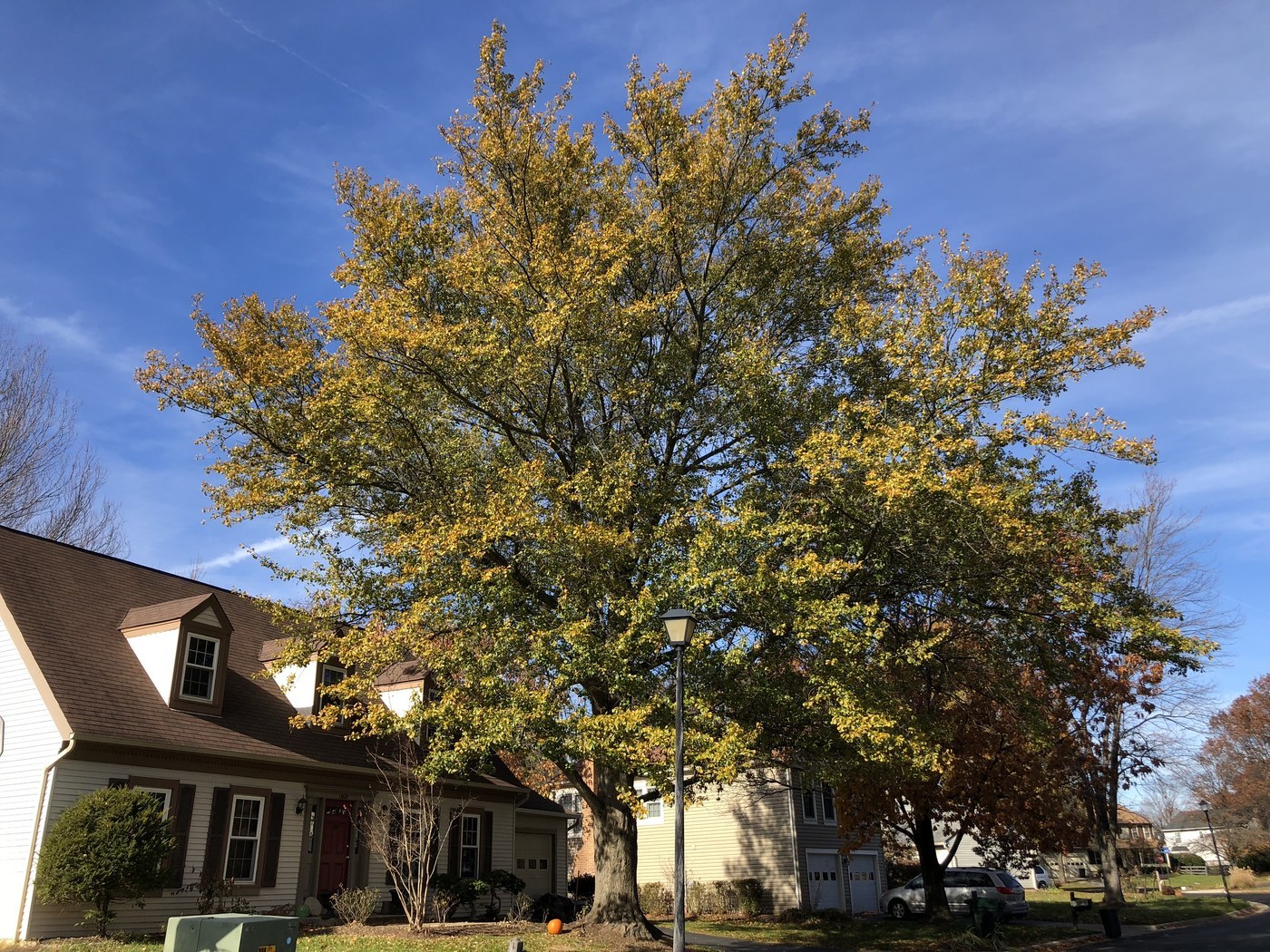
Widely planted as specimen and street trees, crabapples typically reach 15-25 ft (4.5-7.5 m) with a rounded to spreading crown.
How to identify it
- Habit: Small tree or large shrub, usually 15-25 ft tall, with a rounded or spreading crown
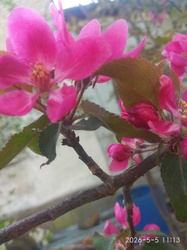
- Flowers: Five-petaled blossoms in white, pink, or red, borne in clusters before or with the leaves in spring
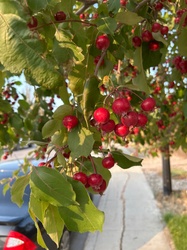
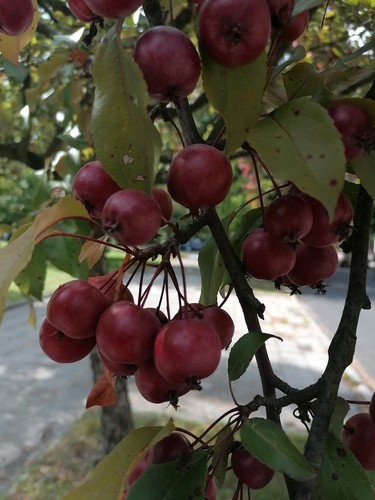
- Fruit: Small pomes (under 2 in / 5 cm) in yellow, orange, red, or purple, often persisting into winter
- Leaves: Simple, alternate, oval to elliptic with toothed margins; some cultivars have purple-bronze foliage
- Bark: Grayish-brown, becoming scaly or platy with age
Care & growing
Light: Plant in full sun for best flowering and disease resistance; at least 6 hours daily.
Water: Water regularly the first two years; established trees tolerate moderate drought but prefer consistent moisture.
Soil: Adaptable, but favors moist, well-drained, slightly acidic loam.
Temperature: Cold-hardy, generally USDA zones 4-8; most need winter chill to bloom.
Feeding: A light spring application of balanced fertilizer; avoid excess nitrogen, which promotes disease.
Pruning & propagation: Prune in late winter to remove crossing and dead wood. Named cultivars are grafted; species can be grown from seed (after stratification).
Habitat & origin
The genus Malus is native across the temperate Northern Hemisphere, with species in Europe, Asia, and North America. Many popular ornamentals derive from Asian species such as Malus floribunda and Malus baccata.
Crabapples grow naturally in woodland edges, thickets, and open ground. As cultivated trees they are planted throughout temperate North America, Europe, and Asia in gardens, parks, and along streets.
Frequently asked questions
Why isn't my crabapple flowering?
Common causes are too much shade, excess nitrogen fertilizer, or over-pruning. Most crabapples also need a cold winter dormancy to bloom well.
How big does a crabapple tree get?
Most ornamental cultivars reach 15-25 ft tall with a similar spread, though dwarf and weeping forms stay smaller.
How do I prevent disease on crabapples?
Choose disease-resistant cultivars, plant in full sun with good air circulation, and rake up fallen leaves and fruit to reduce apple scab and rust.
How do I tell a crabapple from an apple tree?
By fruit size: crabapples bear pomes 2 inches (5 cm) or less in diameter, while larger fruit is classed as a domestic apple. Both share five-petaled spring blossoms.
Crabapple Tree guides
In-depth guides for identifying, growing, and caring for Crabapple Tree.
How to Care for Crabapple Tree
Grow an ornamental Crabapple Tree (Malus spp.) in full sun with well-drained soil for spring blossoms and long-lasting fruit display.
Crabapple Tree Identification Guide
How to recognize a crabapple (Malus species) by its spring blossoms, small fruit, and rounded form, and how to separate it from domestic apples and ornamental cherries.
Crabapple Tree identified by the community
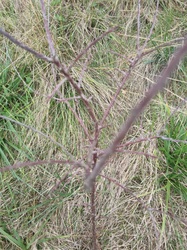
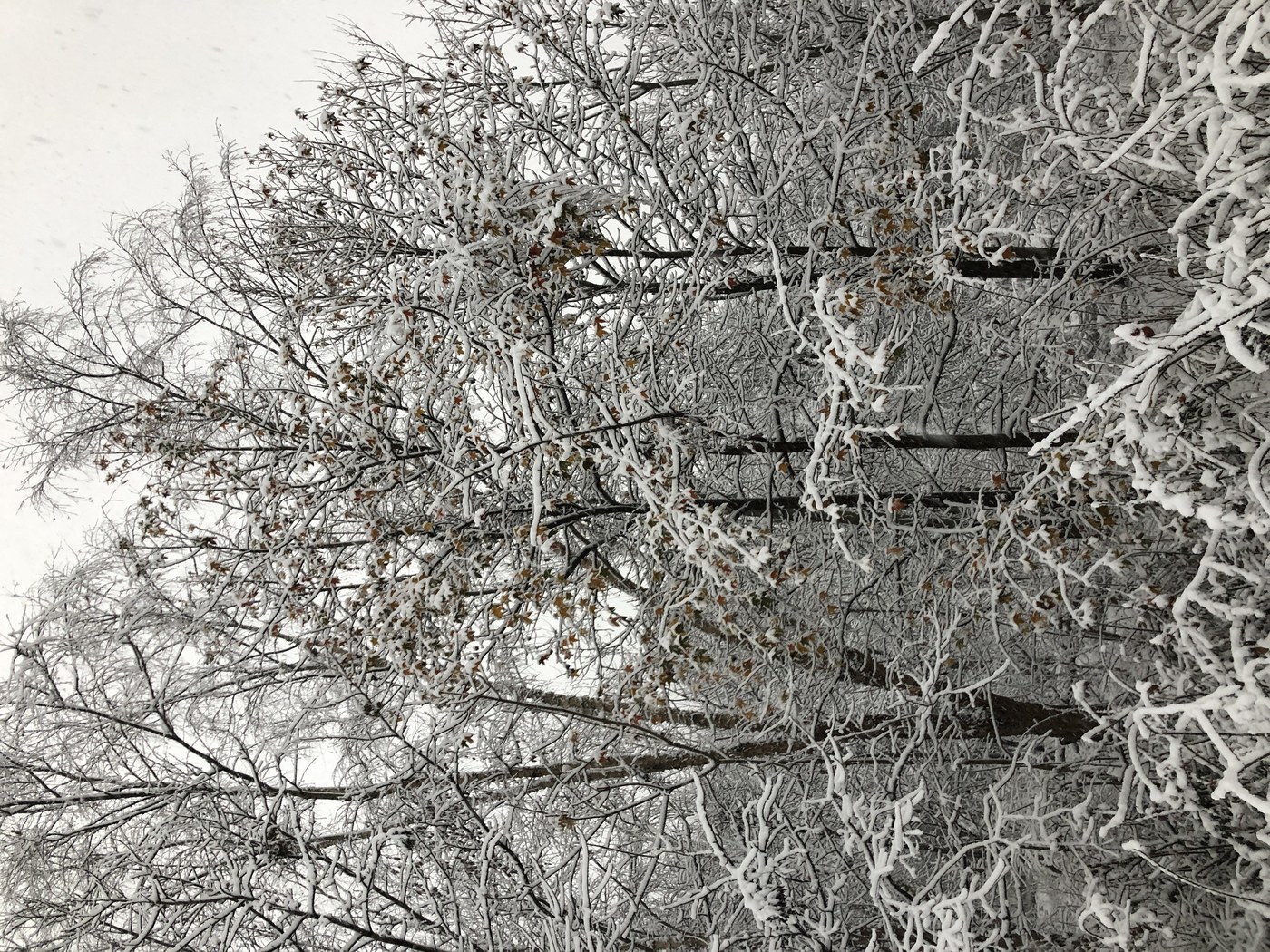
Real specimens identified with Plant Identifier.