Crabgrass Identification Guide
How to identify crabgrass (Digitaria species), a sprawling summer annual grass weed of lawns, gardens, and pavement cracks.
Read the full Crabgrass encyclopedia entry →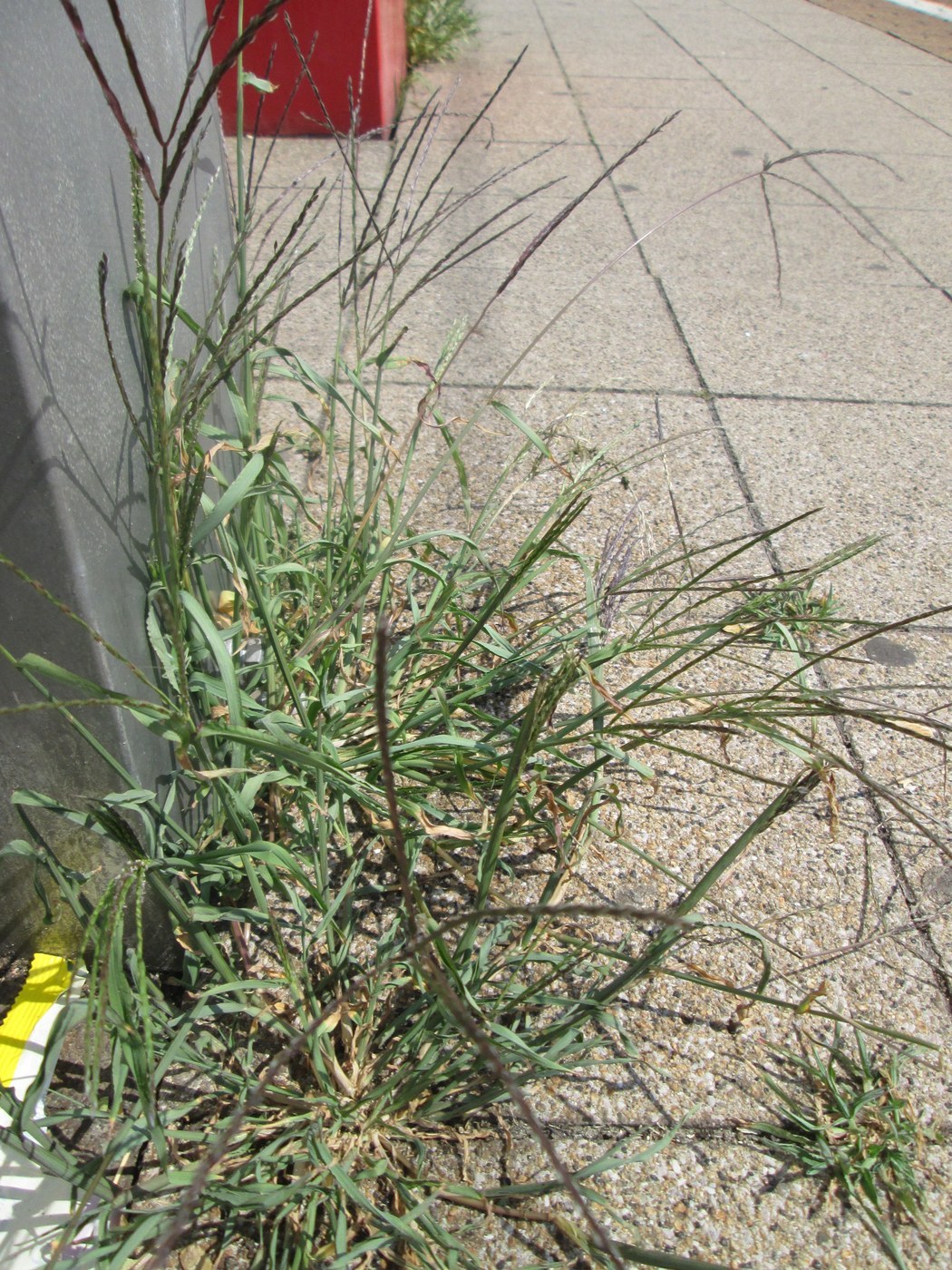
Key Identifying Features
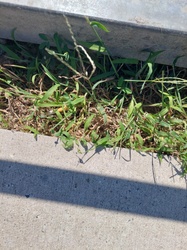
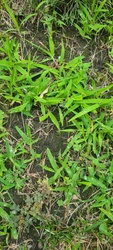
Crabgrass (Digitaria species, mainly large and smooth crabgrass) is a warm-season annual grass that invades thin lawns, garden beds, driveway edges, and sidewalk cracks. Its signature look is a low, star- or crab-shaped sprawl of stems radiating outward from a central point, hugging the ground and rooting where nodes touch soil.
- Coarse, light-green grass that grows faster than turf in summer heat
- Stems (tillers) spread flat outward before turning up at the tips
- Finger-like seed heads splaying from the stem tops
Leaves & Stems
Leaf blades are wide (1/4 inch), short, and pale green, often rough or hairy, tapering to a point. Large crabgrass (Digitaria sanguinalis) has conspicuous hairs on the blades and sheaths; smooth crabgrass (Digitaria ischaemum) is nearly hairless. Stems are thick and sprawl horizontally, rooting at the lower nodes to form a dense mat. New plants form a low rosette-like clump before sending out runners. The prostrate, branching, mat-forming habit distinguishes it from upright turfgrasses.
Flowers & Fruit
From midsummer into fall, crabgrass produces distinctive seed heads with two to several finger-like spikes spreading from the top of an upright stalk, like the ribs of an umbrella or the fingers of a hand. Each spike bears tiny seeds along its length. A single plant can produce thousands of seeds, which is why it returns yearly. Plants die at the first hard frost, leaving tan, flattened mats.
How to Tell It Apart from Look-Alikes
- Quackgrass / tall fescue: these grow upright in clumps and are perennial; crabgrass sprawls flat and dies each winter.
- Goosegrass (Eleusine indica): similar finger-like seed heads but with a distinctive white-to-silver flattened center and zipper-like seed spikes; goosegrass forms a tighter rosette.
- Bermudagrass: also spreads, but is a fine-textured perennial with above-ground runners and a gray-green color.
- Foxtail: has a single bristly cylindrical seed head, not splayed fingers.
Where You'll Find It
Crabgrass thrives in hot, sunny, compacted or thin areas: lawn edges along driveways and walks, bare patches, garden rows, and pavement cracks. It germinates in spring as soil warms and exploits any gap in turf. It is found across temperate and warm regions worldwide.
Quick ID Checklist
- Sprawling, star-shaped clump hugging the ground
- Wide, pale green blades, often hairy near the base
- Stems root at the nodes to form mats
- Finger-like seed spikes splayed from stalk tips in summer
- Summer annual that dies at frost
Frequently asked questions
How do I tell crabgrass from regular lawn grass?
Crabgrass grows in a flat, spreading, star-shaped clump with coarse, pale, wide blades, and it grows faster than turf in summer heat. Lawn grasses are finer and grow more uniformly upright.
What does crabgrass seed head look like?
It has two to several finger-like spikes splaying out from the top of an upright stalk, resembling spread fingers or umbrella ribs. This appears from midsummer through fall.
How is crabgrass different from goosegrass?
Both have finger-like seed heads, but goosegrass forms a flattened, white-centered rosette with a zipper-like seed pattern, while crabgrass sprawls outward and roots at its stem nodes.
Does crabgrass come back every year?
Crabgrass is a summer annual that dies at the first frost, but each plant drops thousands of seeds that germinate the following spring, so it reappears yearly unless prevented.
Crabgrass identified by the community
Recent Crabgrass specimens identified with Plant Identifier.