How to Care for Croton
Grow vibrant Croton (Codiaeum variegatum) with bright light, steady moisture, and warm humid air for its signature multicolored foliage.
Read the full Croton encyclopedia entry →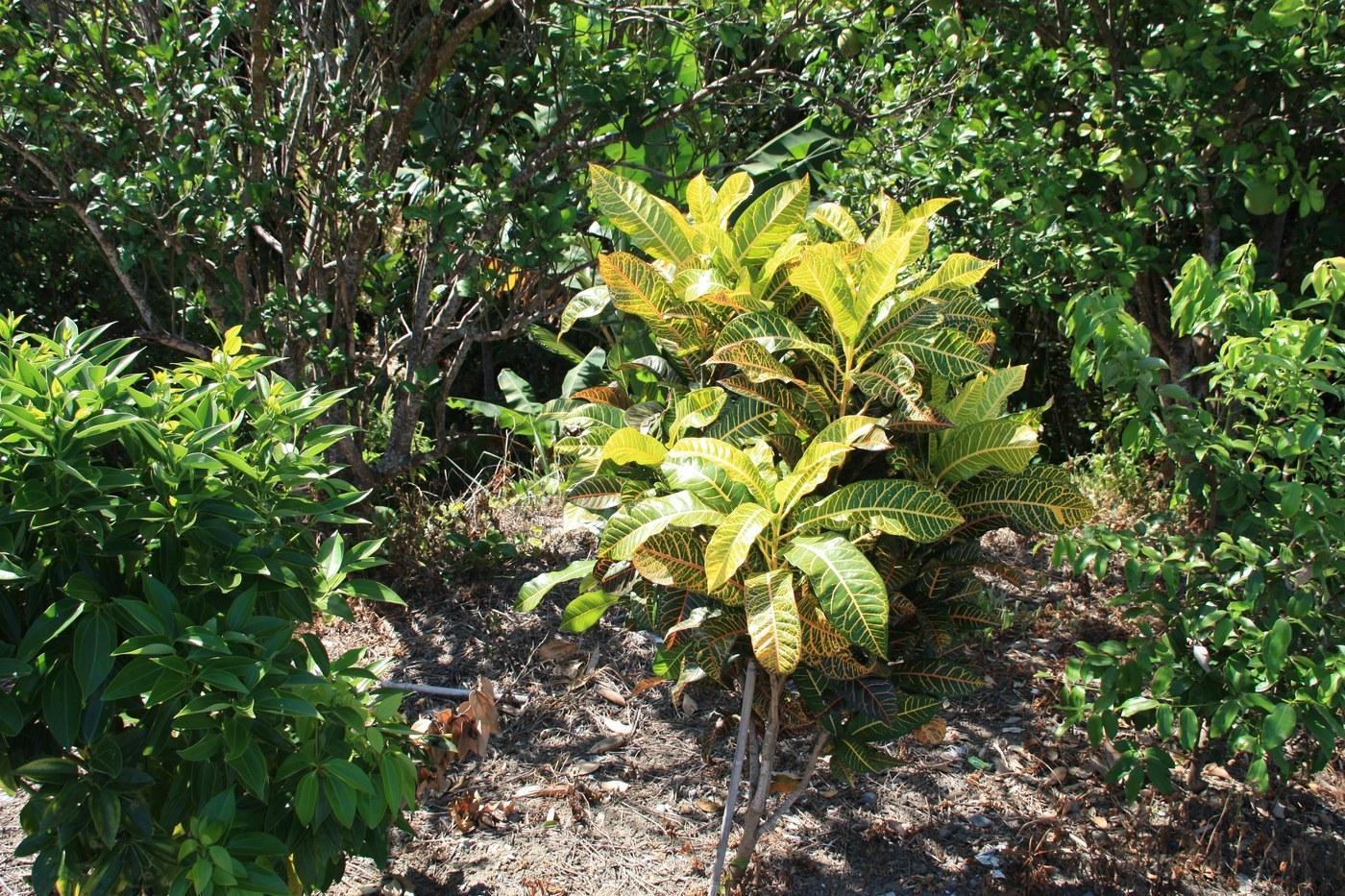
The Croton (Codiaeum variegatum) is prized for its bold, leathery leaves splashed in green, yellow, orange, red, and burgundy. It is a moderate-difficulty tropical shrub that rewards consistent conditions with electric color but sulks and drops leaves when conditions swing.
Light
Croton needs bright light with some direct sun to develop its full spectrum of leaf color. An east, west, or lightly shaded south window is ideal indoors. In too little light, new growth turns plain green and variegation fades. If moving a plant into stronger sun, acclimate it gradually over a couple of weeks to avoid scorched patches on the leaves.
Water
Water when the top inch of soil dries out, then moisten the root ball thoroughly until water drains from the bottom. Croton likes to stay evenly moist but not soggy; both drought and standing water trigger dramatic leaf drop. Reduce frequency in winter when growth slows, but never let the pot dry out completely. Always empty the saucer so roots are not left sitting in water.
Soil & Potting
Use a rich, well-draining potting mix with plenty of organic matter. A blend of quality potting soil with added perlite or bark keeps the mix airy while retaining moisture. Choose a pot with drainage holes. Croton prefers to be slightly root-bound, so avoid oversized containers that hold excess wet soil.
Humidity & Temperature
This is a warmth-loving tropical that thrives between 65 and 80 degrees Fahrenheit and dislikes anything below about 55. Keep it away from cold drafts, air-conditioning vents, and doorways in winter. Croton craves high humidity; run a humidifier, group it with other plants, or set it on a pebble tray. Low humidity causes leaf-tip browning and invites spider mites.
Feeding
Feed every two to four weeks during spring and summer with a balanced liquid fertilizer diluted to half strength. Ample feeding supports the vivid coloration. Stop or greatly reduce feeding in fall and winter when the plant rests.
Propagation
Propagate from stem-tip cuttings taken in spring or early summer. Cut a 4 to 6 inch tip, allow the milky sap to stop, then root it in moist mix or water. Warmth, humidity, and a covered environment speed rooting, which typically takes several weeks. Air layering is also reliable for leggy stems.
Repotting / Pruning
Repot every couple of years in spring, moving up one pot size only when roots fill the container. Prune leggy stems in spring to encourage bushier growth; cut just above a leaf node. Wear gloves and avoid getting the sap on skin. Wipe the broad leaves regularly to keep them dust-free and photosynthesizing well.
Common Problems & Pests
Leaf drop is the classic complaint, usually from sudden changes in light, temperature, drafts, or inconsistent watering. Faded color signals too little light. Spider mites are the main pest, especially in dry air, appearing as fine webbing and stippled leaves; scale and mealybugs can also occur. Boost humidity and rinse foliage to keep mites at bay.
Seasonal Care Tips
In spring and summer, give bright light, steady moisture, and regular feeding for peak growth and color. In fall, taper feeding and watering as light drops. In winter, protect from cold and drafts, keep humidity up, and water more sparingly while the plant rests.
Frequently asked questions
Why is my Croton dropping leaves?
Leaf drop almost always follows a sudden change: a move to a new spot, a cold draft, or letting the soil swing from bone dry to soggy. Give it a stable warm location with steady moisture and it usually recovers with fresh growth.
Why are my Croton's leaves turning plain green?
Fading, greening foliage is a sign of too little light. Move the plant to a brighter spot with some direct sun and new growth should return to its full multicolored pattern.
How often should I water a Croton?
Water when the top inch of soil dries, keeping the root ball evenly moist. This often means weekly in summer and less in winter. Avoid both drought and waterlogging, as either triggers leaf drop.
Does Croton need high humidity?
Yes. As a tropical plant it thrives in humid air. Use a humidifier, pebble tray, or grouping with other plants to prevent leaf-tip browning and discourage spider mites.
Croton identified by the community
Recent Croton specimens identified with Plant Identifier.