Croton
Codiaeum variegatum
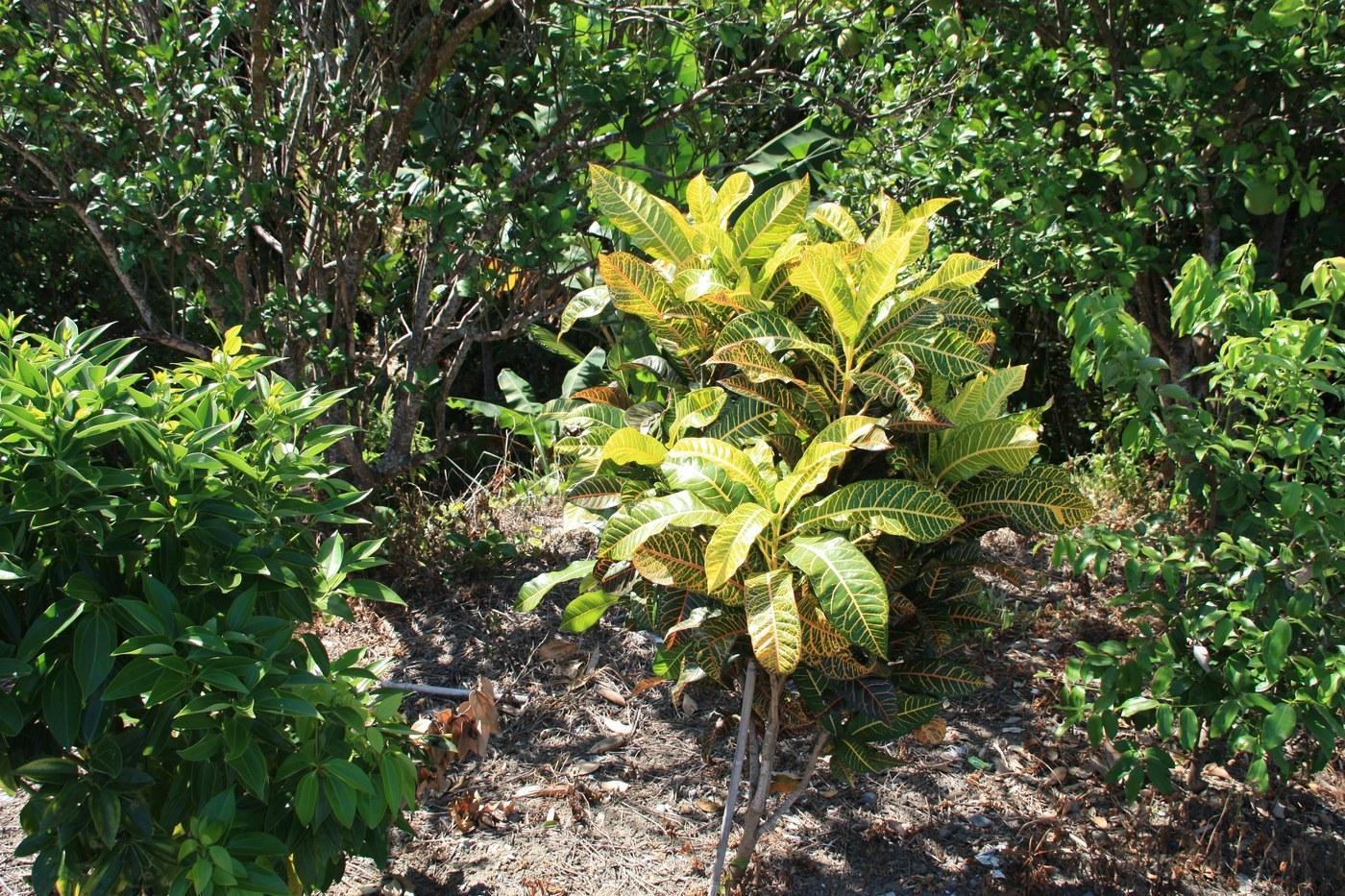
The croton is a tropical shrub famous for its leathery leaves splashed with brilliant yellow, orange, red, and green. Bright light is the key to its vivid coloring.
- Light
- Bright light, some direct sun
- Water
- When top inch of soil dries
- Difficulty
- Moderate
Got a plant like this?
Identify any plant from a photo, free.
Overview
Codiaeum variegatum is an evergreen shrub from Southeast Asia and the Pacific, grown for some of the most colorful foliage in the plant world. Leaves can be green, yellow, orange, red, pink, or nearly black, often combining several colors with bold veins or spots.
Leaf shapes vary enormously among cultivars, from narrow and twisted to broad and oval. The intensity of color depends heavily on light, with brighter conditions producing more vivid hues.
Indoors it forms a bushy upright plant; in tropical gardens it becomes a large hedge or specimen shrub.
How to identify it
Identify croton by:
- Leaves: thick, glossy, leathery, and stiff
- Color: vivid mixes of green, yellow, orange, red, and purple, often along the veins
- Shapes: highly variable, from oval and lance-shaped to narrow, lobed, or corkscrew-twisted
- Habit: upright, bushy, woody-stemmed shrub
- Sap: milky latex that can stain
Care & growing
- Light: bright light with some direct sun is essential for vivid color; too little light dulls foliage
- Water: keep evenly moist in summer, watering when the top inch dries; reduce in winter
- Humidity: high; mist or use a pebble tray to prevent leaf drop
- Soil: rich, well-draining potting mix
- Temperature: 60-85 degrees F; sensitive to cold and drafts
- Feeding: feed every 2-4 weeks in spring and summer
- Propagation: stem cuttings with bottom heat; air layering also works
Habitat & origin
Croton is native to Indonesia, Malaysia, and the western Pacific islands, where it grows in open tropical forests and scrub. It thrives in warm, humid, brightly lit conditions.
It is widely cultivated as a landscape shrub and hedge throughout the tropics and subtropics, including South Florida, and as a houseplant in cooler climates.
Frequently asked questions
Why is my croton dropping leaves?
Crotons drop leaves from stress such as low humidity, cold drafts, sudden moves, or inconsistent watering. Keep conditions warm, humid, and stable, especially after bringing one home.
Why are my croton's colors fading?
Insufficient light is the usual cause. Crotons need bright light, including some direct sun, to develop and keep their vivid red, orange, and yellow tones.
Can croton grow outdoors?
Only in frost-free tropical and subtropical climates (roughly USDA zone 10-11). Elsewhere it must be grown as a houseplant or brought indoors in winter.
How do I identify a croton?
Look for thick, glossy, leathery leaves in vivid mixes of green, yellow, orange, red, and purple, often colored along the veins, with shapes ranging from oval to narrow, lobed, or corkscrew-twisted on a bushy woody shrub.
Croton guides
In-depth guides for identifying, growing, and caring for Croton.
How to Care for Croton
Grow vibrant Croton (Codiaeum variegatum) with bright light, steady moisture, and warm humid air for its signature multicolored foliage.
Croton Identification Guide
Recognize the Croton (Codiaeum variegatum) by its thick, leathery leaves splashed in vivid yellow, orange, red, and green.
Croton identified by the community
Real specimens identified with Plant Identifier.