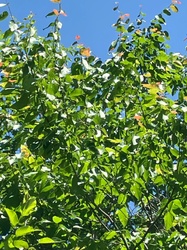
Croton Identification Guide
Recognize the Croton (Codiaeum variegatum) by its thick, leathery leaves splashed in vivid yellow, orange, red, and green.
Read the full Croton encyclopedia entry →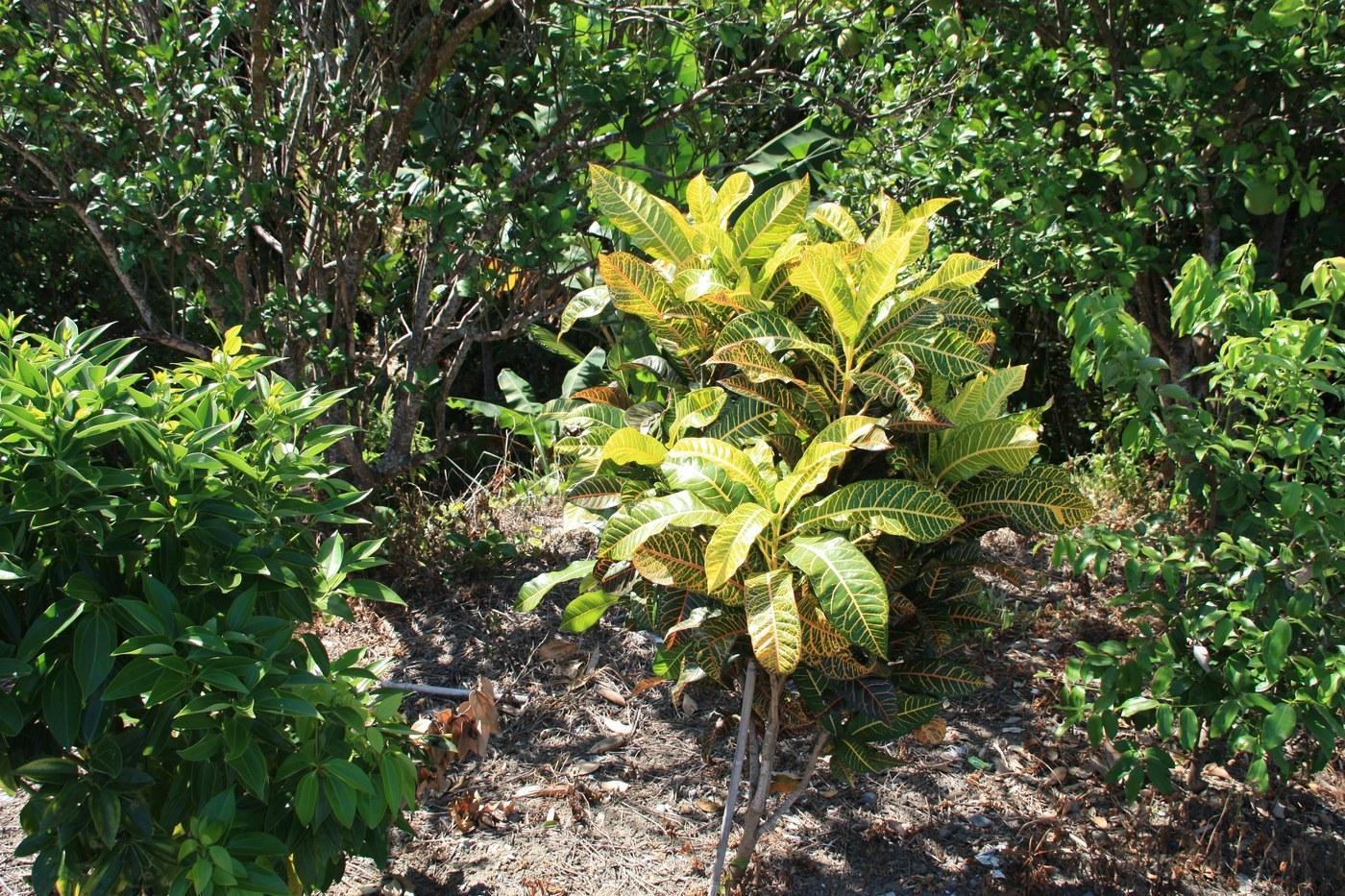
Key Identifying Features
The Croton (Codiaeum variegatum) is one of the most colorful foliage plants, instantly known for thick, glossy, leathery leaves marbled in green, yellow, orange, red, pink, and purple. It is an evergreen shrub in the spurge family (Euphorbiaceae) native to Southeast Asia and the Pacific.
- Leaves are stiff, waxy, and brilliantly multicolored
- Leaf shapes vary enormously — oval, lance, oak-leaf, twisted, or narrow strap-like
- Color intensifies with bright light, with veins often a contrasting hue
Leaves & Stems
Leaf variability is the hallmark of Croton — a single cultivar can show several shapes and color stages on one plant. Look for:
- A tough, almost plastic-like leaf texture with a high-gloss sheen
- Prominent colored midribs and veins (yellow, orange, or pink)
- Arrangement is alternate and spiraling up the stem
- Cut stems and leaves exude a milky latex sap (typical of euphorbs) that can stain
Stems are woody at the base, and plants grow as upright shrubs to 1-2 m (3-6 ft) indoors, taller outdoors in the tropics.
Flowers & Fruit
Flowers are inconspicuous and not the reason it is grown:
- Tiny star-shaped cream-white flowers dangle on slender stalks from leaf axils
- Male and female flowers are separate; males are small puffballs, females are yellowish
- Small, three-lobed capsule fruits may follow
How to Tell It Apart from Look-Alikes
- Coleus (Plectranthus): also colorful but has soft, toothed, fuzzy leaves and square stems, not stiff leathery blades.
- Ti plant (Cordyline): has long strap leaves in pink/burgundy but lacks the multicolor mottling and milky sap.
- Croton's combination of rigid waxy leaves + multicolor marbling + milky latex is unique among common houseplants.
Where You'll Find It
Indoors, Croton is a popular bright-window foliage plant. In tropical and subtropical climates (South Florida, Hawaii, Southeast Asia) it is widely planted as a landscape hedge and accent shrub, where strong sun brings out its most vivid reds and oranges.
Quick ID Checklist
- Thick, glossy, leathery leaves
- Bold multicolor patterns (green/yellow/orange/red/purple)
- Highly variable leaf shapes
- Milky sap when cut
- Upright woody shrub
If the foliage looks painted in tropical sunset colors and feels stiff and waxy, you have found a Croton.
Frequently asked questions
Why are my Croton's leaves losing their color?
Croton needs bright light to develop and keep its vivid reds, oranges, and yellows. In low light, new leaves emerge greener and the dramatic variegation fades, which is itself a clue to the species.
Are all Crotons the same leaf shape?
No. Codiaeum variegatum has dozens of cultivars with oval, lance, oak-leaf, spiral, or narrow strap leaves. The shared traits are the thick leathery texture and multicolor patterning, not a single shape.
What features confirm a plant is a Croton?
The combination of rigid, waxy, multicolored leaves, highly variable leaf shapes, milky latex when a stem is cut, and an upright woody base is unique to Croton among common houseplants.
How do I distinguish a Croton from a Coleus?
Coleus has soft, fuzzy, toothed leaves and square stems, while Croton leaves are stiff, glossy, leathery, and exude milky sap when broken.
Croton identified by the community
Recent Croton specimens identified with Plant Identifier.