Dogwood Identification Guide
How to identify Dogwood (Cornus, especially flowering dogwood Cornus florida) by its four showy notch-tipped bracts, arcing leaf veins, and red berry clusters.
Read the full Dogwood encyclopedia entry →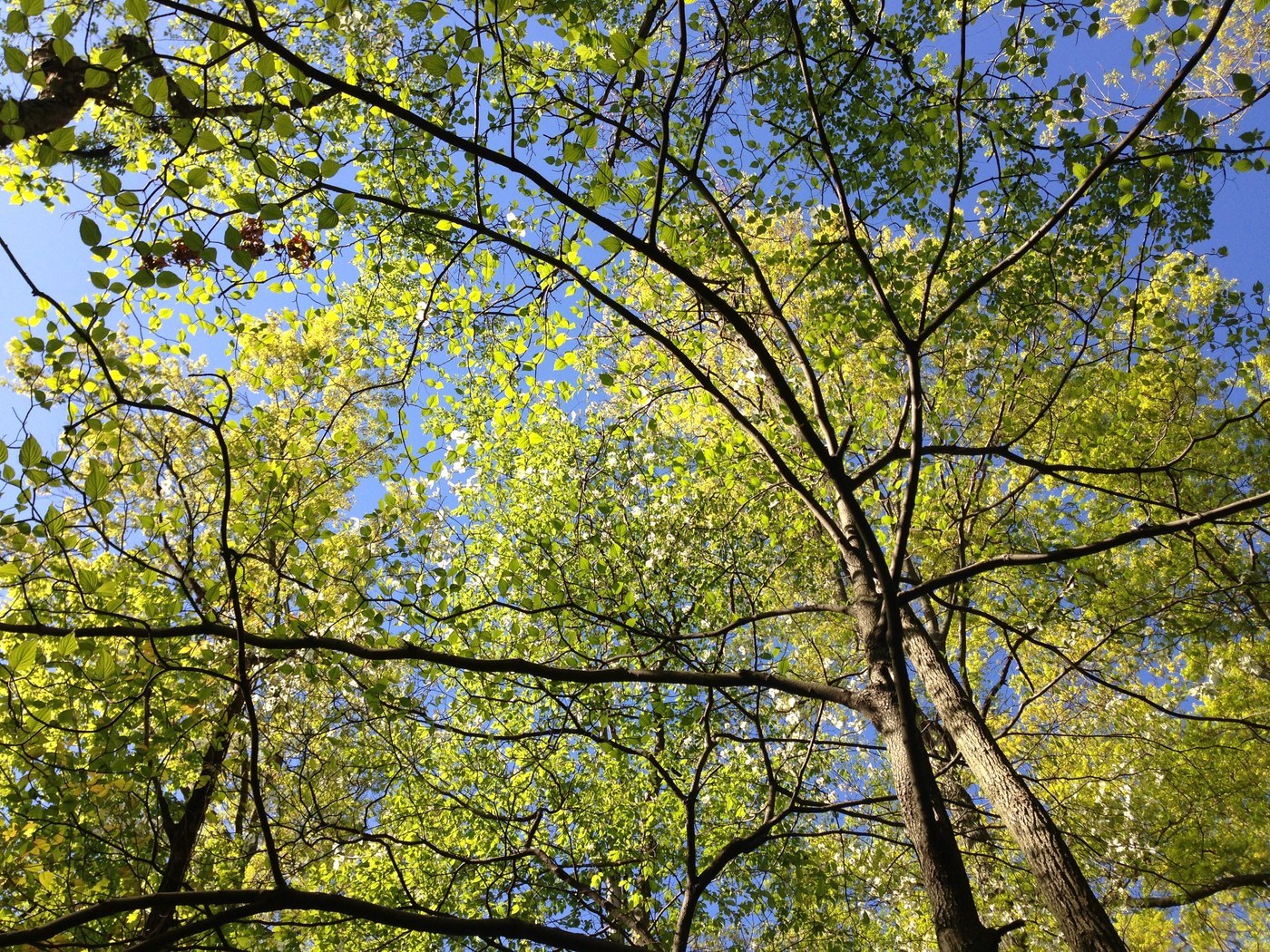
Key Identifying Features
Dogwood (genus Cornus) is best known through flowering dogwood (Cornus florida), a small understory tree 15-30 feet tall. Its showiest feature is misunderstood: the four white (or pink) "petals" are actually bracts (modified leaves), each with a distinctive notched, brown-tinged tip, surrounding a central cluster of tiny true flowers. A second, genus-wide clue works year-round: arcuate leaf veins that curve and run parallel toward the leaf tip, and white latex threads that stretch when you gently pull a leaf apart.
- 4 showy bracts with notched tips around a central flower cluster
- Leaves with curving, parallel (arcuate) veins
- Stretchy white "threads" when a leaf is torn
- Clusters of glossy red berries (drupes) in fall
Leaves & Stems
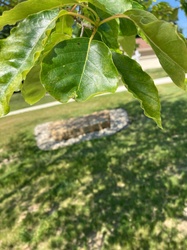
Leaves are opposite (a key trait — most trees with this leaf arrangement are dogwood, maple, ash, or viburnum), 3-6 inches long, oval, with smooth or slightly wavy margins. The veins curve in a bow shape and run toward the tip, following the leaf margin. Tear a leaf slowly and the cut halves cling by thin white elastic strands — a near-foolproof dogwood test. Fall color is deep red to maroon.
Twigs of flowering dogwood are slender, often purplish or greenish; flower buds are distinctive button-like, flattened turban shapes at twig tips. Bark on mature trees breaks into small, blocky plates resembling alligator hide.
Flowers & Fruit
The spring "flower" of Cornus florida is a head of small greenish-yellow true flowers surrounded by four large white (sometimes pink) petal-like bracts, each notched at the tip. Other dogwoods differ: kousa dogwood has pointed (non-notched) bracts and a bumpy raspberry-like fruit; gray and red-osier dogwoods are shrubs with flat-topped clusters of small white flowers and white/blue berries. Flowering dogwood produces clusters of shiny red oval drupes in fall, eaten by birds.
How to Tell It Apart from Look-Alikes
- Kousa dogwood (Cornus kousa): bracts are pointed, not notched; fruit is a round, pink, knobby aggregate; blooms later.
- Redbud (Cercis): also a spring understory tree, but has heart-shaped alternate leaves and pea-like pink flowers — no bracts.
- Viburnum/maple: opposite leaves too, but lack the stretchy latex threads and arcuate veins.
The opposite, arcuate-veined leaves with latex threads plus notched bracts and red drupes confirm flowering dogwood.
Where You'll Find It
Flowering dogwood is a native understory tree of eastern North American hardwood forests, woodland edges, and a hugely popular landscape ornamental, ranging from southern Maine and Ontario to Florida and eastern Texas. Other Cornus species (kousa, gray, red-osier, silky) occupy gardens, wetlands, and thickets across the Northern Hemisphere.
Quick ID Checklist
- Opposite leaves with curving parallel veins
- White latex threads stretch when a leaf is torn
- 4 showy bracts with notched tips (Cornus florida) in spring
- Turban-shaped flower buds; alligator-hide bark
- Clusters of glossy red berries in fall
- Eastern hardwood understory and gardens
Frequently asked questions
Are the white 'petals' of a dogwood really flowers?
No. They are bracts — modified leaves. The true flowers are the small greenish-yellow cluster in the center, surrounded by four showy bracts that in flowering dogwood are notched at the tip.
What's the quickest year-round dogwood test?
Gently tear a leaf in half: dogwoods leave thin, white, stretchy latex threads connecting the two halves. Combine that with opposite leaves and curving parallel veins.
How do I tell flowering dogwood from kousa dogwood?
Bract shape and fruit: flowering dogwood has notched bract tips and red oval berries, while kousa dogwood has pointed bract tips and a round, knobby, raspberry-like pink fruit, and it blooms a few weeks later.
What does dogwood bark look like?
On mature flowering dogwoods the bark breaks into small, square, blocky plates resembling alligator skin, a helpful clue even in winter.
Dogwood identified by the community
Recent Dogwood specimens identified with Plant Identifier.