Eastern Red Cedar Identification Guide
Recognize Eastern Red Cedar (Juniperus virginiana), a native juniper, by its prickly-then-scaly foliage, frosty blue berry-like cones, and shreddy reddish bark.
Read the full Eastern Red Cedar encyclopedia entry →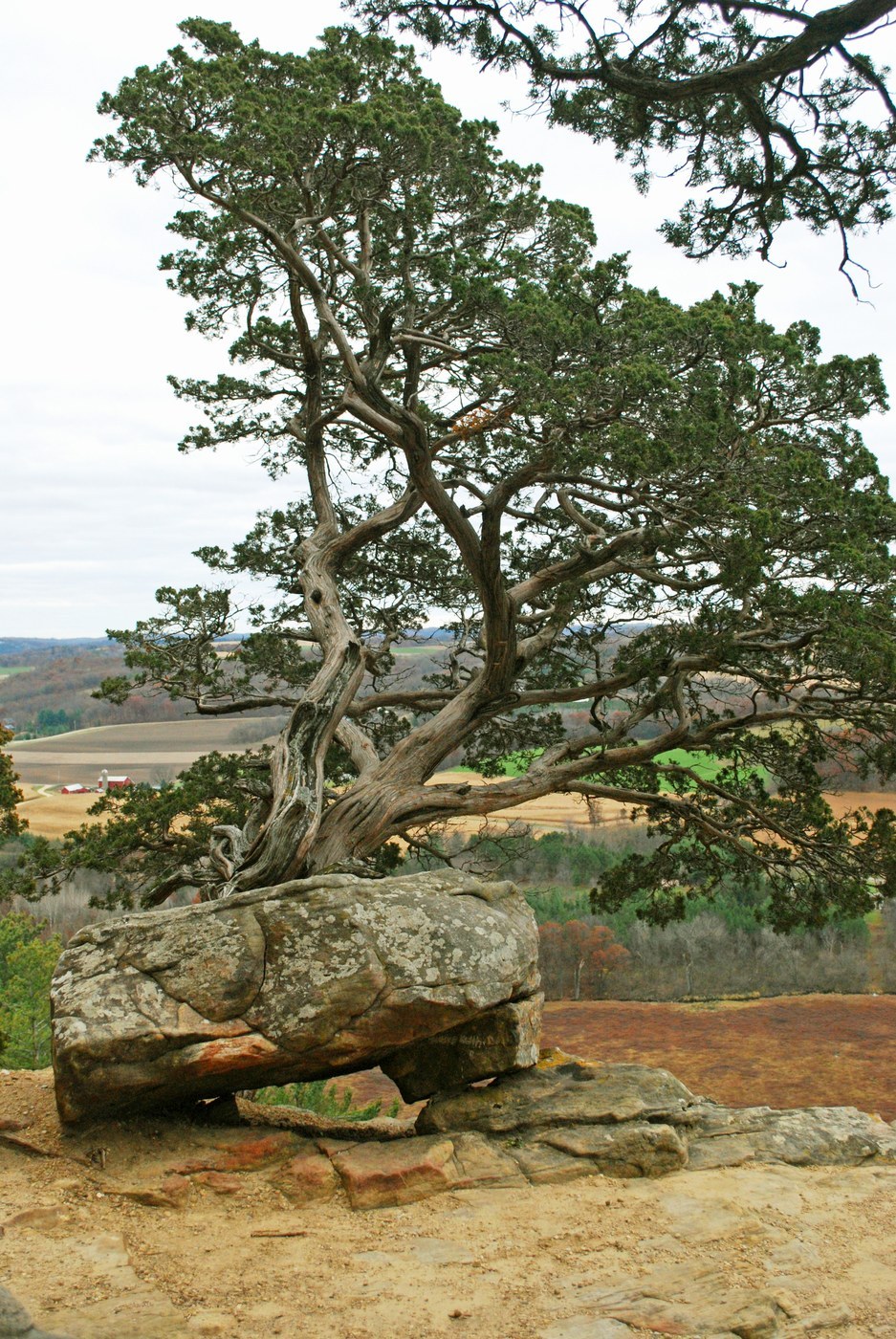
Key Identifying Features
Eastern Red Cedar (Juniperus virginiana) is not a true cedar but a juniper, the most widespread native conifer of eastern North America. It is typically a dense, pyramidal to columnar evergreen, 30-50 ft tall, often found colonizing old fields and fencerows. Diagnostic features include frosty blue berry-like cones, fibrous reddish-brown shredding bark, and a mix of prickly and scaly foliage.
- Form: dense, narrow pyramid to broad column
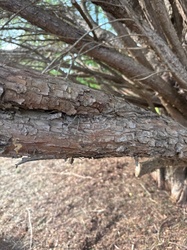
- Bark: reddish-brown, peeling in long thin strips
- Cones: small powder-blue "berries"
Leaves & Stems
The foliage is two kinds on the same tree: juvenile leaves are sharp, awl-shaped needles (especially on young plants and vigorous shoots), while mature leaves are tiny, scale-like, and pressed flat against rounded twigs. Foliage color is dark green, often turning bronzy or purple-brown in winter. The scale sprays are rounded and 3-dimensional (not the flat fans of arborvitae). Crushed foliage is strongly aromatic - a sharp, clean cedar scent (this is the wood used in cedar chests and pencils).
Flowers & Fruit
Eastern red cedar is usually dioecious (separate male and female trees). Female trees bear abundant small, round, fleshy cones that look like berries - about 1/4 inch, dark blue with a whitish, waxy bloom, ripening in fall. These "juniper berries" are eaten by birds (especially cedar waxwings), which spread the seeds. Male trees produce tiny golden-brown pollen cones that release clouds of yellow pollen in late winter.
How to Tell It Apart from Look-Alikes
- Arborvitae (Thuja): flat fan-shaped foliage and small dry woody upright cones - not berries.
- True cypress (Cupressus): woody ball cones, not blue berries.
- Other junipers (e.g., J. scopulorum, Rocky Mountain juniper): very similar; eastern red cedar is the dominant species in the East, tends to be denser, and has a more reddish, fissured trunk.
- The blue berry-like cones + reddish shredding bark + aromatic cedar scent + mixed prickly/scaly foliage confirm a juniper, specifically eastern red cedar in eastern North America.
Where You'll Find It
A tough pioneer species, it thrives in abandoned fields, pastures, roadsides, limestone glades and fencerows across the eastern and central U.S. It tolerates drought and poor soil and is a classic early-succession tree. (Note: it is an alternate host for cedar-apple rust, producing orange gelatinous galls in spring.)
Quick ID Checklist
- Mix of sharp awl-needles (juvenile) and flat scales (mature)
- Rounded 3-D foliage sprays, dark green bronzing in winter
- Small powder-blue berry-like cones on female trees
- Reddish-brown bark peeling in thin fibrous strips
- Strong cedar aroma when crushed; old fields and fencerows
Frequently asked questions
Is Eastern Red Cedar actually a cedar?
No. It is a juniper, *Juniperus virginiana*. True cedars (*Cedrus*) have needles in clusters and large barrel cones; this tree has scale/awl foliage and blue berry-like cones.
What are the blue 'berries'?
They are fleshy seed cones, about 1/4 inch and frosty blue, produced by female trees. Birds eat and spread them. The same structure flavors gin in related junipers.
Why does some foliage prick and some feel smooth?
Young growth and juvenile plants have sharp awl-shaped needles, while mature growth has smooth scale-like leaves. Both types often occur on the same tree.
What are the orange jelly-like blobs on it in spring?
Those are cedar-apple rust galls. Eastern red cedar is an alternate host for this fungus, which also infects apples and crabapples nearby.
Eastern Red Cedar identified by the community
Recent Eastern Red Cedar specimens identified with Plant Identifier.