False Sunflower Identification Guide
How to identify False Sunflower (Heliopsis helianthoides) by its golden-yellow daisy flowers with yellow (not brown) cone centers, opposite rough leaves, and long summer bloom.
Read the full False Sunflower encyclopedia entry →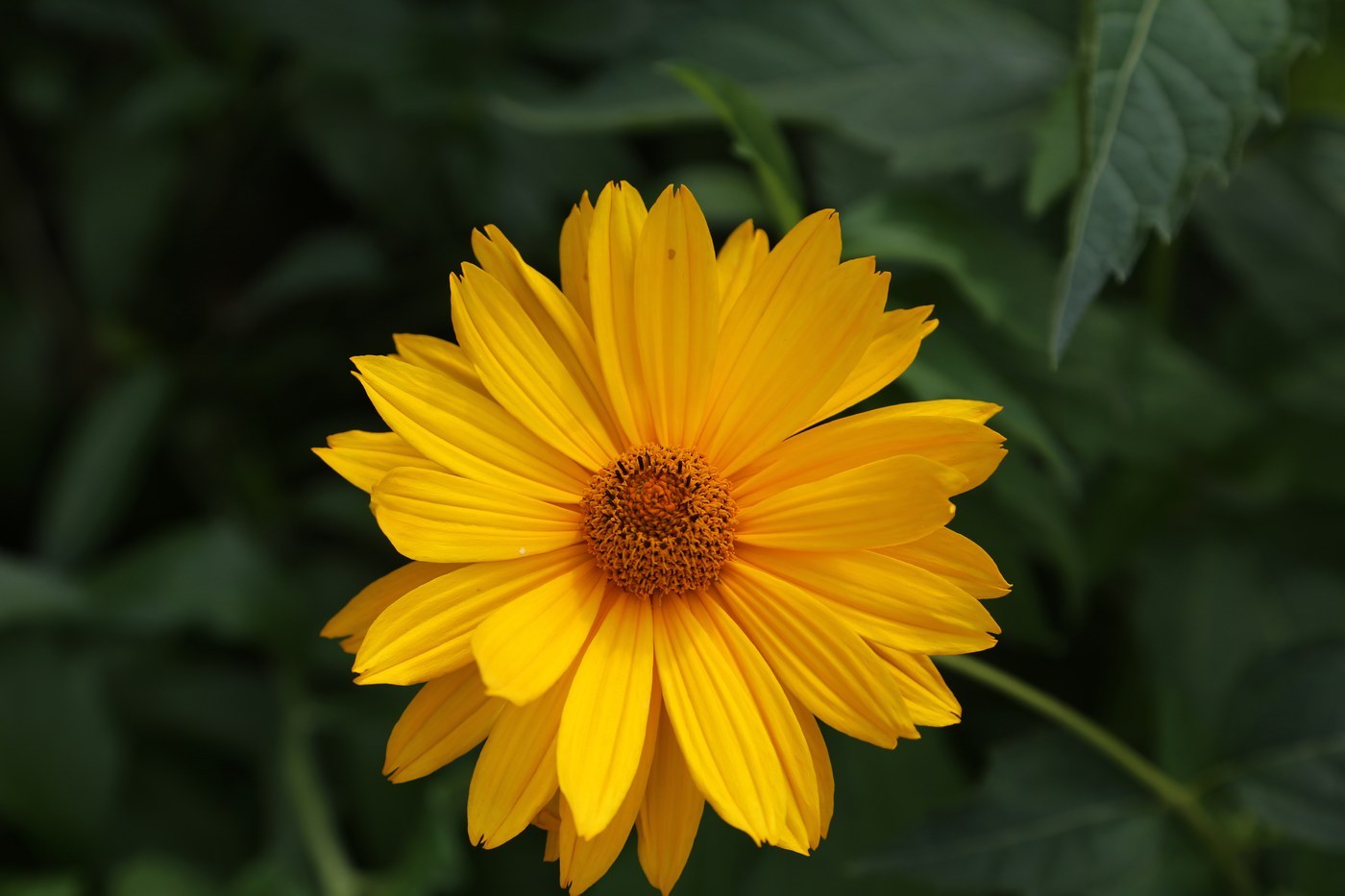
Key Identifying Features
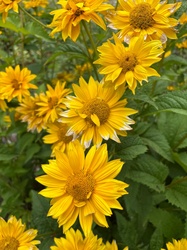
False Sunflower (Heliopsis helianthoides), also called oxeye sunflower, is a bushy native perennial that looks like a small sunflower. The key distinction from true sunflowers and black-eyed Susans is that its central disk is yellow to yellowish-brown, not dark brown or black, and its ray petals persist rather than quickly dropping.
- Golden-yellow daisy flowers, 1.5-3 inches across
- Center disk yellow to gold, not dark
- Bushy clumps 2-5 feet tall
- Long bloom from early summer into fall
Leaves & Stems
Leaves are arranged oppositely (an important clue), are triangular to lance-shaped (ovate), 3-5 inches long, with coarsely toothed margins, a pointed tip, and a rough, sandpapery texture. Each leaf has three main veins from near the base. Stems are stiff, branching toward the top, and often reddish.
Flowers & Fruit
Flower heads are typical of the daisy family: a ring of golden-yellow ray florets surrounding a central button of disk florets. The rays are broad and somewhat persistent, staying on as they fade. The disk is yellow to brownish-yellow and slightly raised (cone-like). Unlike true sunflowers, both the ray and disk florets are fertile and set seed. The fruit is a small, smooth, four-angled seed (achene), without the tuft of hairs (pappus) found on some daisy relatives.
How to Tell It Apart from Look-Alikes
- True sunflower (Helianthus): very similar, but Helianthus rays are sterile and the disk is usually darker; Heliopsis has fertile ray florets and a paler yellow disk, plus consistently opposite leaves.
- Black-eyed Susan (Rudbeckia): yellow rays but a dark brown-black raised cone center, versus False Sunflower's yellow center.
- Coreopsis: smaller, often notched-tipped petals and finer, frequently divided leaves.
The yellow center + opposite rough leaves + persistent yellow rays combination distinguishes False Sunflower.
Where You'll Find It
False Sunflower grows in prairies, open woods, meadows, roadsides, and stream banks across eastern and central North America, and is widely planted in sunny borders and pollinator gardens. It thrives in full sun and average to moist soil and blooms reliably and long. Look for its golden daisies humming with bees and butterflies from June through September.
Quick ID Checklist
- Golden-yellow daisy flowers, broad rays
- Center disk yellow/gold, not dark brown (vs. black-eyed Susan)
- Opposite, triangular, coarsely toothed, rough leaves
- Bushy clump 2-5 ft, long summer bloom
- Both rays and disk set seed (fertile rays)
A sunflower-like daisy with a yellow center and opposite, sandpapery leaves blooming all summer is False Sunflower.
Frequently asked questions
How is false sunflower different from a true sunflower?
False sunflower (Heliopsis) has fertile ray florets that set seed and a paler yellow disk, with consistently opposite leaves, while true sunflowers (Helianthus) have sterile rays and often a darker disk.
How do I tell it from black-eyed Susan?
Both have golden-yellow rays, but black-eyed Susan has a dark brown-black raised cone center, whereas false sunflower's central disk is yellow to gold.
Why is it called false sunflower?
It closely resembles a true sunflower in flower color and form but belongs to a different genus, Heliopsis, hence the name false or oxeye sunflower.
How long does false sunflower bloom?
It has an exceptionally long bloom season, flowering from early summer through fall, especially if spent flowers are deadheaded.
False Sunflower identified by the community
Recent False Sunflower specimens identified with Plant Identifier.