How to Care for Feverfew
Grow Feverfew (Tanacetum parthenium) for cheerful daisy blooms and aromatic foliage. An easy, sun-loving, self-seeding cottage-garden perennial.
Read the full Feverfew encyclopedia entry →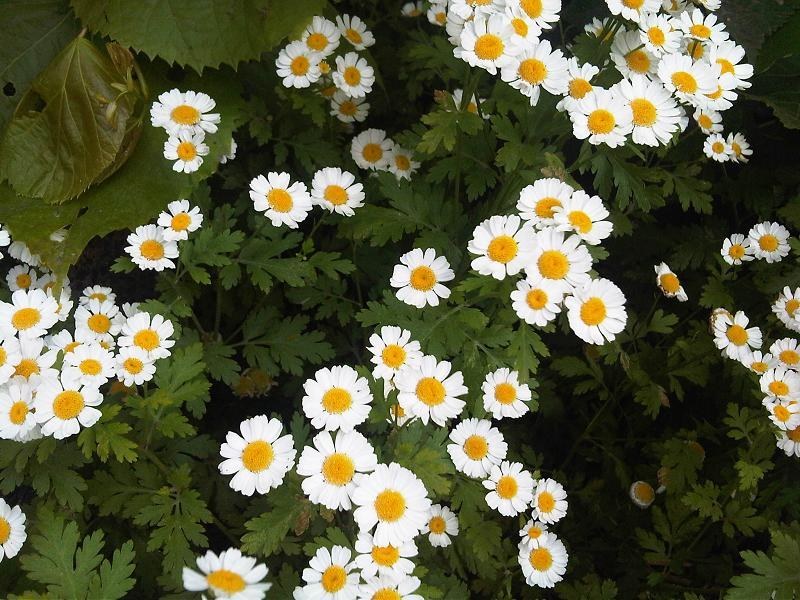
Feverfew (Tanacetum parthenium) is a bushy, aromatic short-lived perennial covered in small white daisy flowers with buttery-yellow centers all summer. Easy and vigorous, it self-seeds freely and suits cottage borders, edges, and containers, asking only for sun and decent drainage.
Light
Feverfew grows best in full sun but tolerates part shade, especially in hot climates where a little afternoon shade is welcome. More sun produces sturdier, bushier plants and heavier flowering. In deep shade it becomes lanky and blooms less.
Water
Water is moderate. Keep young plants and new sowings evenly moist while establishing. Mature plants are drought tolerant and prefer soil that dries somewhat between waterings; they dislike constantly soggy conditions. Water during dry spells, then let the surface dry before watering again.
Soil & Potting
Well-drained, average garden soil suits it well; it is not fussy and even tolerates poor ground. Sharp drainage matters more than fertility. For containers, use a free-draining general potting mix. Avoid heavy, waterlogged soils, which lead to root problems.
Humidity & Temperature
Feverfew is hardy and adaptable, handling a wide range of temperatures. It thrives in average outdoor humidity and appreciates good air circulation, which helps prevent foliar disease. In cold climates it may behave as a short-lived perennial or reseed itself to persist year to year.
Feeding
Feeding needs are minimal. A single light application of balanced fertilizer or a topdressing of compost in spring is plenty. Over-fed plants grow soft and leggy with weaker flowering, so keep nutrition modest for compact, floriferous growth.
Propagation
Feverfew is easily raised from seed, which it scatters generously on its own; sow on the surface in spring as it needs light to germinate. You can also divide clumps in spring or take softwood cuttings in early summer, both of which root readily.
Repotting / Pruning
Shear plants back after the first flush of bloom to encourage rebloom and keep them tidy and bushy. Cut back hard in late fall or early spring. To limit its enthusiastic self-seeding, remove spent flower heads before they set seed. Repot or divide container plants each spring.
Common Problems & Pests
Feverfew is largely trouble-free. Aphids may cluster on new growth and can be rinsed off. Powdery mildew or leaf spot can appear in crowded, damp, poorly ventilated conditions, so space plants and improve airflow. Good drainage prevents most root issues.
Seasonal Care Tips
In spring, sow or divide, and cut back old growth. Through summer, deadhead and shear after the first bloom to prompt a second flush, watering in dry spells. In fall, cut back and decide whether to let a few seed heads ripen for self-sown replacements. In winter the plant rests, re-emerging or reseeding come spring.
Frequently asked questions
Is feverfew a perennial or annual?
It is a short-lived perennial that often behaves like a biennial or annual. It persists reliably because it self-seeds so freely, with new plants replacing older ones.
How do I stop feverfew from spreading everywhere?
Deadhead the flowers before they set seed. Removing spent blooms prevents the heavy self-sowing that lets feverfew pop up all over the garden.
Will feverfew rebloom if I cut it back?
Yes. Shearing the plant back after its first flush of flowers encourages a fresh round of bloom and keeps the plant compact and bushy.
Can feverfew grow in partial shade?
Yes, it tolerates part shade, which is helpful in hot climates. It flowers most heavily and stays sturdiest in full sun, though.
Feverfew identified by the community
Recent Feverfew specimens identified with Plant Identifier.