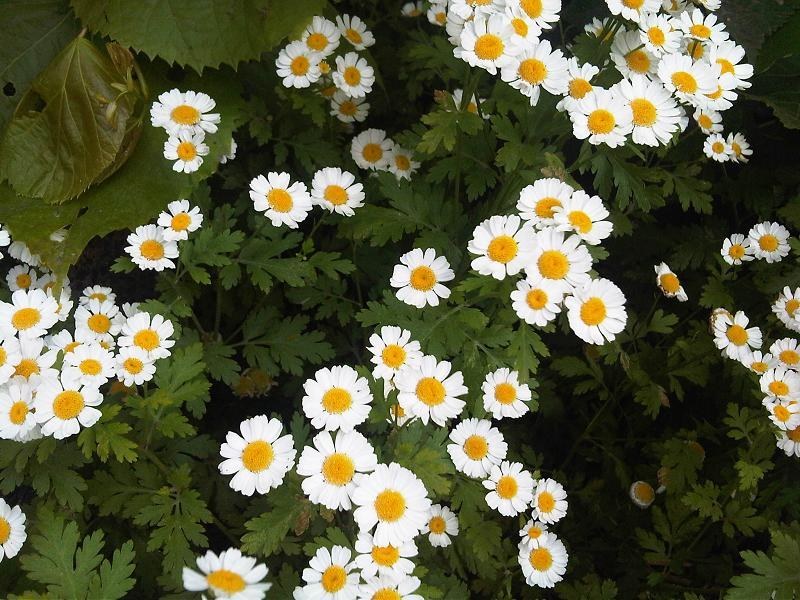
Feverfew
Tanacetum parthenium
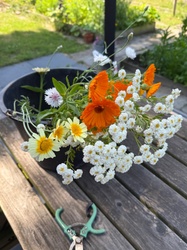
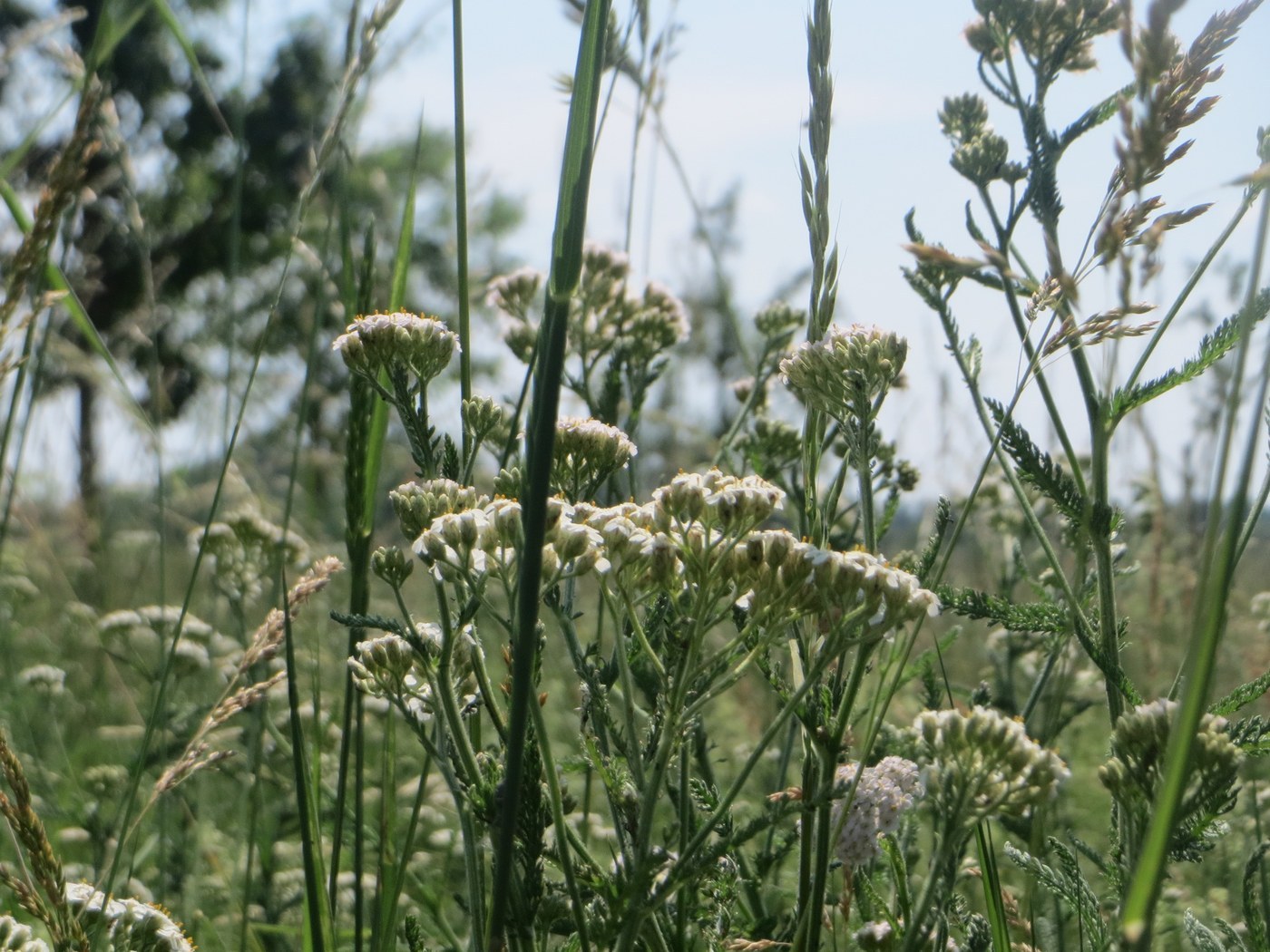
Feverfew is a bushy, aromatic herb covered in small white daisy flowers with yellow centers. It is a cheerful, easy cottage-garden plant with feathery, citrus-scented foliage.
- Light
- Full sun to part shade
- Water
- Moderate; drought-tolerant once established
- Difficulty
- Easy
Got a plant like this?
Identify any plant from a photo, free.
Overview
Feverfew (Tanacetum parthenium) is a short-lived perennial herb in the daisy family (Asteraceae). It forms a bushy mound of citrus-scented, feathery foliage smothered in masses of small white, yellow-centered daisies through summer.
It self-seeds freely and pops up readily around the garden, forming new plants wherever conditions suit.
Easy and cheerful, feverfew suits cottage gardens, herb gardens, and informal borders.
How to identify it
Recognize feverfew by its small daisies and pungent, ferny leaves.
- Flowers: Numerous small daisy-like blooms, about 0.75 inch across, with white rays and flat yellow centers
- Leaves: Yellow-green, feathery, deeply divided, and strongly aromatic when crushed
- Size: 1 to 2 feet tall, forming a rounded, bushy clump
- Scent: Pungent, citrusy aroma
- Bloom time: Summer into early autumn
Care & growing
An undemanding herb that thrives almost anywhere sunny.
- Light: Full sun to part shade
- Water: Moderate; drought-tolerant once established
- Soil: Average, well-drained soil; tolerates poor conditions
- Temperature: Hardy in USDA zones 5 to 9; often grown as a short-lived perennial or self-seeding annual
- Feeding: Little needed; rich soil reduces flowering
- Propagation: Seed (it self-sows abundantly), division, or cuttings; deadhead to limit spread
Habitat & origin
Native to the mountainous regions of the Balkans and Asia Minor, feverfew has naturalized widely across Europe, North America, and beyond.
It grows readily in herb gardens, cottage borders, and disturbed sunny ground. It is commonly cultivated ornamentally throughout temperate regions.
Frequently asked questions
Is feverfew the same as chamomile?
No, though it is sometimes called wild chamomile. The flowers look similar, but feverfew is a different, more pungent plant.
Does feverfew spread?
Yes, it self-seeds freely and can pop up throughout the garden. Deadheading helps keep it in check.
What does feverfew look like?
It forms a bushy, 1 to 2 foot mound of feathery, citrus-scented leaves covered in small white daisies with flat yellow centers through summer.
How do I grow feverfew?
Give it full sun to part shade and average, well-drained soil. It is drought-tolerant once established and self-sows readily, so deadhead to limit its spread.
Feverfew guides
In-depth guides for identifying, growing, and caring for Feverfew.
How to Care for Feverfew
Grow Feverfew (Tanacetum parthenium) for cheerful daisy blooms and aromatic foliage. An easy, sun-loving, self-seeding cottage-garden perennial.
Feverfew Identification Guide
Identify Tanacetum parthenium by its small white daisies with flat yellow centers, ferny aromatic leaves, and bushy habit.
Feverfew identified by the community
Real specimens identified with Plant Identifier.