Feverfew Identification Guide
Identify Tanacetum parthenium by its small white daisies with flat yellow centers, ferny aromatic leaves, and bushy habit.
Read the full Feverfew encyclopedia entry →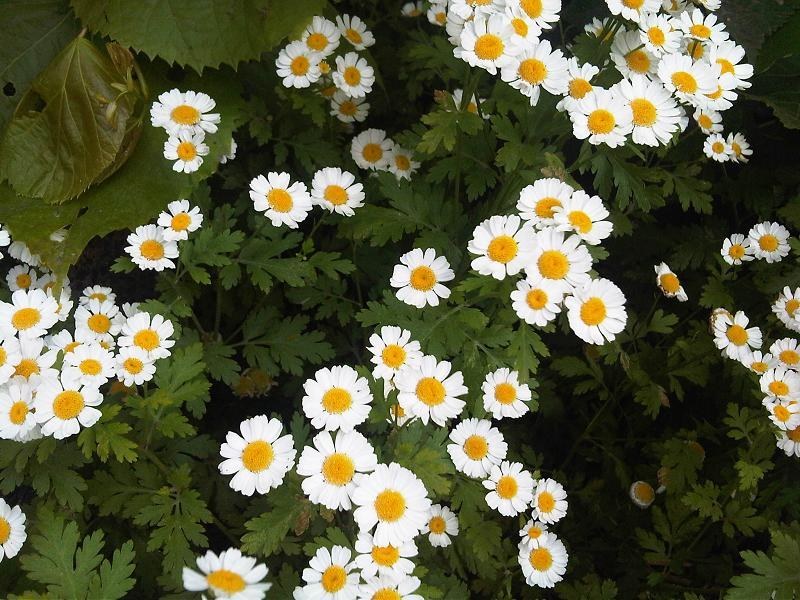
Key Identifying Features
Feverfew (Tanacetum parthenium, formerly Chrysanthemum parthenium) is a bushy, aromatic herb in the daisy family. Look for:
- Many small daisy flowers (about 3/4 in across) with white ray petals and a flat yellow center
- Yellow-green, ferny, deeply lobed leaves with a strong, bitter, chrysanthemum-like scent
- A bushy, branching habit 1-2 ft tall
- Profuse, clustered (flat-topped) bloom in summer
Leaves & Stems
Leaves are alternate, pinnately divided into rounded, toothed lobes, giving a soft ferny look, and are yellowish-green (chartreuse in the golden form 'Aureum'). When crushed they emit a pungent, bitter aroma — a key identifier. Stems are erect, branching, finely ridged, and slightly downy, forming a rounded bushy plant. The whole plant has a fresh, citrusy-bitter herbal smell.
Flowers & Fruit
Blooming all summer, the flowers appear in loose, flat-topped clusters at the stem tips. Each head is a small daisy with about 10-20 short white ray florets surrounding a broad, flattened yellow disk — the disk is notably flat and prominent relative to the short petals. Double-flowered forms exist (button-like, all-white). Flowers are very numerous. Seeds are tiny, ribbed achenes, and feverfew self-seeds prolifically, often naturalizing.
How to Tell It Apart from Look-Alikes
- Chamomile (Matricaria/Chamaemelum) — very similar white daisies, but chamomile has finely thread-like, feathery leaves (not lobed-leaflet) and a sweet apple scent; feverfew's leaves are broader-lobed and bitter-smelling, and its flower disk is flatter.
- Ox-eye daisy (Leucanthemum) — larger single daisies on taller stems with spoon-shaped basal leaves, not bushy and ferny.
- Tansy (Tanacetum vulgare) — a close relative, but with button-like rayless yellow flowers and ferny aromatic leaves.
- Mayweed — similar but foul-smelling with thread-fine leaves.
The bushy clusters of small white-petaled, flat-yellow-centered daisies plus bitter ferny yellow-green foliage identify feverfew.
Where You'll Find It
Native to the Balkans and Eurasia, feverfew is now widely naturalized worldwide along roadsides, waste ground, walls, and garden edges. It thrives in sun to part shade and poor soils, self-seeding readily. It's also grown as an ornamental herb. Look for its daisy clusters all summer.
Quick ID Checklist
- Bushy plant 1-2 ft tall
- Many small white daisies with flat yellow centers
- Yellow-green, ferny, lobed leaves
- Strong bitter aroma when crushed
- Flat-topped flower clusters; abundant self-seeding
A bushy herb covered in little white-and-yellow daisies with pungent ferny foliage is feverfew.
Frequently asked questions
How do I tell feverfew from chamomile?
Both have small white daisies, but feverfew has broader, lobed, bitter-smelling leaves and a flatter yellow disk, while chamomile has thread-fine, sweet-apple-scented foliage and a more domed center.
Does feverfew smell?
Yes. Crushing the leaves releases a strong, bitter, chrysanthemum-like aroma, which is a reliable identification clue.
Is feverfew related to tansy?
Yes, both are in the genus Tanacetum. Tansy has rayless yellow button flowers, while feverfew has classic white-petaled daisies.
Why is feverfew growing everywhere in my garden?
It self-seeds prolifically and naturalizes easily in sunny, disturbed, or poor soils, so it spreads readily once established.
Feverfew identified by the community
Recent Feverfew specimens identified with Plant Identifier.