Ginger Identification Guide
Recognize ginger by its knobbly aromatic rhizome, reed-like leafy stems, and lance-shaped two-ranked leaves. Includes how to distinguish it from turmeric, galangal, and ornamental gingers.
Read the full Ginger encyclopedia entry →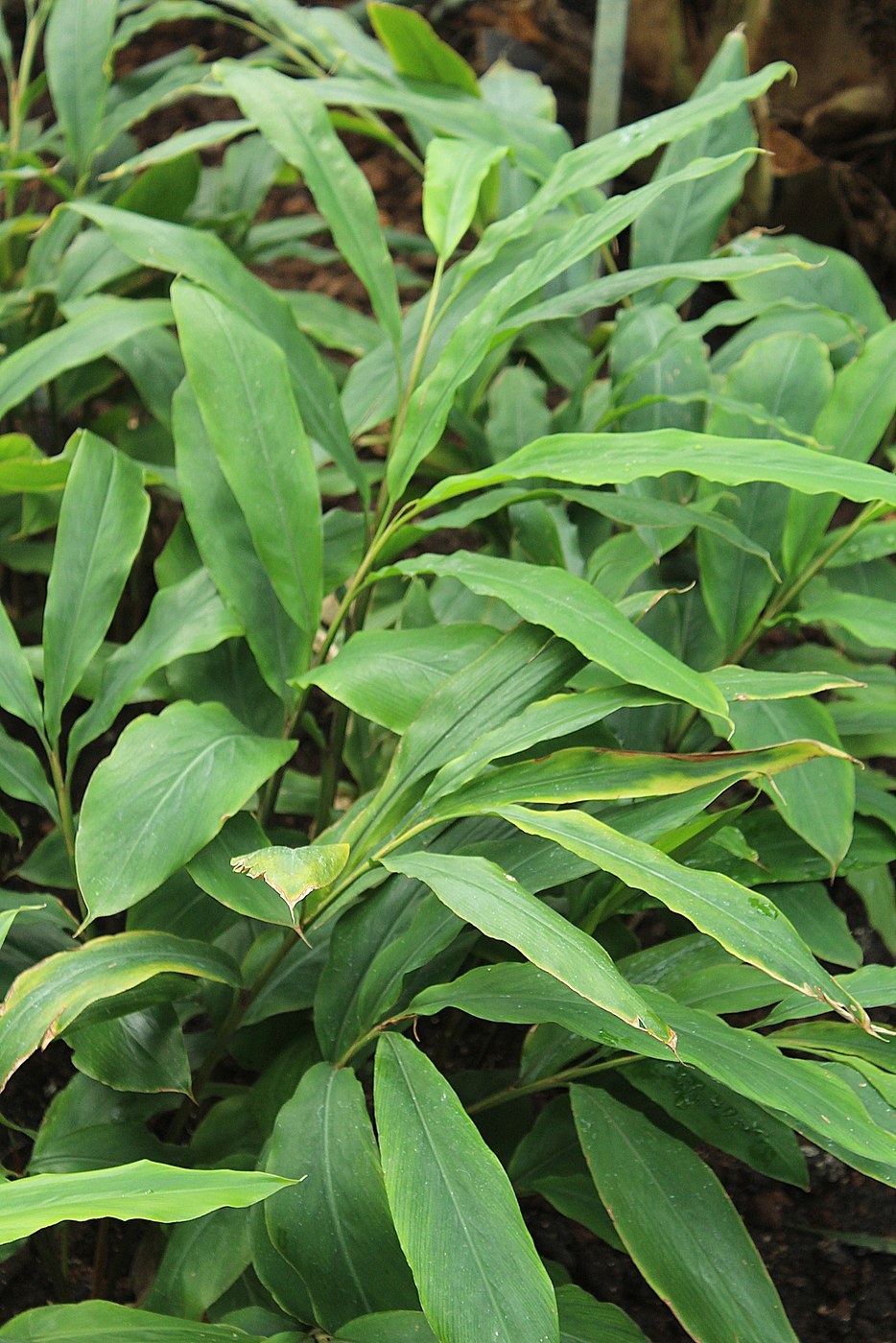
Key Identifying Features
Ginger (Zingiber officinale) is a tropical perennial in the ginger family (Zingiberaceae). Its signature feature is the knobbly, branching underground rhizome with pale yellow flesh and a sharp, warm, spicy-citrus aroma. Above ground it forms clumps of reed-like leafy stems (pseudostems) to about 1 m tall bearing narrow lance-shaped leaves in two opposite rows.
Leaves & Stems
- The upright stems are actually pseudostems formed by tightly rolled leaf sheaths.
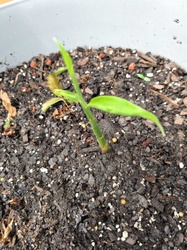
- Leaves are narrow, lance-shaped (lanceolate), 15-30 cm long, arranged alternately in two ranks along the stem.
- Leaves are smooth, glossy, with a prominent midrib and parallel veins; they smell faintly gingery when crushed.
- The rhizome is horizontal, finger-like and branching, buff-colored skin with aromatic pale flesh.
Flowers & Fruit
- True ginger rarely flowers in cultivation. When it does, it produces a cone-like spike on a separate short stalk from the base.
- The spike has overlapping green-to-yellow bracts; small yellow-green flowers with a purple, cream-flecked lip emerge between them.
- Fruit (a capsule) is seldom formed in cultivated plants.
How to Tell It Apart from Look-Alikes
- Turmeric (Curcuma longa) has wider, more oval-elliptic leaves, taller broad foliage, and a rhizome with bright orange interior versus ginger's pale yellow.
- Galangal (Alpinia spp.) has a harder, paler, more fibrous rhizome with a sharper pine-citrus smell and reddish rings.
- Ornamental shell/torch gingers have showier flowers but much larger, broader leaves and woody rhizomes.
- The reliable test is the rhizome cut: pale yellow aromatic flesh with the classic spicy-warm ginger smell.
Where You'll Find It
Ginger is grown in warm, humid tropical and subtropical regions and in pots or greenhouses elsewhere. It thrives in rich, moist, well-drained soil with partial shade. It is a crop plant, not naturally wild, though it can persist in old plantations.
Quick ID Checklist
- Knobbly branching rhizome with pale yellow aromatic flesh
- Reed-like pseudostems to ~1 m
- Two-ranked, narrow lance-shaped leaves
- Spicy-warm ginger smell from cut rhizome
- Rare cone-like flower spike from the base, not the leafy stem
Frequently asked questions
How do I tell ginger from turmeric?
Cut the rhizome: ginger is pale yellow inside while turmeric is bright orange. Turmeric also has broader, more oval leaves, whereas ginger leaves are narrow and lance-shaped.
Why doesn't my ginger plant flower?
Cultivated ginger rarely flowers, especially outside the tropics. It is grown for its rhizome and spreads vegetatively, so flowering is uncommon.
What does the ginger flower look like?
When it appears, the flower is a cone-shaped spike of overlapping bracts rising on a short separate stalk from the base, with small yellow-green flowers bearing a purple, cream-spotted lip.
Is the upright green stem the true stem of ginger?
No, it is a pseudostem formed by tightly wrapped leaf sheaths. The true stem is the horizontal underground rhizome.
Ginger identified by the community
Recent Ginger specimens identified with Plant Identifier.