Grape Ivy Identification Guide
How to identify Grape Ivy (Cissus rhombifolia / alata), a grape-family vine with glossy three-part leaves and curling tendrils, not a true ivy.
Read the full Grape Ivy encyclopedia entry →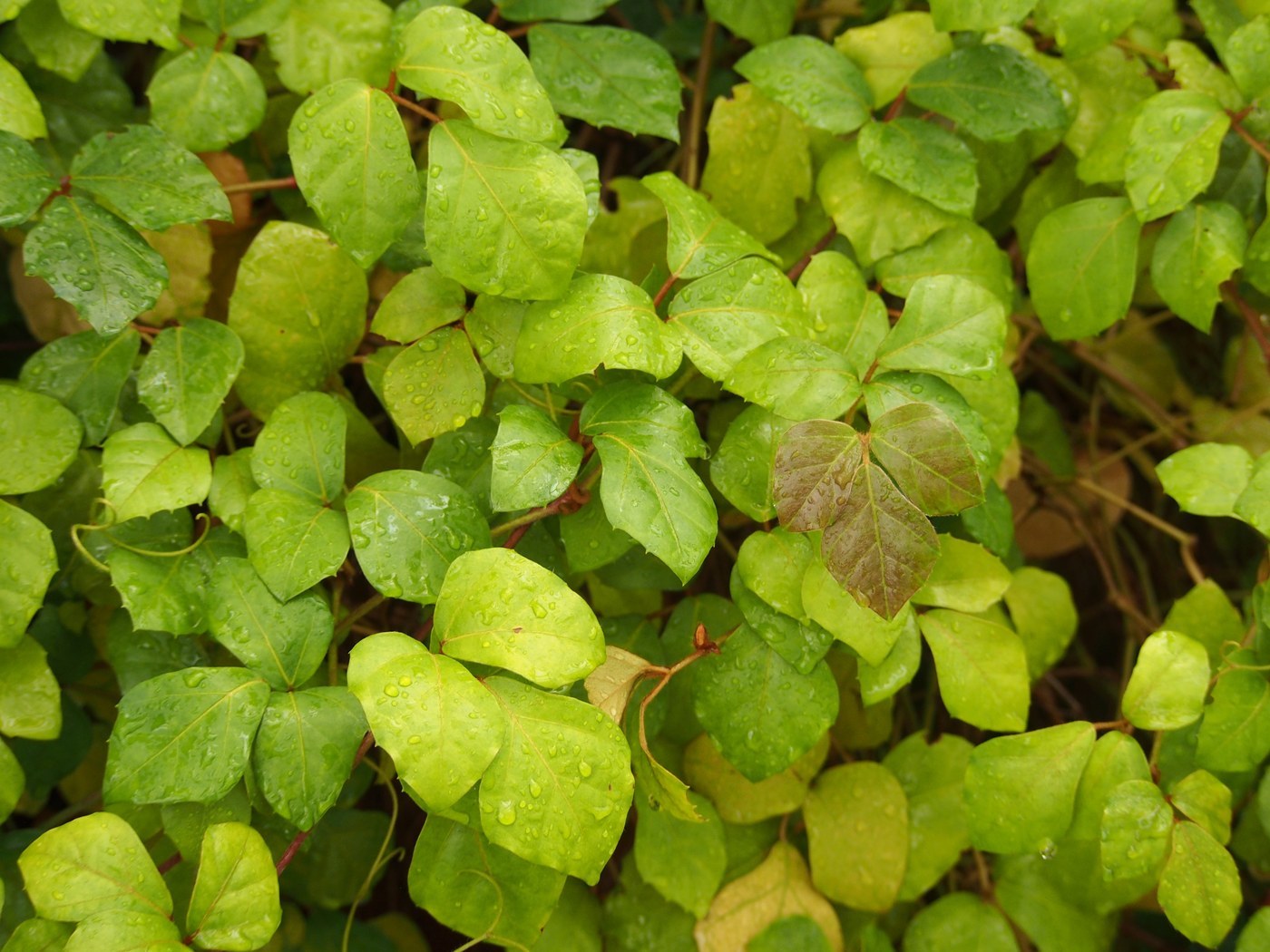
Key Identifying Features
Grape Ivy (Cissus rhombifolia, also sold as C. alata) is a member of the grape family (Vitaceae), not a true ivy. The giveaways are its compound leaves divided into three diamond-shaped (rhombic) leaflets and the forked curling tendrils it uses to climb, just like a grapevine.
- Leaves split into 3 diamond-shaped leaflets
- Curling, forked tendrils opposite the leaves
- Toothed leaflet margins, glossy green tops
- Trailing/climbing vine habit
Leaves & Stems
Each leaf is compound with three glossy, toothed, rhombic (diamond) leaflets, the central one largest. New growth is often covered in fine silvery or brownish hairs, especially on the undersides and young stems, giving a slightly fuzzy bronze look that ages to smooth green.
The stems are thin and flexible and produce tendrils (modified shoots) that coil around supports, the classic grape-family climbing method. This lets Grape Ivy climb a trellis or trail from a hanging basket. The leaflet edges are clearly serrated (toothed).
Flowers & Fruit
Indoor flowering is rare and insignificant; small greenish flower clusters and tiny berries can form on mature outdoor plants. It is grown almost entirely as a foliage vine.
How to Tell It Apart from Look-Alikes
- True ivy (Hedera): Has single lobed (palmate) leaves and climbs by aerial rootlets, never tendrils; Grape Ivy has three-part diamond leaflets and grape-like tendrils.
- Oakleaf ivy (Cissus alata 'Ellen Danica'): A closely related cultivar with more deeply lobed leaflets; still has tendrils and the grape-family habit.
- Kangaroo vine (Cissus antarctica): Has simple (undivided) toothed leaves, not three leaflets.
- Poison ivy: Also '3 leaflets' but has untoothed-to-irregular leaflets, no tendrils, and grows outdoors wild; Grape Ivy is a tendrilled, fine-toothed houseplant.
Where You'll Find It
A classic hanging-basket and trellis houseplant, tolerant of lower light and popular in offices and homes. Native to the Americas. It likes bright indirect light and moderate moisture.
Quick ID Checklist
- Three diamond-shaped, toothed leaflets per leaf
- Curling, forked tendrils for climbing
- Silvery/brown hairs on new growth
- Glossy green, vining/trailing habit
- In the grape family, NOT a true ivy
If you see a vine with glossy three-part diamond leaflets and coiling grape-like tendrils, it is Grape Ivy.
Frequently asked questions
Is Grape Ivy a true ivy?
No. It is Cissus rhombifolia, a member of the grape family (Vitaceae). True ivies (Hedera) have single lobed leaves and climb by aerial roots, while Grape Ivy has three diamond-shaped leaflets and climbs with tendrils.
How do I tell Grape Ivy from poison ivy?
Both can show three leaflets, but Grape Ivy has finely toothed, glossy diamond leaflets and produces curling tendrils, and it is a cultivated houseplant. Poison ivy has no tendrils, smoother-edged leaflets, and grows wild outdoors.
Why does new growth look fuzzy or bronze?
Young leaves and stems of Grape Ivy are covered in fine silvery to brownish hairs, which give a bronze, fuzzy appearance before the leaves mature to smooth glossy green.
What conditions does Grape Ivy prefer?
It thrives in bright indirect light with moderate, even moisture, and its tendrils let it climb a trellis or trail from a hanging basket. It tolerates lower light, which makes it popular in offices and homes.
Grape Ivy identified by the community
Recent Grape Ivy specimens identified with Plant Identifier.