Hawthorn Tree Identification Guide
How to identify Hawthorn (Crataegus) by its thorny branches, lobed toothed leaves, clusters of white spring flowers, and red autumn haws.
Read the full Hawthorn Tree encyclopedia entry →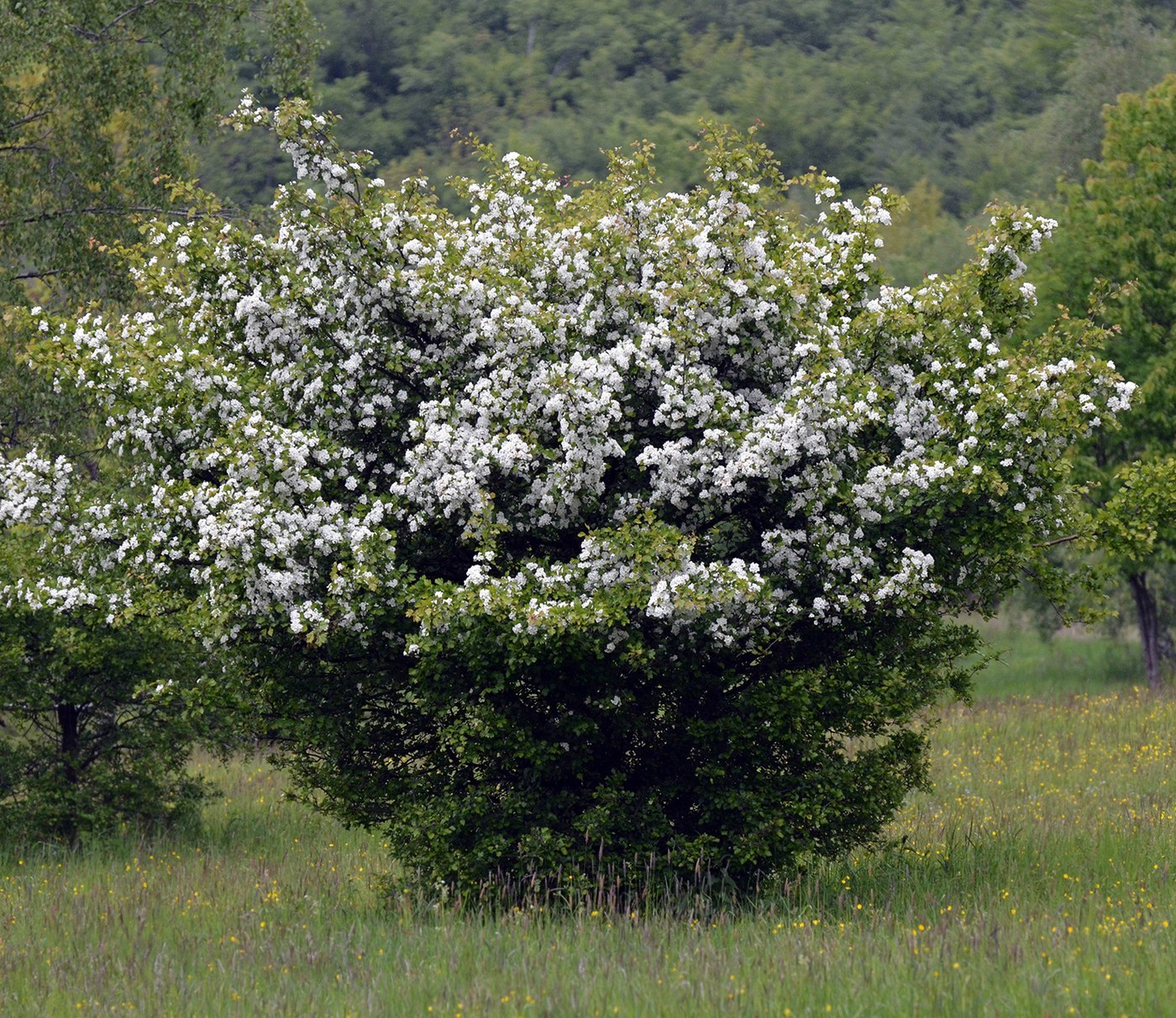
Key Identifying Features
Hawthorn (Crataegus species) is a thorny small tree or large shrub of hedgerows and woodland edges, easily known by its sharp thorns, clusters of white blossom, and red berry-like haws.
- Stiff, sharp thorns along the twigs and branches
- Small lobed and toothed leaves
- Dense flat-topped clusters of white (sometimes pink) flowers in late spring
- Clusters of red 'haws' (berry-like pomes) in autumn
- Dense, twiggy small tree or shrub, usually 3-10 m tall
Leaves & Stems
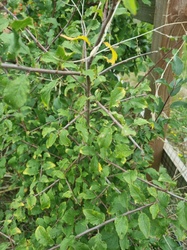
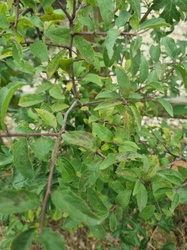
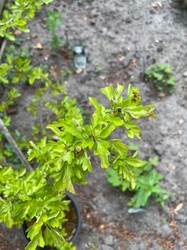
Leaves are alternate, small (2-6 cm), and deeply lobed with toothed margins — the common European hawthorn (Crataegus monogyna) has 3-7 deep lobes cut more than halfway to the midrib, while some species have shallower lobes or coarse teeth. Leaves are glossy green above, paler below.
The twigs bear straight, sharp thorns 1-3 cm long (modified shoots) — a defining feature. The plant is densely twiggy, forming an excellent hedge. Bark is gray-brown, becoming finely fissured or scaly with age.
Flowers & Fruit
- Flowers appear in May (the 'May tree') in flattened clusters (corymbs), each blossom white with five petals and a cluster of pink-tipped stamens; some species and cultivars are pink or red. The blossom has a strong, slightly musky scent.
- Fruit is the 'haw', a small round to oval red pome 6-14 mm wide, ripening in autumn and persisting into winter. Each contains 1-5 hard nutlets (single-seeded in C. monogyna, a key ID detail). Haws are an important wildlife food.
How to Tell It Apart from Look-Alikes
- Blackthorn (Prunus spinosa) also has thorns and white flowers but blooms earlier on bare black twigs, has unlobed oval leaves, and bears blue-black sloes, not red haws.
- Crab apple has larger, unlobed leaves and larger apple-like fruit without thorns of this type.
- Rowan has pinnate (feather-like) leaves, not lobed simple ones, and lacks thorns.
- The thorns + lobed leaves + white May blossom + red haws combination identifies hawthorn.
Where You'll Find It
Native across Europe, North Africa, western Asia, and (other species) North America, hawthorn is one of the most common hedgerow, woodland-edge, and scrubland trees. It is widely planted for hedging, wildlife, and ornament, thriving in almost any soil in sun or light shade.
Quick ID Checklist
- Sharp thorns on twigs and branches
- Small lobed, toothed leaves
- Flat clusters of white (or pink) five-petaled flowers in late spring
- Red berry-like haws in autumn, persisting into winter
- Dense twiggy small tree/shrub, common in hedgerows
Frequently asked questions
What is the difference between common and Midland hawthorn?
Common hawthorn (Crataegus monogyna) has deeply lobed leaves and haws with a single seed, while Midland hawthorn (C. laevigata) has shallower-lobed leaves and haws with two or more seeds. The seed count in the haw is the classic separator.
What features confirm a hawthorn?
Look for the combination of stiff sharp thorns, small deeply lobed toothed leaves, flat-topped clusters of white five-petaled flowers in late spring, and red berry-like haws in autumn.
How do I tell hawthorn from blackthorn?
Hawthorn has lobed leaves, blooms in May with leaves already out, and bears red haws. Blackthorn flowers earlier on bare black twigs before its leaves, has oval unlobed leaves, and produces blue-black sloes.
Why is it called the May tree?
Common hawthorn typically flowers in May, and its blossom (called 'may') is strongly associated with that month and with traditional May Day celebrations across Britain and Europe.
Hawthorn Tree identified by the community
Recent Hawthorn Tree specimens identified with Plant Identifier.