Hibiscus Identification Guide
Identify hibiscus by its large funnel-shaped five-petaled flowers, prominent central staminal column, and toothed alternate leaves.
Read the full Hibiscus encyclopedia entry →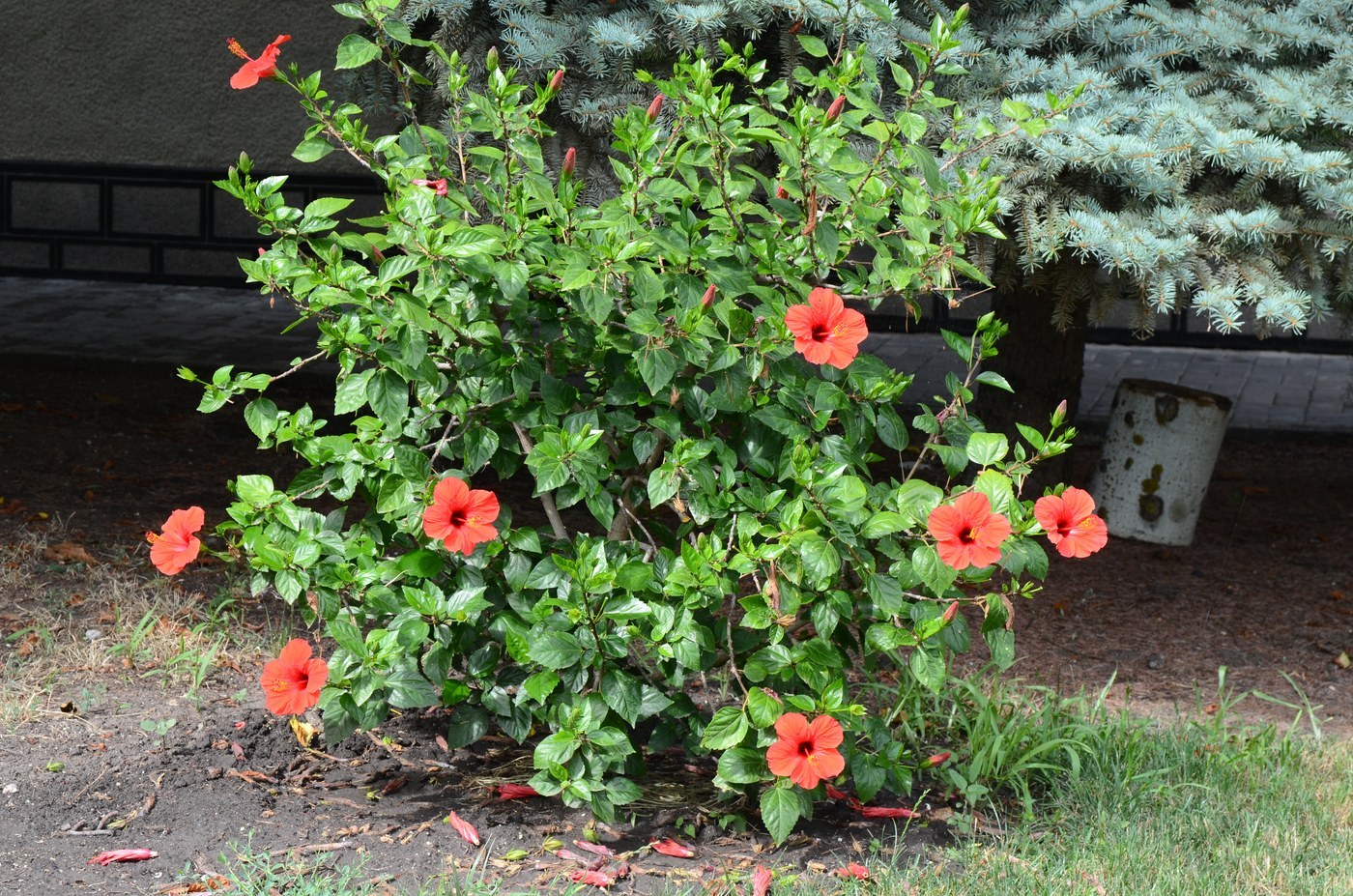
Key Identifying Features
Hibiscus (Hibiscus species, mallow family) ranges from tropical shrubs to hardy perennials, all sharing a striking flower structure. Identify them by:
- Large, showy, funnel- or saucer-shaped flowers with five overlapping petals
- A long, prominent central staminal column carrying many stamens and a five-branched stigma projecting beyond the petals
- A distinct contrasting throat (often dark red or maroon) at the flower's center
- Alternate, toothed leaves, often ovate to lobed with palmate veins
- Flowers that frequently last only a day or two
Leaves & Stems
Hibiscus leaves are alternate, simple, and broadly ovate to lance-shaped or lobed, with toothed (serrated) margins and palmate or pinnate veining. Tropical hibiscus (H. rosa-sinensis) has glossy dark green leaves on woody stems; hardy hibiscus (H. moscheutos) has larger, sometimes felty leaves on tall herbaceous stems; rose of Sharon (H. syriacus) is a woody shrub with three-lobed leaves. Stems are tough and fibrous; the bark of some species yields strong fibers.
Flowers & Fruit
The flower is unmistakable. Five (sometimes more in doubles) broad, often crepe-textured petals form a bowl or trumpet up to 15-30 cm wide in some types. The defining feature is the monadelphous staminal column: the stamens are fused into a tube around the style, with the five-knobbed stigma held at the tip, projecting well past the petals. A ring of small bracts (the epicalyx) sits beneath the green calyx. Colors include red, pink, white, yellow, orange, and bicolors. After flowering a five-chambered dry capsule forms, splitting to release kidney-shaped seeds.
How to Tell It Apart from Look-Alikes
- Rose mallow and other mallows (Malva, Lavatera, Alcea/hollyhock) share the staminal column but generally have smaller or differently shaped flowers; hollyhocks grow as tall spires.
- Morning glory has funnel flowers too but they are fused into a single trumpet with no protruding stamen column, and the plant is a twining vine.
- Camellia and rose lack the central fused staminal column entirely.
- The decisive hibiscus trait is the long central column of fused stamens with the five-part stigma protruding from a five-petaled funnel flower.
Where You'll Find It
Tropical hibiscus grows in warm gardens, patios, and as houseplants; hardy hibiscus and rose of Sharon are grown in temperate borders and hedges. Wild mallows and hibiscus occur in marshes, riverbanks, and disturbed sunny ground. They like full sun and moist, fertile soil.
Quick ID Checklist
- Large funnel- or saucer-shaped flower with five petals
- Long central staminal column with protruding five-part stigma
- Dark contrasting throat at flower center
- Alternate, toothed, palmately veined leaves
- Small bracts (epicalyx) under the calyx
- Blooms often last only a day
A bold five-petaled funnel flower with a long stamen column jutting from its center is the hallmark of a hibiscus.
Frequently asked questions
What is the long stalk sticking out of a hibiscus flower?
It is the staminal column, a tube of fused stamens surrounding the style, tipped by a five-knobbed stigma. This protruding column is the single most reliable hibiscus identifier.
How do I tell hibiscus from morning glory?
Hibiscus has five distinct petals and a long protruding stamen column, while morning glory has a single fused trumpet with no projecting column, and grows as a twining vine.
Why does my hibiscus flower only last one day?
Many hibiscus blooms naturally open for just a day or two, then close and drop. Healthy plants produce a steady succession of new flowers, so the display continues.
Is rose of Sharon a hibiscus?
Yes. Rose of Sharon (Hibiscus syriacus) is a hardy woody hibiscus with the same five-petaled flower and staminal column, just smaller and more cold-tolerant than tropical types.
Hibiscus identified by the community
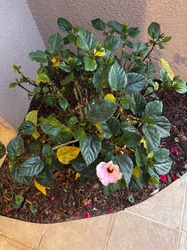
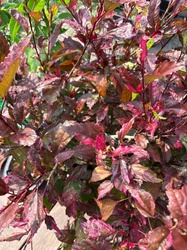
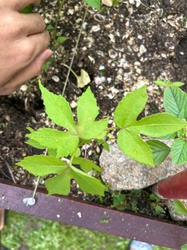
Recent Hibiscus specimens identified with Plant Identifier.