
How to Care for Hollywood Juniper
Grow the twisting, sculptural Hollywood Juniper with full sun, sharp drainage, and minimal watering once established.
Read the full Hollywood Juniper encyclopedia entry →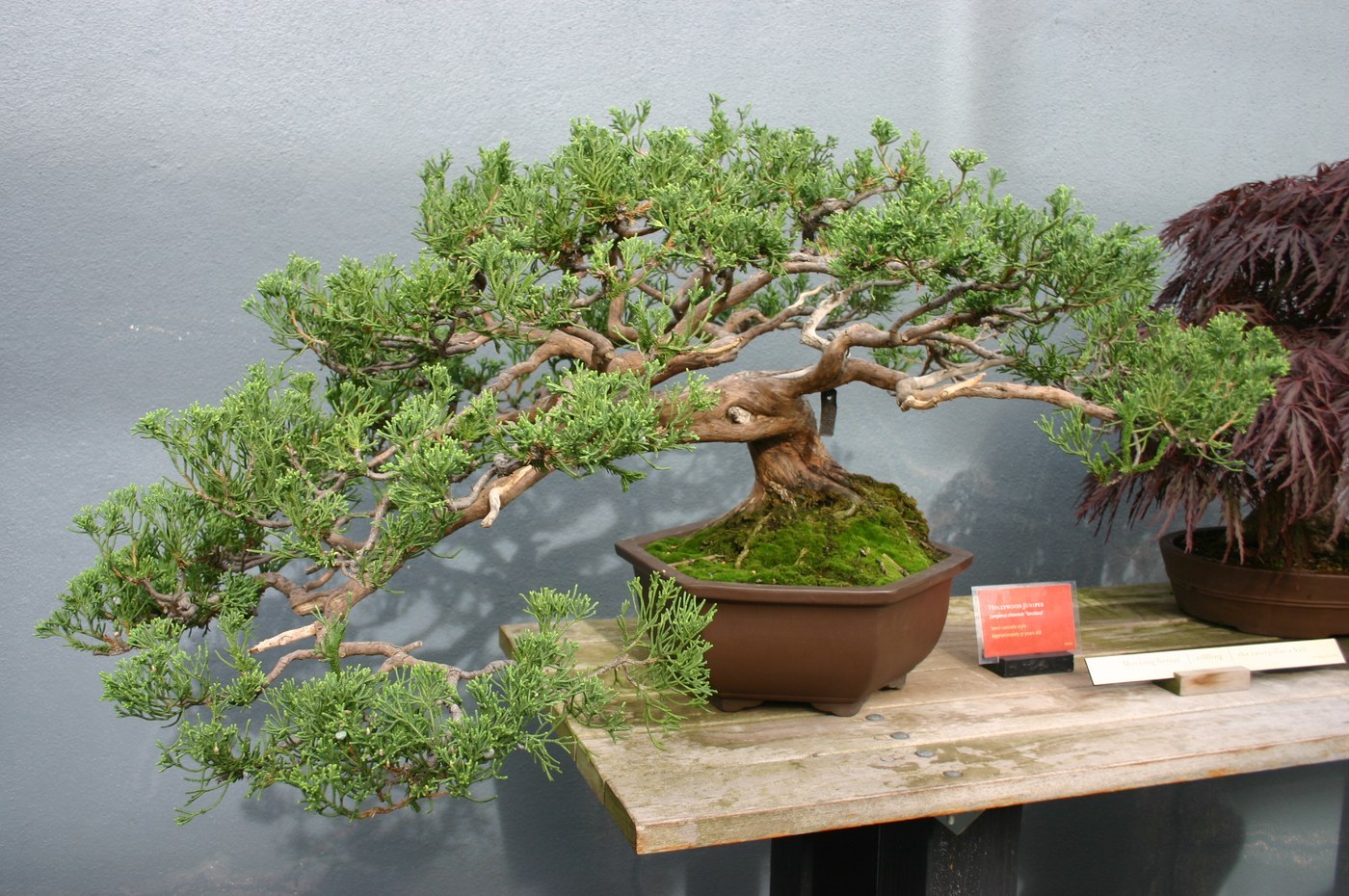
Hollywood Juniper (Juniperus chinensis 'Torulosa') is an evergreen shrub famous for its dramatic, irregularly twisting branches and rich dark-green foliage. Nearly indestructible once established, it makes a bold living sculpture that thrives on neglect and sunshine.
Light
Give Hollywood Juniper full sun, at least six to eight hours daily. Full sun is essential for dense, richly colored foliage and the tight, muscular branching that makes this plant a specimen. In too much shade it thins out, grows sparse and open, and becomes prone to disease.
Water
This is a drought-tolerant shrub. Water regularly during the first growing season to establish the root system, then only occasionally thereafter. Once established, it needs supplemental water only during extended dry spells. Always let the soil dry between waterings; junipers strongly resent soggy roots and are far more likely to die from overwatering than from drought.
Soil & Potting
Sharp drainage is the single most important requirement. Hollywood Juniper tolerates poor, sandy, rocky, and lean soils, and adapts to a wide pH range. Avoid heavy clay or any site where water pools. In containers, use a gritty, fast-draining mix and a pot with ample drainage; adding pumice or coarse sand improves aeration.
Humidity & Temperature
Highly adaptable, this juniper withstands heat, wind, coastal salt spray, and cold. It is cold-hardy across a broad range of climates and shrugs off dry air, so humidity is never a concern. Its toughness in exposed, windy, and seaside sites is one of its greatest strengths.
Feeding
Hollywood Juniper needs little feeding. A single application of a balanced slow-release fertilizer in early spring is plenty for landscape plants. Over-fertilizing forces weak, floppy growth that spoils the plant's naturally dense architecture. Container specimens can take a light spring feeding to sustain steady growth.
Propagation
Propagate from semi-hardwood cuttings taken in late summer or fall. Dip the cut ends in rooting hormone and set them in a gritty, well-draining medium kept lightly moist; rooting is slow and can take several months. Because it is a named cultivar, cuttings are the reliable way to reproduce its distinctive twisting form true to type.
Repotting / Pruning
Hollywood Juniper needs very little pruning, as its charm lies in its natural irregular shape. Remove dead, damaged, or crossing branches in early spring, and lightly shape only if needed, always cutting back to green growth since junipers rarely resprout from bare old wood. It is a popular subject for bonsai and topiary. Repot container plants every two to three years into fresh gritty mix.
Common Problems & Pests
Spider mites are the most common pest, causing bronzing and fine webbing, especially in hot dry conditions; a strong hose spray helps. Bagworms can defoliate branches and should be picked off. Watch for tip blight and juniper twig blights in humid or crowded conditions, and prune out affected wood. Nearly all serious problems trace back to poor drainage and root rot, so keep the site dry and airy.
Seasonal Care Tips
In spring, prune out any winter damage, feed lightly, and refresh mulch. Through summer, monitor for spider mites during heat and dry weather and water only in prolonged drought. In autumn, take cuttings and ease off watering. In winter, established plants need no attention, though heavy snow should be brushed off to prevent the twisting branches from splaying or breaking.
Frequently asked questions
How much sun does Hollywood Juniper need?
Full sun, at least six hours a day. Plenty of sun keeps the foliage dense and dark green and maintains its signature twisting, sculptural form.
Why is my juniper turning brown inside?
Some interior browning of old foliage is normal, but widespread browning often signals overwatering, poor drainage, spider mites, or twig blight. Check drainage and inspect for mites first.
Do I need to prune Hollywood Juniper?
Very little. Just remove dead or crossing branches in spring. Its beauty is the natural irregular shape, so avoid heavy shearing and never cut into bare old wood.
Can Hollywood Juniper handle drought?
Yes, once established it is highly drought tolerant. Water regularly the first season to root it in, then only during extended dry spells.