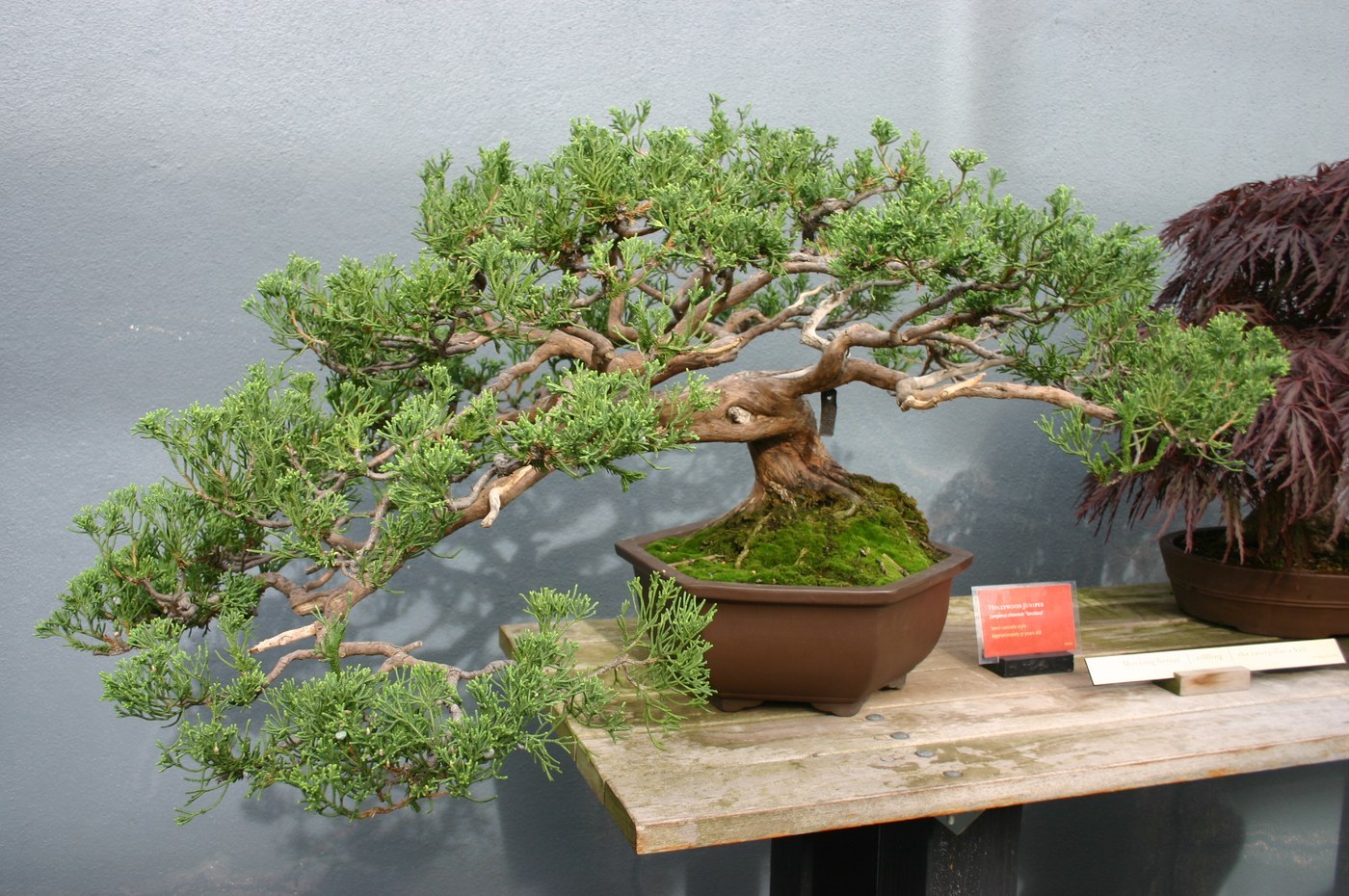
Hollywood Juniper
Juniperus chinensis 'Torulosa'
Hollywood Juniper is a sculptural Chinese juniper cultivar famous for its dramatically twisted, irregular branches and rich green scale-like foliage.
- Light
- Full sun
- Water
- Drought tolerant
- Difficulty
- Easy
Got a plant like this?
Identify any plant from a photo, free.
Overview
Hollywood Juniper (Juniperus chinensis 'Torulosa') is an ornamental cultivar of Chinese juniper celebrated for its theatrical, contorted growth habit, with branches that twist and turn in irregular, upswept tufts.
Its living-sculpture form gives gardens an instant Asian or Mediterranean character, and it remains tough, drought-tolerant, and low-maintenance once established.
How to identify it
- Habit: Distinctly twisted, irregular, upright with curling, tufted branches — its signature trait.
- Foliage: Dense, dark green, mostly scale-like (some prickly juvenile foliage), held in irregular sprays.
- Cones: Small, berry-like, bluish with a waxy bloom.
- Bark: Reddish-brown, shredding.
- Size: Typically 10–15 ft tall, 4–8 ft wide.
Care & growing
Hollywood Juniper wants full sun and well-drained soil; it tolerates heat, salt, and drought.
- Water: Drought tolerant once established; avoid soggy soil.
- Soil: Well-drained; adaptable to poor, sandy, or coastal conditions.
- Temperature: Hardy USDA zones 6–9.
- Feeding: Light spring feeding optional.
- Propagation: From cuttings.
Habitat & origin
The parent species, Juniperus chinensis, is native to China, Mongolia, Japan, Korea, and the Russian Far East. 'Torulosa' is a cultivated ornamental selection.
It is widely planted in warm-temperate and coastal landscapes, especially in California (hence "Hollywood"), the Southeast, and Mediterranean climates.
Frequently asked questions
Why is it called Hollywood Juniper?
Its dramatic, twisted, sculptural form became popular in California and southern landscapes, earning the name.
How big does it get?
Typically 10–15 ft tall and 4–8 ft wide, growing at a moderate pace.
Is it good for coastal gardens?
Yes, it tolerates salt spray, heat, and drought, making it well suited to seaside plantings.
Does it need shaping?
Its naturally twisted habit is the attraction; minimal pruning keeps the irregular form looking its best.
Hollywood Juniper guides
In-depth guides for identifying, growing, and caring for Hollywood Juniper.
How to Care for Hollywood Juniper
Grow the twisting, sculptural Hollywood Juniper with full sun, sharp drainage, and minimal watering once established.
Hollywood Juniper Identification Guide
How to identify Hollywood Juniper (Juniperus chinensis 'Torulosa') by its dramatic twisting, irregular upright form and rich green scale foliage. Covers its sculptural habit and look-alikes.