Horse Chestnut Identification Guide
Identify horse chestnut by its large palmately compound leaves, upright white flower candles, and spiny husks holding glossy conkers.
Read the full Horse Chestnut encyclopedia entry →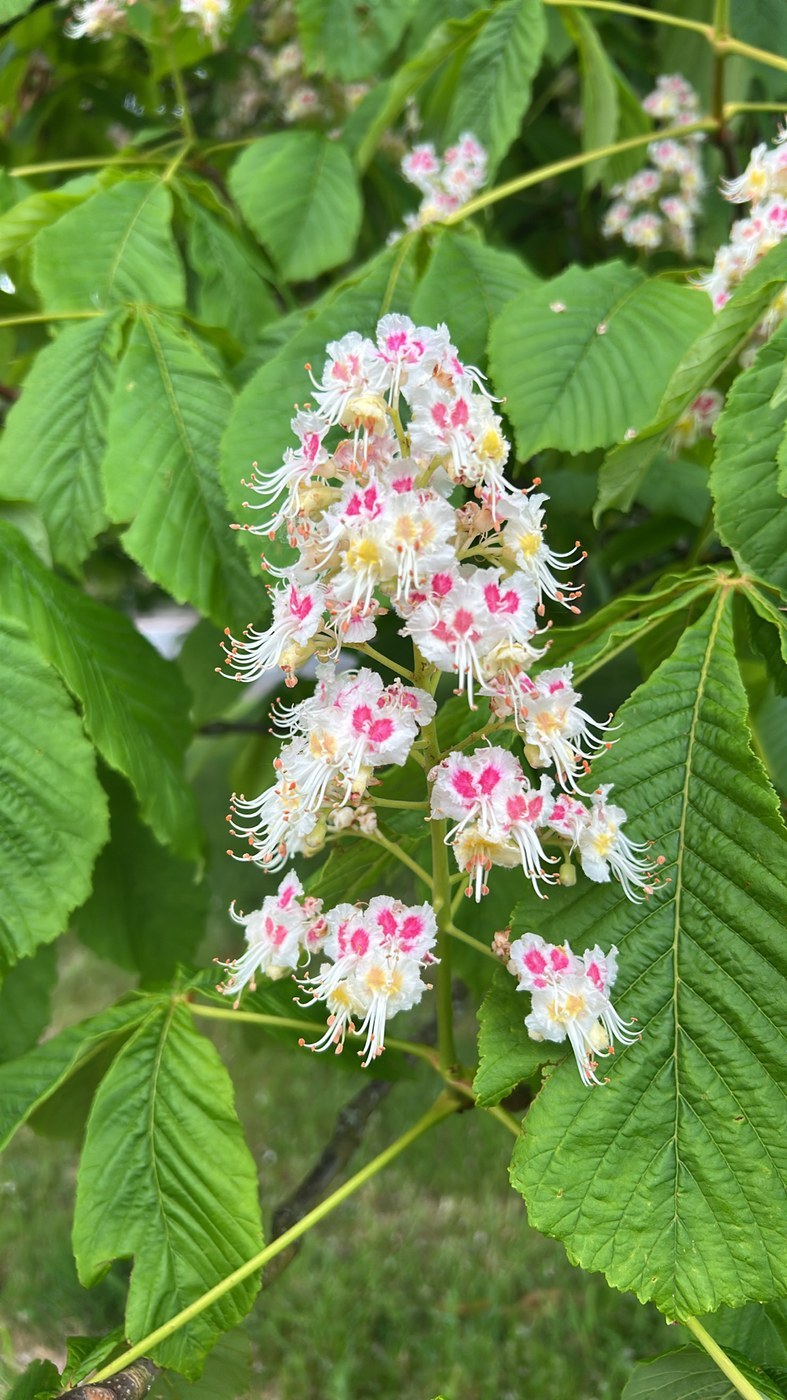
Key Identifying Features
Horse chestnut (Aesculus hippocastanum) is a large ornamental tree famous for its spring flower "candles" and the shiny brown conkers prized by children. It is unrelated to sweet chestnuts.
- Large palmately compound leaves with 5-7 leaflets radiating from one point
- Upright conical clusters ("candles") of white flowers in spring
- Spiny green husks containing one or two glossy brown seeds (conkers)
- Big sticky terminal buds in winter
Leaves & Stems
Leaves are opposite and palmately compound, with 5-7 large leaflets (each 10-25 cm long) spreading like fingers from the tip of a long stalk. Leaflets are obovate (widest near the tip), tapering to the base, with doubly toothed margins and prominent veins; they are often somewhat drooping and crinkled. The whole leaf can span 30 cm or more. Foliage turns yellow-brown in autumn.
In winter the tree is identified by large, fat, sticky reddish-brown terminal buds and big horseshoe-shaped leaf scars dotted with vein marks resembling horseshoe nails (a source of the name). Bark is gray-brown, smooth when young, becoming scaly and flaking with age.
Flowers & Fruit
Flowers appear in late spring in showy erect panicles 20-30 cm tall ("candles"), each flower white with a yellow blotch that turns pink-red after pollination. The fruit is a rounded, green, spiny (soft-spined) husk that splits to release one or two glossy red-brown nuts (conkers) with a pale scar.
How to Tell It Apart from Look-Alikes
- Sweet chestnut (Castanea): Has simple, single, toothed leaves (not palmate) and densely spiny burrs.
- Buckeyes (other Aesculus): Similar palmate leaves but usually 5 leaflets, smaller flower clusters, and smooth or warty (not soft-spiny) husks.
- Red horse chestnut (A. x carnea): Has pink-red flowers and nearly smooth husks.
The palmate compound leaves plus white flower candles and spiny conker husks are unmistakable for common horse chestnut.
Where You'll Find It
Native to the Balkan Peninsula but planted worldwide in parks, avenues, gardens, and town squares as a shade and ornamental tree. It tolerates a range of soils and is a common urban tree in temperate Europe and North America.
Quick ID Checklist
- Opposite palmately compound leaves, 5-7 finger-like leaflets
- Upright white flower candles in spring
- Spiny green husks holding glossy brown conkers
- Large sticky reddish terminal buds in winter
- Horseshoe-shaped leaf scars
Frequently asked questions
How do horse chestnuts differ from sweet chestnuts?
Sweet chestnuts come from Castanea, which has simple toothed leaves and densely bristly burrs, while horse chestnut has palmate compound leaves and rounded soft-spined husks.
What are the white candles on the tree?
They are upright flower clusters that bloom in late spring, each with many white blossoms marked with a yellow spot that turns pink-red after pollination.
How can I identify it in winter?
Look for the large, fat, sticky reddish-brown terminal buds and the horseshoe-shaped leaf scars with dots resembling horseshoe nails.
Why is it called horse chestnut?
The leaf scars resemble a horseshoe with nail marks, which is one traditional source of the name.
Horse Chestnut identified by the community
Recent Horse Chestnut specimens identified with Plant Identifier.