Hosta Identification Guide
Recognize hostas by their bold mounds of heavily veined, heart-shaped leaves and tall scapes of nodding lily-like flowers in shady gardens.
Read the full Hosta encyclopedia entry →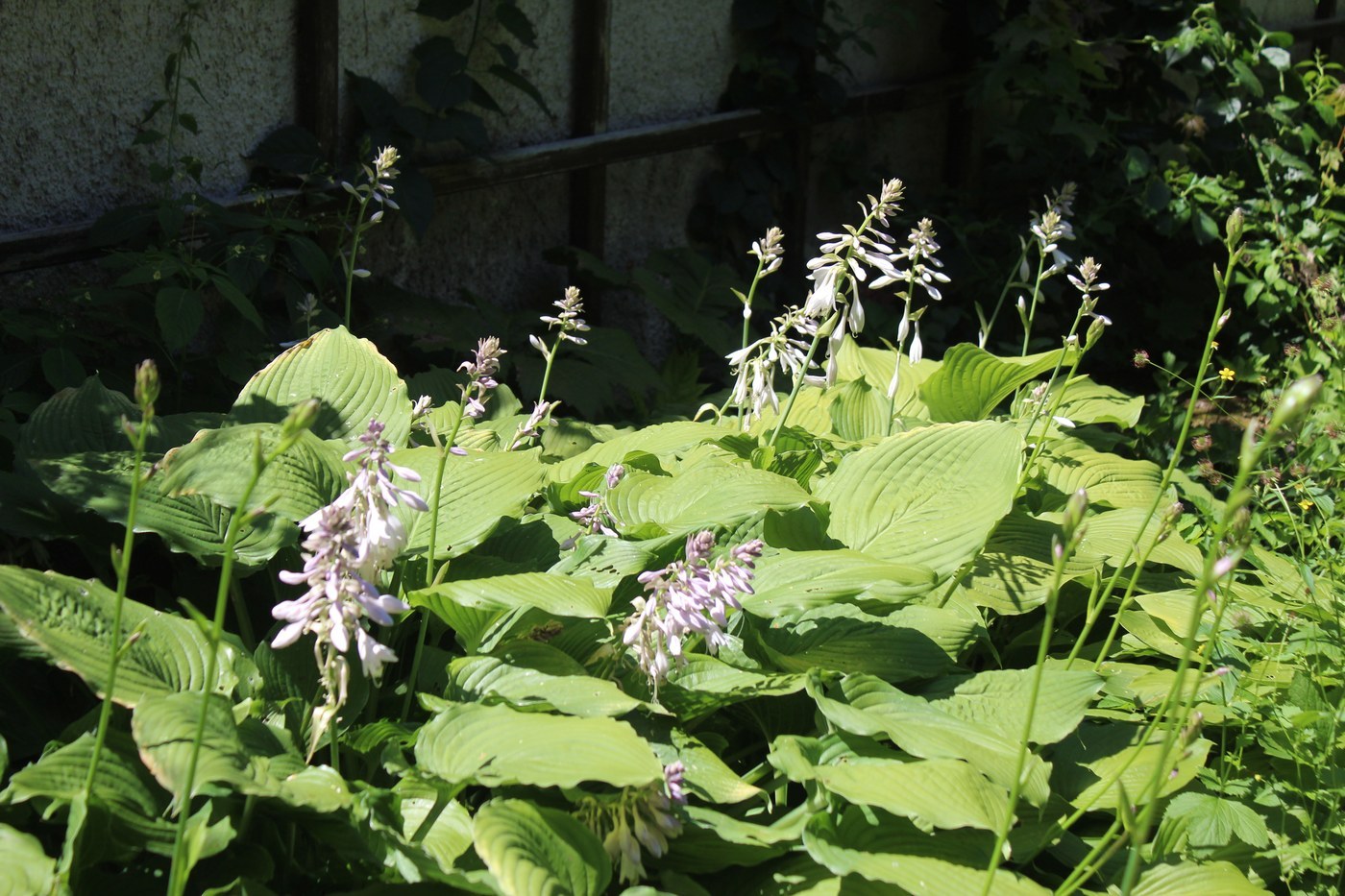
Key Identifying Features
Hostas (genus Hosta) are the classic shade-garden foliage plant, grown far more for their leaves than their flowers. They form a tidy, dome-shaped mound or rosette of broad leaves emerging directly from a crown at ground level.
- Leaves: broad, often heart-shaped, with strongly parallel sunken veins
- Habit: clumping mounds, no woody stems
- Flowers: lavender to white, lily-like, on tall leafless scapes
- Setting: shade and part shade
Leaves & Stems
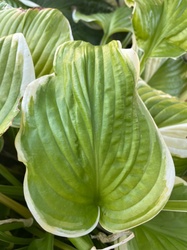
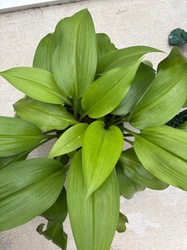
The leaves are the giveaway. They are basal (all rising from the crown on leaf stalks called petioles), broadly oval to heart-shaped, and marked by deeply impressed, parallel veins that run from the base toward the tip and give a quilted or pleated texture. Leaf size ranges from a few inches (miniatures) to over a foot. Colors and patterns are enormously varied: solid blue-green, chartreuse, or variegated with white or yellow margins or centers. Many blue hostas owe their color to a waxy bloom that rubs off. There are no true stems — just petioles and the flower scape.
Flowers & Fruit
In summer, bare scapes rise above the foliage bearing a one-sided raceme of funnel- to bell-shaped flowers, typically lavender, purple, or white, with six tepals. A few species (notably Hosta plantaginea) are fragrant. Flowers are followed by elongated three-part seed capsules holding flat black seeds.
How to Tell It Apart from Look-Alikes
- Hellebore: evergreen, palmately divided/toothed leaves and nodding cup flowers in late winter — hosta leaves are simple and undivided.
- Bergenia: large rounded leathery basal leaves, but thick and glossy with rounded margins and no impressed parallel veins.
- Plantain (Plantago): weedy look-alike with ribbed basal leaves, but much smaller, with tiny greenish flower spikes, not lily flowers.
- Lily-of-the-valley: paired upright leaves and tiny white bells, far smaller and spreading by runners.
The sure signs are broad heart-shaped leaves with deeply parallel sunken veins forming a shade-loving mound, topped by leafless scapes of lavender bells.
Where You'll Find It
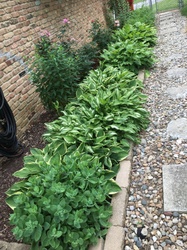
Hostas are planted in shaded and woodland gardens, along north-facing foundations, and under trees throughout temperate regions. They are not typically wild in North America (native to East Asia) but are extremely common in cultivation. Snails, slugs, and deer browse damage is so frequent it can itself be an ID hint.
Quick ID Checklist
- Mound/rosette of broad basal leaves
- Heart-shaped leaves with deep parallel sunken veins
- Often variegated blue, green, gold, or white-edged
- Leafless scapes of lavender or white bell flowers
- Grows in shade, no woody stems
- Slug/snail holes common in leaves
Frequently asked questions
How do I identify a hosta when it's not flowering?
Look for a ground-level mound of broad, heart-shaped leaves with strongly impressed, parallel veins running from base to tip. That quilted, parallel-veined leaf in a shady spot is the clearest sign.
Why are some hostas blue and others green or yellow?
Leaf color is a varietal trait. Blue hostas have a waxy surface bloom that scatters light (and rubs off), while others are naturally green, chartreuse, or variegated with white or gold.
What are the tall stalks with purple flowers on my hosta?
Those are flower scapes. In summer hostas send up leafless stalks topped with lavender-to-white, lily-like bell flowers; a few are fragrant.
What is eating holes in my hosta leaves?
Slugs and snails are the usual culprits, and deer browse the whole leaf. Hostas are so frequently chewed that ragged holes are almost an identifying clue.
Hosta identified by the community
Recent Hosta specimens identified with Plant Identifier.