Inch Plant Identification Guide
Identify the Inch Plant (Tradescantia zebrina and relatives) by its striped purple-and-silver pointed leaves, fleshy trailing stems, and three-petaled flowers.
Read the full Inch Plant encyclopedia entry →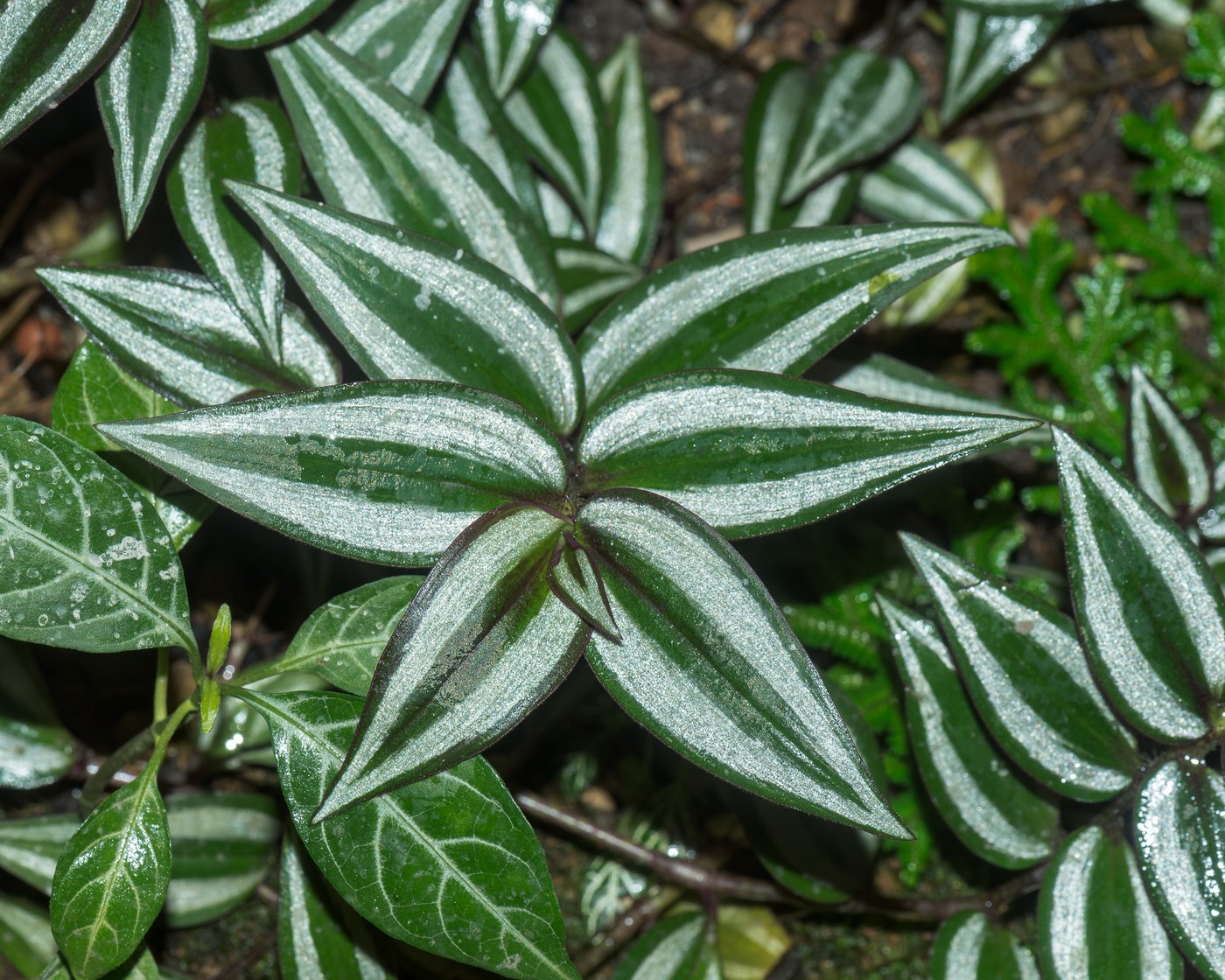
Key Identifying Features
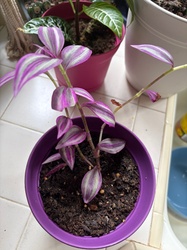
The Inch Plant (most often Tradescantia zebrina, also sold as Wandering Jew/Wandering Dude) is a fast-growing trailing plant recognized by its pointed oval leaves striped in silver and green above with vivid purple undersides, on succulent trailing stems.
- Pointed, oval-to-lance leaves, 3–7 cm long
- Upper surface with two silver bands flanking a green center; purple underside
- Fleshy, jointed trailing stems that root at the nodes
- Fast, sprawling, mat-forming growth
Leaves & Stems
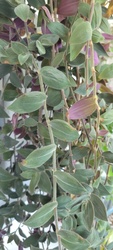
Leaves clasp the stem in an alternating pattern and have a slightly fleshy, sometimes hairy texture. In T. zebrina the top shows two broad metallic-silver stripes with green between and along the edges, while the entire underside is a rich purple-magenta — the most reliable ID feature. The stems are succulent, jointed (each segment roughly an "inch," hence the name), and trail or climb, rooting easily wherever a node touches soil. Snapping a stem reveals it breaks cleanly at the swollen nodes. Related species like T. fluminensis have plain green or cream-variegated leaves with purple undersides, and T. pallida ('Purple Heart') is solid deep purple.
Flowers & Fruit
Inch Plants produce small, charming three-petaled flowers — the signature of the Tradescantia genus. In T. zebrina they are pink to lavender-purple, about 1–1.5 cm, emerging from paired bracts at the stem tips. The consistent three petals confirm the genus.
How to Tell It Apart from Look-Alikes
- Tradescantia fluminensis: similar habit but leaves are solid green or cream-striped, lacking the silver bands of zebrina.
- Callisia (e.g., Turtle Vine): smaller, rounder leaves; related but different genus.
- Pilea or Peperomia: can have patterned leaves but lack the purple undersides and three-petaled flowers.
- The silver-striped top, purple underside, fleshy jointed stems, and three-petaled flowers identify the Inch Plant.
Where You'll Find It
Native to Mexico and Central America, it has naturalized as a groundcover (and weed) in warm regions worldwide. As a houseplant it is popular in hanging baskets for its fast-trailing, colorful foliage. It loves bright light (which intensifies the purple and silver colors) and roots from cuttings extremely easily.
Quick ID Checklist
- Pointed leaves with two silver stripes over green on top
- Bright purple leaf undersides
- Fleshy, jointed trailing stems rooting at nodes
- Small three-petaled pink-purple flowers
Frequently asked questions
Why are the undersides of my Inch Plant leaves purple?
Purple undersides are a natural pigment feature of Tradescantia zebrina and many relatives. Combined with the silver-striped tops, they are the most reliable way to identify the Inch Plant.
Why is it called the Inch Plant?
The name refers to its fast, sprawling growth and the roughly inch-long spacing between the stem nodes from which it readily roots.
How do I tell Tradescantia zebrina from plain Tradescantia fluminensis?
T. zebrina has bold metallic-silver bands over green on the leaf top, while T. fluminensis has solid green or cream-variegated leaves. Both share purple undersides and three-petaled flowers.
How can I confirm it is a Tradescantia?
Check the flowers: Tradescantia blooms have three distinct petals, a hallmark of the genus. The fleshy jointed stems that root at every node are another clue.
Inch Plant identified by the community
Recent Inch Plant specimens identified with Plant Identifier.