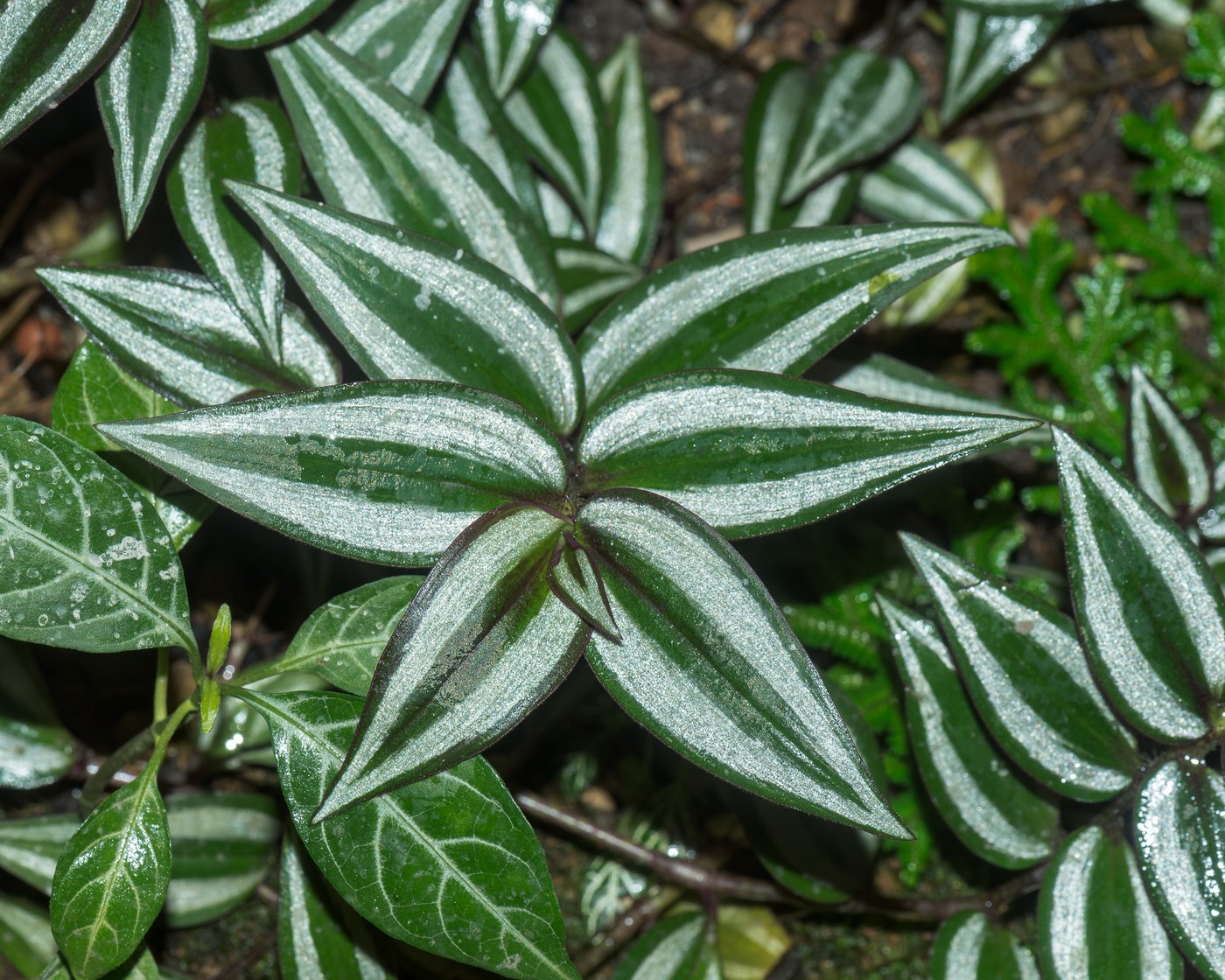
Inch Plant
Tradescantia zebrina
A fast-growing trailing plant with shimmery purple-and-silver striped leaves. It roots and spreads quickly, making it a vigorous, colorful houseplant.
- Light
- Bright indirect light
- Water
- When top inch dries
- Difficulty
- Easy
Got a plant like this?
Identify any plant from a photo, free.
Overview
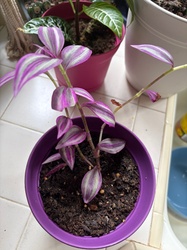
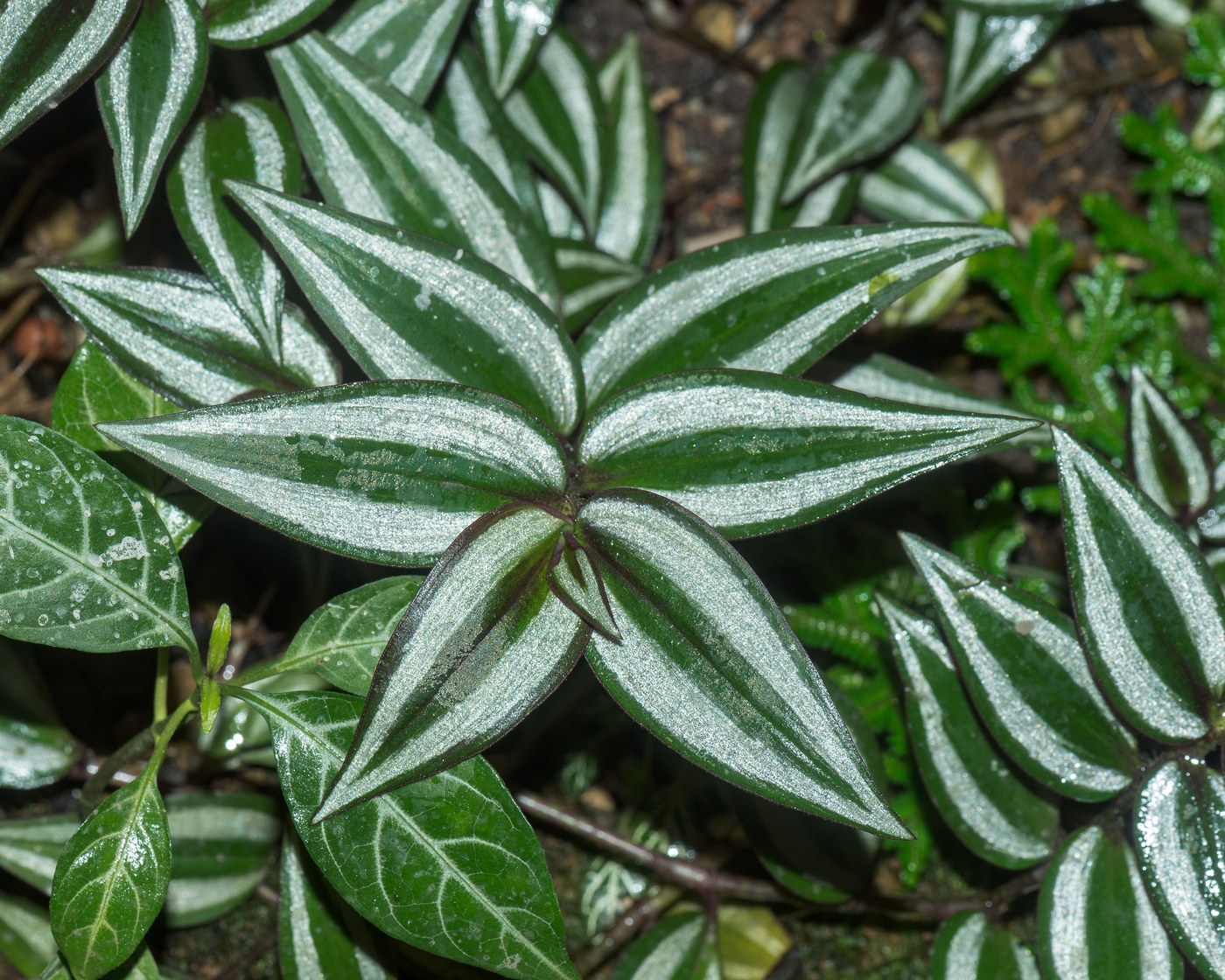
The Inch Plant, Tradescantia zebrina, is a fast-spreading trailing plant grown for its striking foliage: leaves striped in silver and green on top with deep purple undersides, often shimmering with a metallic sheen. The name "inch plant" comes from both its rapid growth and the roughly inch-spaced leaf nodes.
It is extremely easy to grow and propagate, rooting from almost any stem piece. Its vivid color and vigor make it a popular hanging-basket and groundcover plant, though it can become invasive outdoors in warm climates.
How to identify it
Identify it by trailing stems of pointed-oval leaves striped silver and green above with purple undersides.
- Leaves: oval with pointed tips, 3 to 5 cm, two silver stripes on green, vivid purple beneath
- Stems: succulent, trailing, jointed, rooting at the nodes
- Habit: fast-growing trailer; can become leggy if underlit
- Flowers: small three-petaled pink to purple blooms
Care & growing
Give bright indirect light, with a little direct sun, to keep the purple and silver vivid; in low light the color fades and stems stretch.
- Water: when the top inch of soil dries; somewhat drought-tolerant thanks to fleshy stems
- Soil: well-draining potting mix
- Temperature: 18 to 27 C; keep above 10 C
- Feeding: light monthly feeding in the growing season
- Propagation: extremely easy; stem cuttings root in water or soil within days
- Tip: pinch regularly to prevent legginess
Habitat & origin
Native to Mexico, Central America and parts of South America, where it grows as a fast-spreading groundcover in warm, humid conditions. It has naturalized and become an invasive weed in many tropical and subtropical regions. Indoors it is a popular, easy trailing houseplant worldwide.
Frequently asked questions
Why is my inch plant losing its purple color?
Insufficient light. Move it to a brighter spot with some direct sun to restore the vivid purple and silver striping.
How do I keep it from getting leggy?
Pinch back the stems regularly and give it bright light. Replant the cuttings into the pot to keep it full and bushy.
How do I propagate it?
Snip a stem section and place it in water or moist soil. It roots extremely fast, often within a few days.
Inch Plant guides
In-depth guides for identifying, growing, and caring for Inch Plant.
How to Care for Inch Plant
Inch Plant (Tradescantia zebrina) is a fast-growing trailing houseplant with shimmering silver-and-purple striped leaves that thrives in bright indirect light.
Inch Plant Identification Guide
Identify the Inch Plant (Tradescantia zebrina and relatives) by its striped purple-and-silver pointed leaves, fleshy trailing stems, and three-petaled flowers.
Inch Plant identified by the community
Real specimens identified with Plant Identifier.