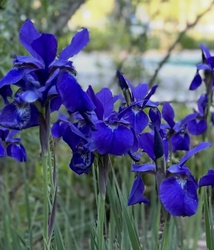
Iris Identification Guide
Identify irises by their distinctive three-up, three-down flower structure, sword-shaped fanned leaves, and the bearded or beardless crests on their falls.
Read the full Iris encyclopedia entry →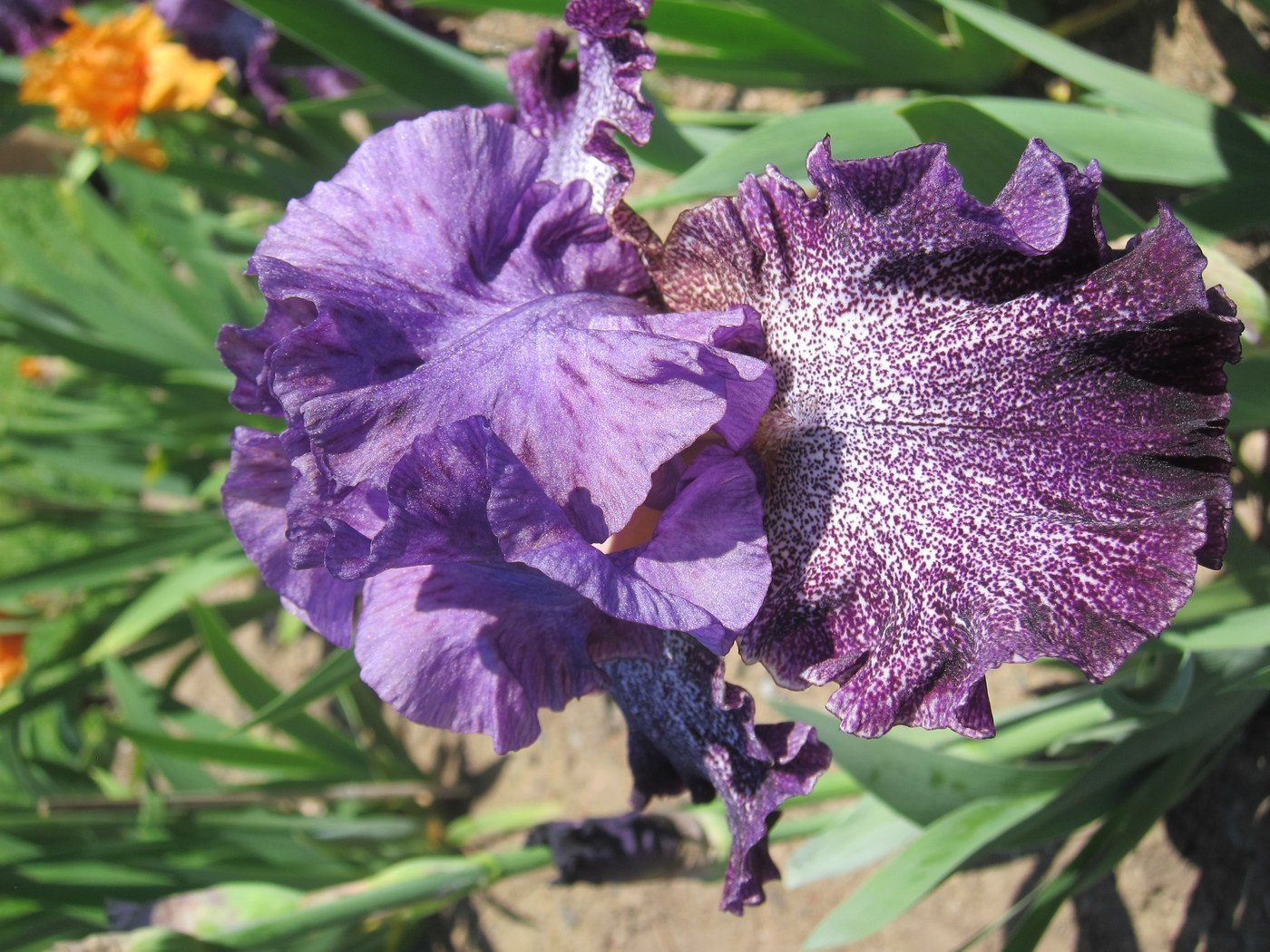
Key Identifying Features
Irises (genus Iris) are perennials in the family Iridaceae, famous for their elegant, intricate flowers. Key traits:
- A six-part flower divided into three upright standards and three drooping falls.
- Flat, sword-shaped (sigmoid) leaves arranged in a fan from the base.
- Many have a fuzzy "beard" (bearded iris) or a ridge/crest along the falls.
Leaves & Stems
Iris leaves are long, narrow, and sword-like (ensiform), growing in a flat overlapping fan from a creeping rhizome or, in some species, a bulb. The leaves are typically blue-green, stiff, and held upright with parallel veins. Flower stalks are erect, round or angled, and often branched, rising above or among the foliage. Bearded irises grow from thick surface rhizomes; some (Dutch, reticulata) grow from bulbs.
Flowers & Fruit
The flower is unmistakable: three upright petals (standards) and three down-curving sepals (falls), with a small style arm crest in the center. Bearded irises bear a fuzzy caterpillar-like beard down the center of each fall; beardless types (Siberian, Japanese, Louisiana) lack it, and crested irises have a small ridge instead. Colors cover the full spectrum — purple, blue, yellow, white, brown, near-black, and bicolors, often with veining or contrasting beards. After bloom, a three-chambered capsule forms holding rounded seeds. Most bloom late spring to early summer.
How to Tell It Apart from Look-Alikes
- Daylily (Hemerocallis): Has strappy arching leaves but flowers with six similar tepals and no standards/falls distinction or beard.
- Gladiolus: Sword leaves too, but flowers line up along a tall one-sided spike, lacking the three-up/three-down form.
- Crocus: Bulb relative with smaller cup flowers and grassy leaves, no falls or beard.
The three standards plus three falls (often with a beard or crest) is the defining iris signature found in no look-alike.
Where You'll Find It
Irises grow in perennial borders, water gardens, and naturalized clumps. Bearded irises prefer full sun and well-drained soil with rhizomes near the surface; Japanese, Louisiana, and yellow flag irises thrive in wet or boggy ground and pond margins. Wild species occur in meadows, marshes, and along streams across the Northern Hemisphere.
Quick ID Checklist
- Flower with 3 upright standards + 3 drooping falls
- Fuzzy beard or crest on the falls (in many types)
- Flat, sword-shaped leaves in a fan
- Erect, sometimes branched flower stalk
- Grows from a surface rhizome or bulb
- Three-chambered seed capsule after bloom
Frequently asked questions
What are the standards and falls on an iris?
Standards are the three upright inner petals and falls are the three drooping outer sepals. This three-up, three-down arrangement is the defining structure of an iris flower.
What is the beard on a bearded iris?
The beard is a fuzzy strip of hairs running down the center of each fall. Bearded irises have it, while beardless types like Siberian and Japanese irises do not, and crested irises have a small ridge instead.
Do all irises grow from bulbs?
No. Many common irises, including bearded irises, grow from thick surface rhizomes. Only some groups, such as Dutch and reticulata irises, grow from true bulbs.
How do I tell an iris from a daylily before it blooms?
Both have strappy leaves, but iris leaves form a flat overlapping fan and are stiff and sword-like, while daylily leaves are softer and arch outward in a looser clump.
Iris identified by the community
Recent Iris specimens identified with Plant Identifier.