Jade Plant Identification Guide
Identify the jade plant (Crassula ovata) by its thick, oval, glossy succulent leaves on woody tree-like stems, and distinguish it from similar succulents.
Read the full Jade Plant encyclopedia entry →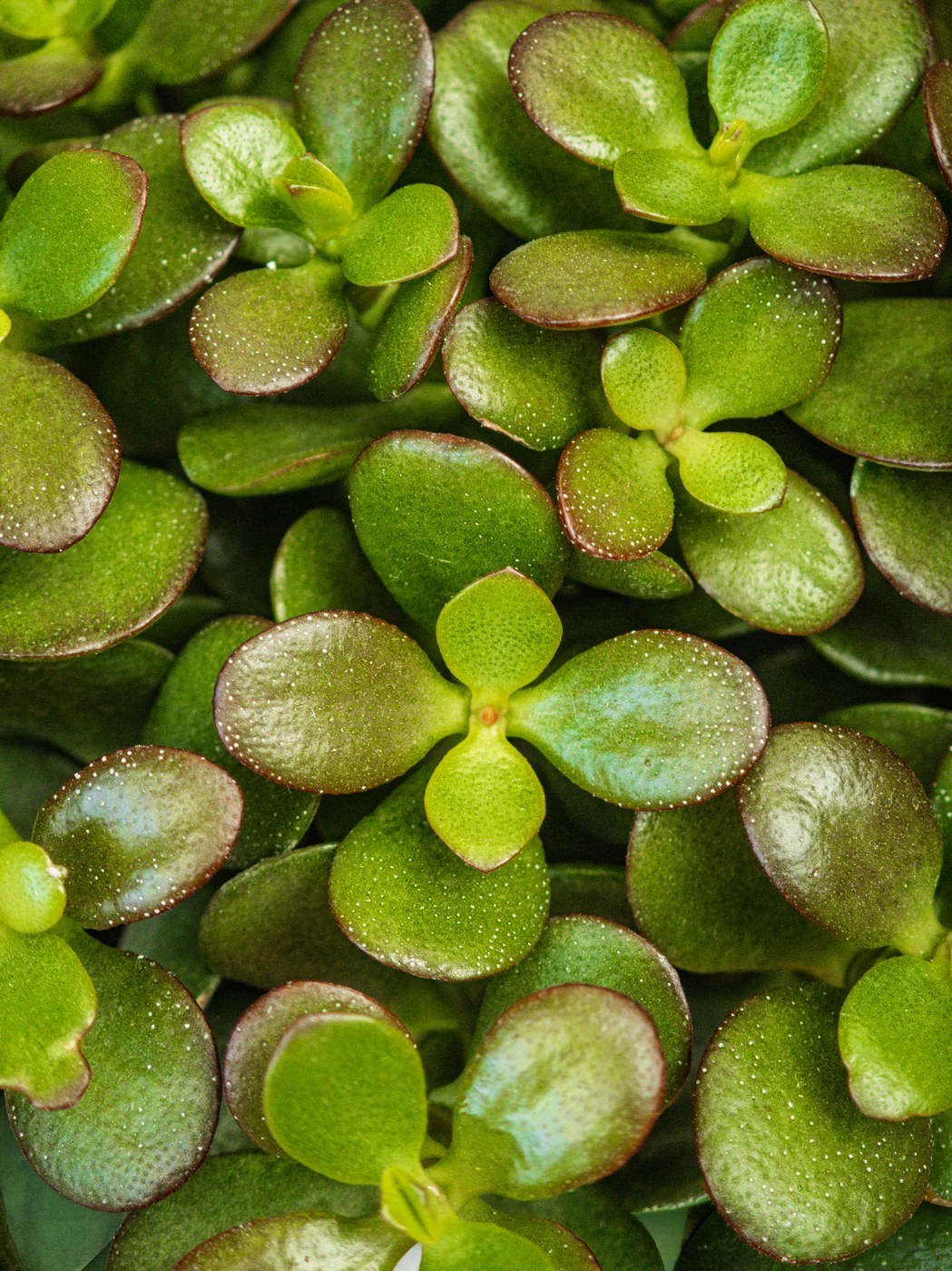
Key Identifying Features
The jade plant (Crassula ovata) is a succulent shrub identified by:
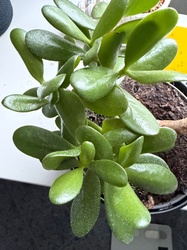
- Thick, fleshy, oval (egg-shaped) leaves that are smooth and glossy.
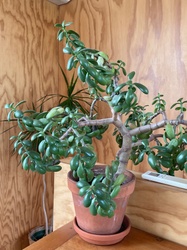
- A woody, branching, tree-like trunk that thickens with age.
- Leaves arranged in opposite pairs, often with reddish margins in bright sun.
Its miniature-tree silhouette makes it a popular bonsai-like specimen.
Leaves & Stems
Leaves are plump and water-filled, jade-green, typically 3–9 cm (1–3.5 in) long, with a smooth waxy surface. In strong light the leaf edges flush red or maroon. Leaves are sessile (no stalk) and grow in opposite pairs along the stems.
Young stems are green and succulent; with age they become brown, woody, and gnarled, giving the classic squat tree form. The branching is thick and rounded. Snapping a leaf reveals juicy interior tissue typical of succulents.
Flowers & Fruit
Mature, somewhat stressed plants (cool, dry, short-day conditions) produce clusters of small, star-shaped, white-to-pale-pink flowers at the branch tips in winter. The blooms are lightly fragrant. Flowering is a bonus rather than a reliable ID trait, since many indoor plants never bloom.
How to Tell It Apart from Look-Alikes
- Portulacaria afra (elephant bush): very similar but has smaller, rounder leaves, reddish-brown stems, and an alternate/clustered arrangement; jade has larger, glossier, opposite leaves on greener young stems.
- Crassula arborescens (silver jade): leaves are gray-blue with red dots and red rims, rounder than C. ovata.
- Gollum/Hobbit jade: cultivars of C. ovata with tubular or trumpet-tipped leaves — still jade plants.
- Kalanchoe: often has toothed or scalloped leaf margins, unlike jade's smooth edges.
The deciding trait: smooth, glossy, opposite oval succulent leaves on a thick woody trunk = jade plant.
Where You'll Find It
Native to South Africa and Mozambique. Worldwide it's an easy-care windowsill succulent and is often kept as a symbolic "money plant." Outdoors it thrives in warm, dry, frost-free climates (USDA zones 10–11), where it can grow into a 1–2 m shrub.
Quick ID Checklist
- Thick, glossy, oval succulent leaves
- Leaves in opposite pairs, smooth-edged
- Red-tinged margins in bright light
- Woody, branching, tree-like trunk
- White-to-pink star flowers in winter (when present)
A small succulent tree with plump, glossy, opposite oval leaves and a thick woody trunk is the classic jade plant.
Frequently asked questions
Why do my jade plant's leaves have red edges?
Red or maroon leaf margins develop when the jade plant gets plenty of bright, direct light. It's a healthy stress response and a normal identifying feature, not a sign of disease.
How is a jade plant different from elephant bush?
Elephant bush (Portulacaria afra) has smaller, rounder leaves on reddish-brown stems with an alternate arrangement, while jade plant (Crassula ovata) has larger, glossier oval leaves in opposite pairs on greener young stems.
Will my jade plant flower indoors?
It can, but only when mature and exposed to cool temperatures, dryness, and shorter days in winter. Many indoor jade plants never bloom, so flowering isn't necessary for identification.
Jade Plant identified by the community
Recent Jade Plant specimens identified with Plant Identifier.