Jade Plant
Crassula ovata
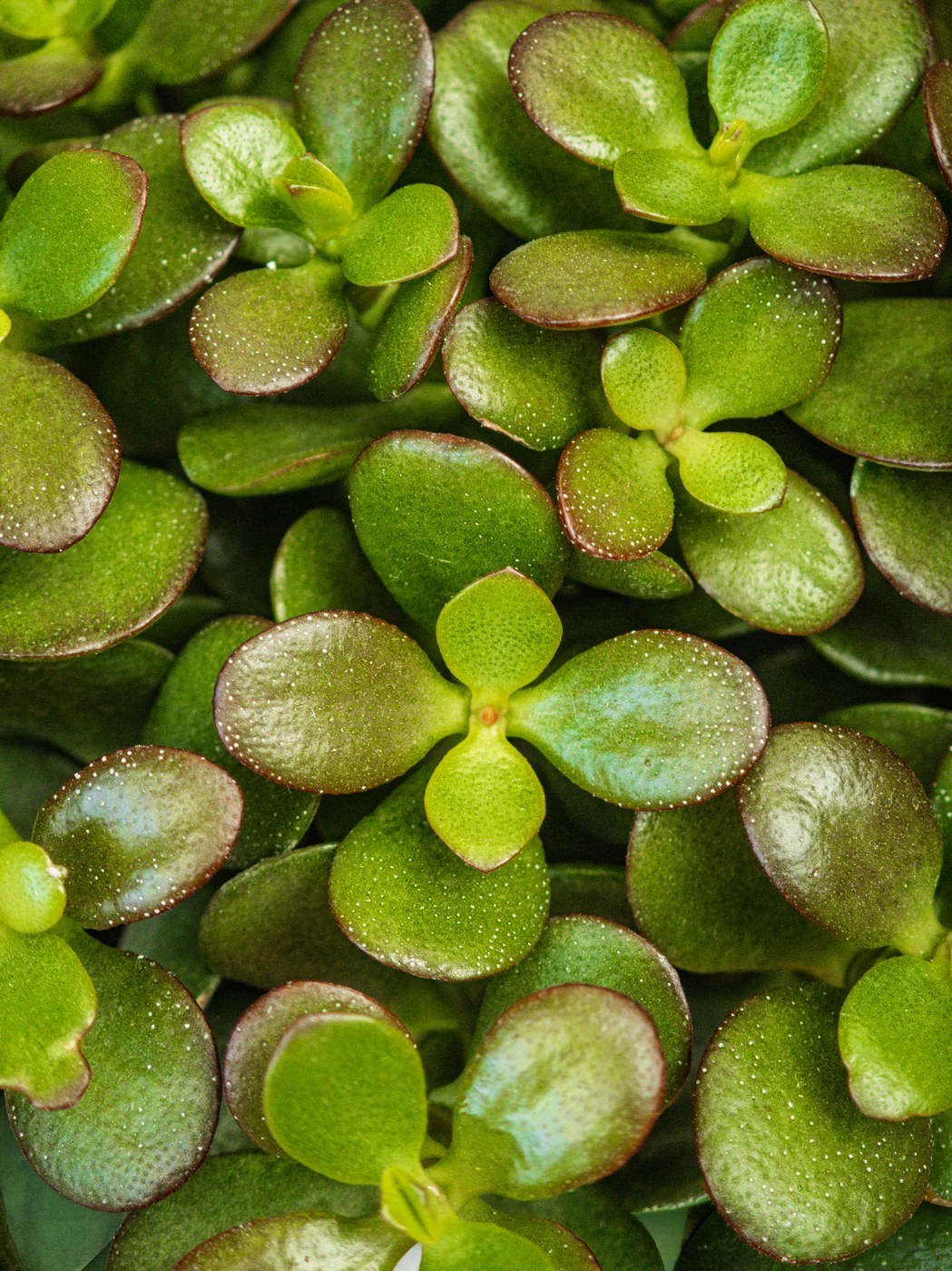
The jade plant is a long-lived succulent with thick, glossy, oval leaves and woody stems that give it a miniature tree appearance. It is easy to grow, drought-tolerant, and often kept as a symbol of good luck.
- Light
- Bright direct to indirect light
- Water
- Sparingly; let soil dry fully
- Difficulty
- Easy
Got a plant like this?
Identify any plant from a photo, free.
Overview
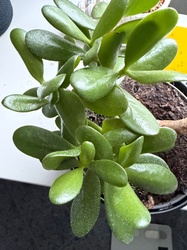
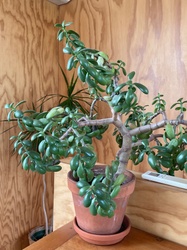
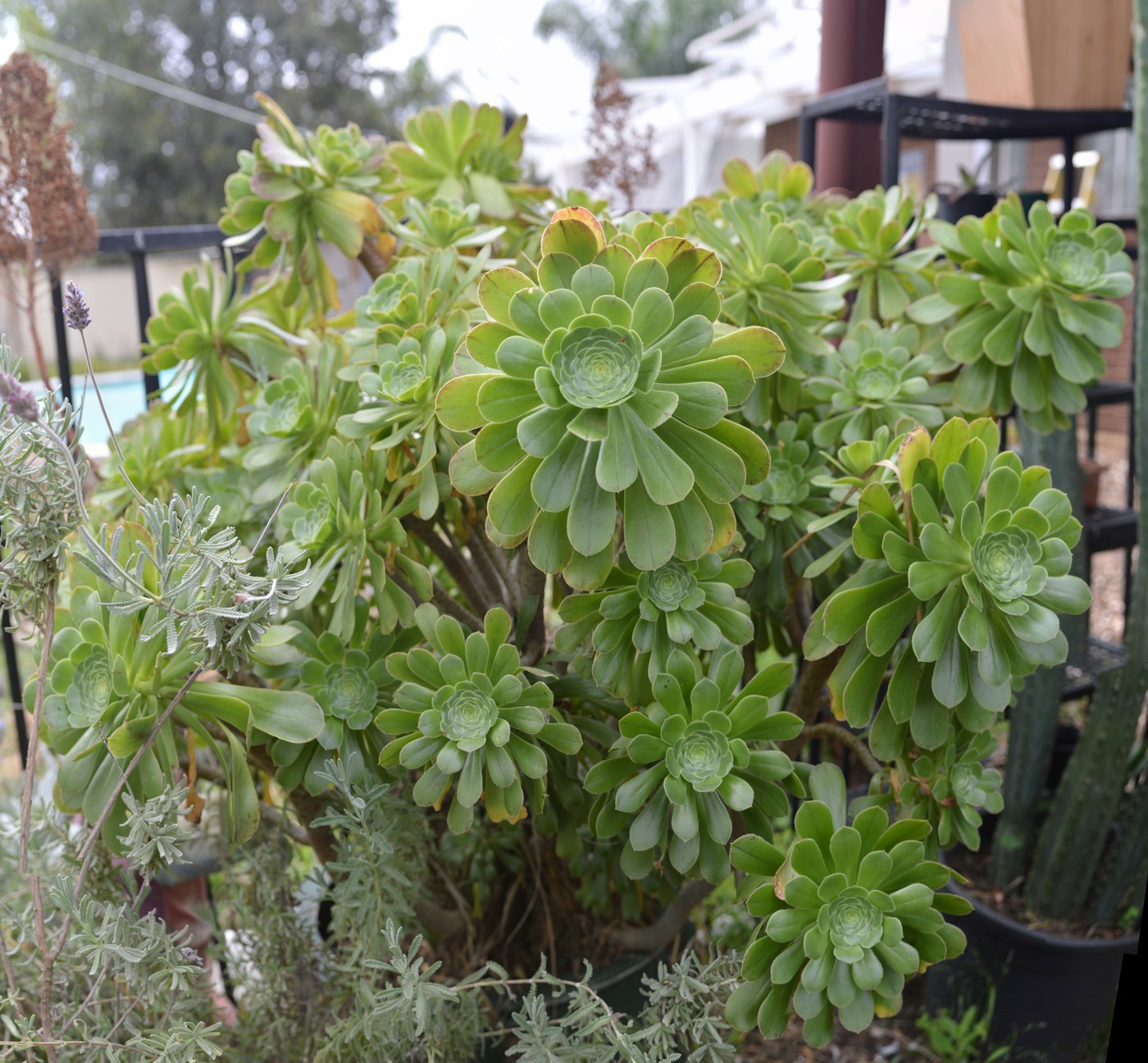
The jade plant (Crassula ovata) is an evergreen succulent shrub native to South Africa and Mozambique. With age it develops a thick, woody trunk and branching structure that resembles a small tree, making it a favorite for bonsai-style display.
Its fleshy, water-storing leaves are smooth and glossy, sometimes edged in red when grown in bright sun. In many cultures it is considered a symbol of prosperity and good fortune.
Jade plants are remarkably long-lived — well-cared-for specimens can survive for decades and become treasured heirloom plants.
How to identify it
- Leaves: Thick, fleshy, oval, glossy green leaves, often tinged red along the margins in bright light
- Stems: Thick, woody, branching trunk that becomes tree-like with age
- Flowers: Mature plants may produce clusters of small white or pink star-shaped flowers in winter
- Habit: Upright, branching shrub
- Size: Commonly 1-3 feet indoors, larger over many years
Care & growing
Light: Bright light with several hours of direct sun produces compact growth and red leaf edges. Too little light causes leggy, stretched stems.
Water: Water thoroughly, then let the soil dry out completely before watering again — roughly every 2-3 weeks, less in winter. Overwatering causes rot.
Soil: Gritty, fast-draining cactus or succulent mix.
Temperature: Prefers 65-75°F (18-24°C); protect from frost.
Feeding: Light feeding a few times during the growing season.
Propagation: Very easy from leaf or stem cuttings allowed to callus before planting.
Habitat & origin
Crassula ovata is native to the dry, rocky hillsides and scrubland of the Eastern Cape and KwaZulu-Natal regions of South Africa, as well as Mozambique, where it tolerates heat and drought.
It grows outdoors in mild, frost-free climates (USDA zones 10-11) and is cultivated worldwide as a popular, easy-care houseplant and bonsai subject.
Frequently asked questions
How often should I water a jade plant?
Only when the soil is fully dry, about every 2-3 weeks in the growing season and much less in winter. Overwatering is the main risk.
Why is my jade plant leggy and stretched?
Stretching (etiolation) is caused by too little light. Move it to a brighter spot with some direct sun for compact growth.
Why are the leaves shriveling or dropping?
Shriveled leaves usually mean it needs water, while soft, yellowing, dropping leaves indicate overwatering and rot.
Jade Plant guides
In-depth guides for identifying, growing, and caring for Jade Plant.
How to Care for Jade Plant
Grow a lush Crassula ovata with the right light, sparse watering, and gritty soil. A forgiving succulent that thrives on neglect indoors.
Jade Plant Identification Guide
Identify the jade plant (Crassula ovata) by its thick, oval, glossy succulent leaves on woody tree-like stems, and distinguish it from similar succulents.
Jade Plant identified by the community
Real specimens identified with Plant Identifier.