Japanese Maple Identification Guide
How to identify Japanese maple (Acer palmatum) by its delicate, deeply lobed palmate leaves, small size, and brilliant red foliage.
Read the full Japanese Maple encyclopedia entry →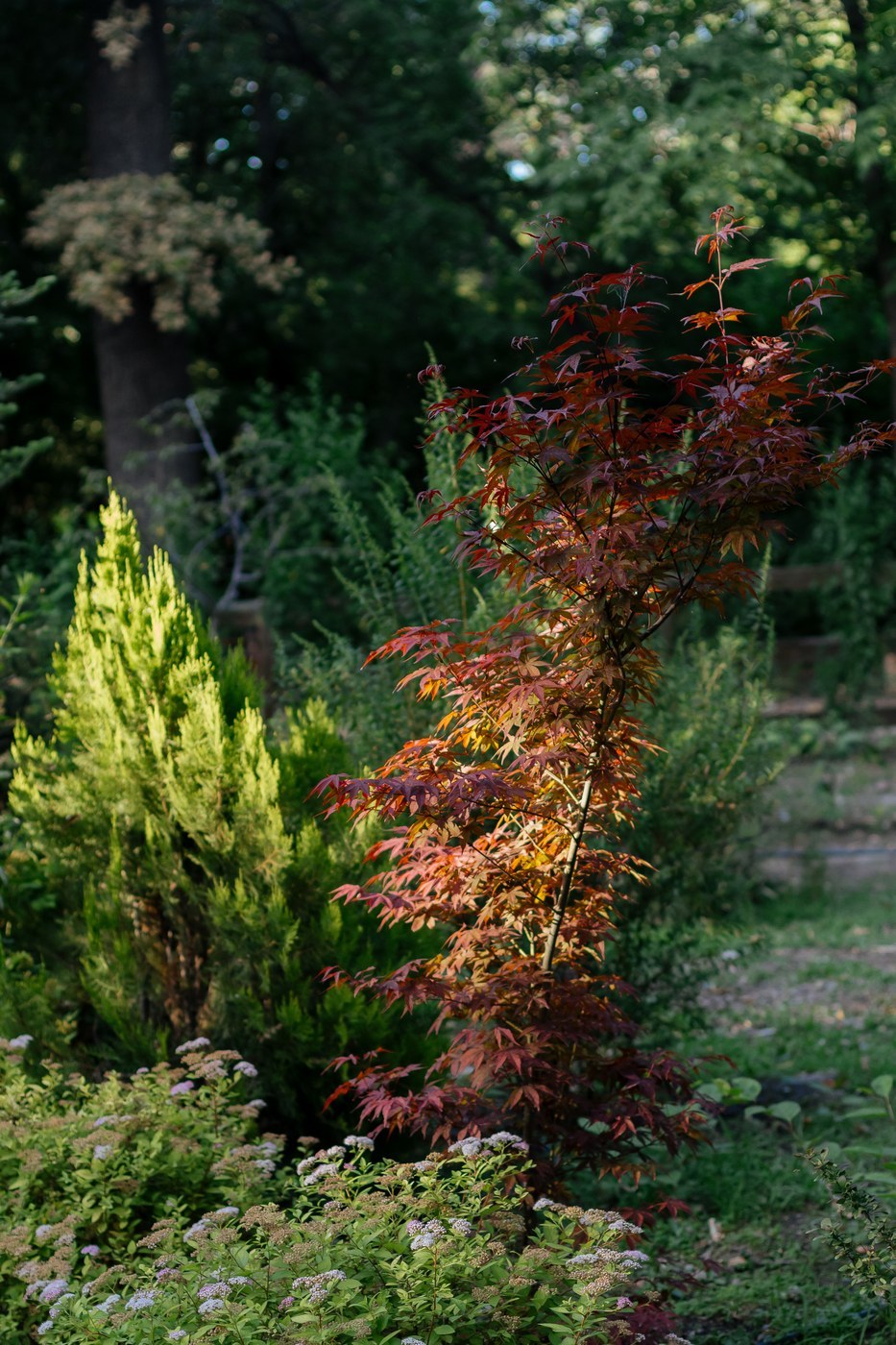
Key Identifying Features
Japanese maple (Acer palmatum) is a small, elegant ornamental tree or large shrub prized for its finely cut, hand-shaped leaves and intense seasonal color. It usually grows 10–25 feet tall with a layered, often weeping or rounded crown and slender, smooth branches.
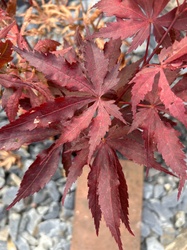
- Small palmate leaves with 5–9 deeply cut, pointed lobes and toothed margins
- Frequently red, purple, or finely dissected (lace-leaf) foliage in cultivars
- Small stature with a graceful, spreading, often layered form
- Paired winged seeds (samaras) typical of all maples
Leaves & Stems
The leaves are the hallmark: 2–5 inches wide, palmately divided into 5, 7, or 9 slender pointed lobes that radiate like fingers, with finely serrated edges. They are arranged oppositely (a maple trait). Wild and green-leaved forms are green in summer; countless cultivars are deep red or purple all season, and lace-leaf (dissectum) types have threadlike, lacy lobes. Fall color is spectacular — crimson, scarlet, orange, or gold. Twigs are slender, smooth, and often reddish; bark is smooth gray-green, sometimes with subtle striping on young stems.
Flowers & Fruit
In spring the tree produces small, reddish-purple flowers in delicate hanging clusters — easy to overlook. These develop into the characteristic maple fruit: paired samaras ("helicopters"), each pair joined at a wide angle, often blushed red, that spin as they fall.
How to Tell It Apart from Look-Alikes
Within maples, Japanese maple stands out by its small size, very finely divided lobes, and delicate texture. Full moon maple (Acer japonicum) has rounder leaves with more, shallower lobes. The much larger native and Norway maples have broader, coarser leaves and grow into big shade trees. The decisive maple-family clues are opposite leaves and paired winged samaras — these rule out look-alikes like Japanese-themed cut-leaf shrubs that are not maples.
Where You'll Find It
Native to Japan, Korea, and China, Japanese maple is grown worldwide as an ornamental in gardens, courtyards, patios, and bonsai collections. It prefers part shade and moist, well-drained soil, and you will most often encounter it as a specimen tree in landscaped settings rather than in the wild.
Quick ID Checklist
- Leaves: palmate, 5–9 deeply cut pointed lobes, opposite, finely toothed
- Color: often red/purple; brilliant red or gold in fall
- Form: small, layered or weeping; 10–25 feet
- Fruit: paired winged samaras at a wide angle
- Setting: ornamental gardens and containers
A small, graceful tree with delicate, deeply lobed, often-red palmate leaves is a Japanese maple.
Frequently asked questions
How do I know it's a maple at all?
Look for two maple signatures: leaves arranged in opposite pairs on the twig, and paired winged seeds called samaras. Japanese maple has both, distinguishing it from non-maple cut-leaf shrubs.
Are all Japanese maples red?
No. Many cultivars are red or purple all season, but the wild species and numerous cultivars are green in summer and turn red, orange, or gold only in autumn.
What is a lace-leaf Japanese maple?
Lace-leaf or dissectum cultivars have leaves so finely divided that each lobe looks threadlike and feathery. They typically form low, weeping, cascading mounds.
How big does a Japanese maple get?
Most reach only 10 to 25 feet, far smaller than native shade maples, which is part of why it is favored for small gardens, patios, and bonsai.
Japanese Maple identified by the community
Recent Japanese Maple specimens identified with Plant Identifier.