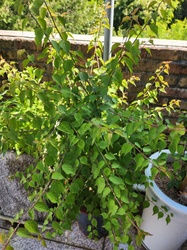
Jasmine Identification Guide
Identify jasmine by its intensely fragrant white (or yellow) star-shaped tubular flowers, glossy opposite or compound leaves, and twining vine habit.
Read the full Jasmine encyclopedia entry →
Key Identifying Features
True jasmine (Jasminum species, olive family) is a twining vine or shrub famed for its scent. Identify it by:
- Intensely fragrant flowers, usually white or yellow, opening especially in evening
- A tubular flower flaring into 4-9 star-like lobes (usually 5)
- Glossy green leaves, either simple or pinnately compound with several leaflets, arranged opposite (or sometimes alternate)
- A twining, climbing or arching shrubby habit with slender green stems
- Pink- or red-tinged buds opening to white in common jasmine
Leaves & Stems
Jasmine leaves are typically opposite, glossy, and either simple or pinnately compound with 3-9 leaflets depending on species. Jasminum officinale (common/poet's jasmine) has compound leaves with pointed leaflets; J. sambac (Arabian jasmine) has simple, broad, shiny leaves; winter jasmine (J. nudiflorum) bears yellow flowers on green four-angled stems often before the leaves. Stems are slender, green when young, and twine or scramble rather than clinging by tendrils. The plant climbs supports or forms a loose mound.
Flowers & Fruit
The flower is the best identifier. Each bloom is a slender tube (corolla tube) flaring into a flat star of pointed lobes, classically waxy white, sometimes yellow, and powerfully sweet-scented, with fragrance peaking at night. Flowers appear singly or in small clusters. Buds are often flushed pink or rose before opening white. Bloom season varies by species from winter (winter jasmine) to summer. Fruit, when formed, is a small black or purple two-lobed berry, though many cultivated jasmines rarely fruit.
How to Tell It Apart from Look-Alikes
- Star jasmine (Trachelospermum jasminoides) is not a true jasmine; it is in the dogbane family, has milky sap and propeller-twisted white flowers, and evergreen simple leaves.
- Mock orange (Philadelphus) has fragrant four-petaled white flowers but is a woody shrub with simple opposite leaves and no twining habit.
- Gardenia has thick waxy rose-like white flowers and leathery leaves, lacking the slender star-tube of jasmine.
- The true jasmine signature is the fragrant slender-tubed star flower with 5 lobes on a twining plant with glossy simple or compound leaves.
Where You'll Find It
Jasmine is grown on trellises, fences, arbors, and as container plants in warm and temperate gardens worldwide, and wild species occur across Asia, Africa, and Europe. It favors full sun to part shade and moist, well-drained soil, and many types are tender to frost.
Quick ID Checklist
- Strongly fragrant white or yellow flowers
- Tubular flower flaring into a 5-lobed star
- Glossy simple or pinnately compound opposite leaves
- Twining, climbing, or arching stems (no tendrils)
- Buds often pink-tinged before opening
- Optional small dark berry fruit
A twining plant with glossy leaves and sweetly scented star-shaped tubular flowers is almost certainly a true jasmine.
Frequently asked questions
Is star jasmine a real jasmine?
No. Star jasmine (Trachelospermum jasminoides) is in the dogbane family, has milky sap, and only resembles jasmine in scent. True jasmine is the genus Jasminum, which lacks milky sap.
Why is jasmine so fragrant at night?
Many jasmines, especially Arabian jasmine, release their strongest scent in the evening to attract night-flying pollinators like moths, which is why the perfume seems to intensify after dark.
How do I tell jasmine from gardenia?
Gardenia has thick, waxy, rose-like multi-petaled flowers and leathery evergreen leaves, while jasmine has slender-tubed star-shaped flowers with narrow lobes on twining stems.
Do all jasmines have white flowers?
Most do, but some species are yellow, such as winter jasmine (J. nudiflorum) and primrose jasmine, which bloom in shades of bright yellow rather than white.
Jasmine identified by the community
Recent Jasmine specimens identified with Plant Identifier.