Jasmine
Jasminum officinale
A climbing shrub famous for intensely fragrant, star-shaped white flowers that perfume summer evenings. Common jasmine is vigorous and grown on trellises and walls.
- Light
- Full sun to part shade
- Water
- Regular; keep evenly moist
- Difficulty
- Moderate
Got a plant like this?
Identify any plant from a photo, free.
Overview
Common jasmine is a twining, semi-evergreen to deciduous climbing shrub celebrated for its powerfully sweet-scented white flowers, which open from summer into autumn.
Its slender stems clamber over supports, making it a favorite for arbors, fences, walls, and pergolas where its fragrance can be enjoyed up close, especially in the evening.
Widely grown across warm-temperate regions, true jasmine is the source of the prized jasmine fragrance used in perfumes, and it carries deep cultural significance in many countries.
How to identify it
Identify common jasmine by:
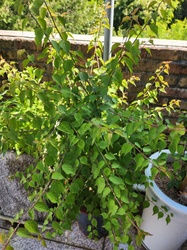
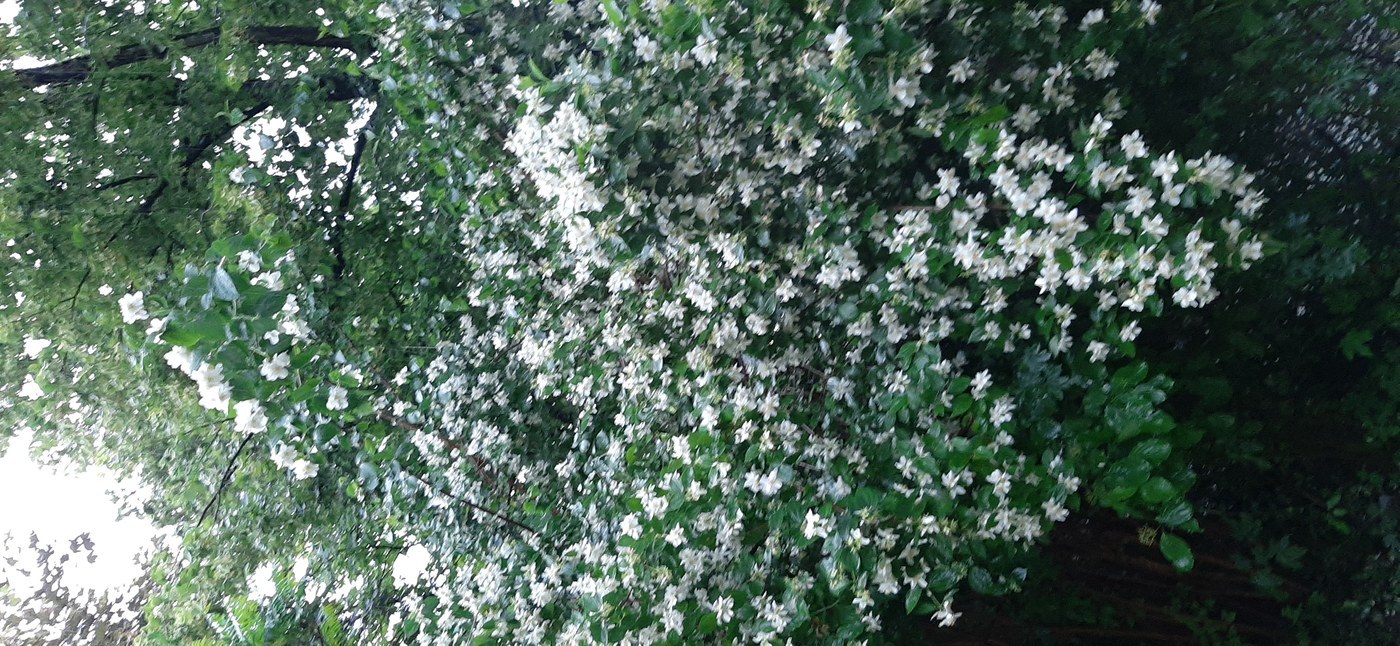
- Flowers: Small, white, star-shaped flowers with five narrow lobes, borne in clusters and intensely fragrant.
- Leaves: Pinnate (feather-like) leaves divided into several small, pointed leaflets.
- Habit: A vigorous twining climber that can reach 10-15 feet or more on supports.
- Stems: Slender, green, flexible, twining stems.
- Scent: A heady, sweet perfume strongest in the evening.
Care & growing
Give jasmine warmth, support, and steady moisture.
- Light: Full sun to partial shade; more sun encourages heavier flowering.
- Water: Keep soil evenly moist during the growing season; avoid both drought and waterlogging.
- Soil: Fertile, well-drained soil with organic matter.
- Temperature: Best in warm-temperate to subtropical climates; common jasmine tolerates light frost but needs protection in cold areas.
- Feeding: Feed during active growth with a balanced or bloom-supporting fertilizer.
- Propagation: Propagate from semi-ripe cuttings or layering; prune after flowering to control the vigorous growth and shape the vine.
Habitat & origin
Jasminum officinale is native to a region stretching from the Caucasus and the Middle East through the Himalayas to western China, where it grows in scrub and on slopes.
It has been cultivated for centuries and is now grown across warm-temperate and subtropical regions worldwide. It is the national flower of Pakistan and holds cultural importance across South Asia, the Middle East, and the Mediterranean.
Frequently asked questions
Why is my jasmine not flowering?
Too little sun, excess nitrogen fertilizer, or pruning at the wrong time can all reduce blooms; common jasmine flowers best in a sunny spot.
When does jasmine smell strongest?
Many jasmines, including common jasmine, release their strongest fragrance in the evening and at night to attract nocturnal pollinators.
Is jasmine the same as star jasmine?
No. Star jasmine (Trachelospermum) is a different plant in another family; true jasmine belongs to the genus Jasminum, though both are fragrant climbers.
Can jasmine be grown in pots?
Yes, jasmine grows well in containers with a trellis, which also makes it easy to move indoors or to shelter in cold climates.
Jasmine guides
In-depth guides for identifying, growing, and caring for Jasmine.
How to Care for Jasmine
Grow fragrant common jasmine (Jasminum officinale) with steady moisture, sun, and support for its twining vines.
Jasmine Identification Guide
Identify jasmine by its intensely fragrant white (or yellow) star-shaped tubular flowers, glossy opposite or compound leaves, and twining vine habit.
Jasmine identified by the community
Real specimens identified with Plant Identifier.