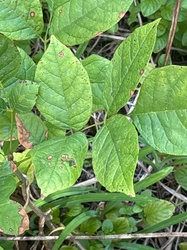
Kudzu Identification Guide
How to identify kudzu (Pueraria montana) by its massive smothering vines, large three-lobed leaves, hairy stems, and fragrant purple grape-scented flowers.
Read the full Kudzu encyclopedia entry →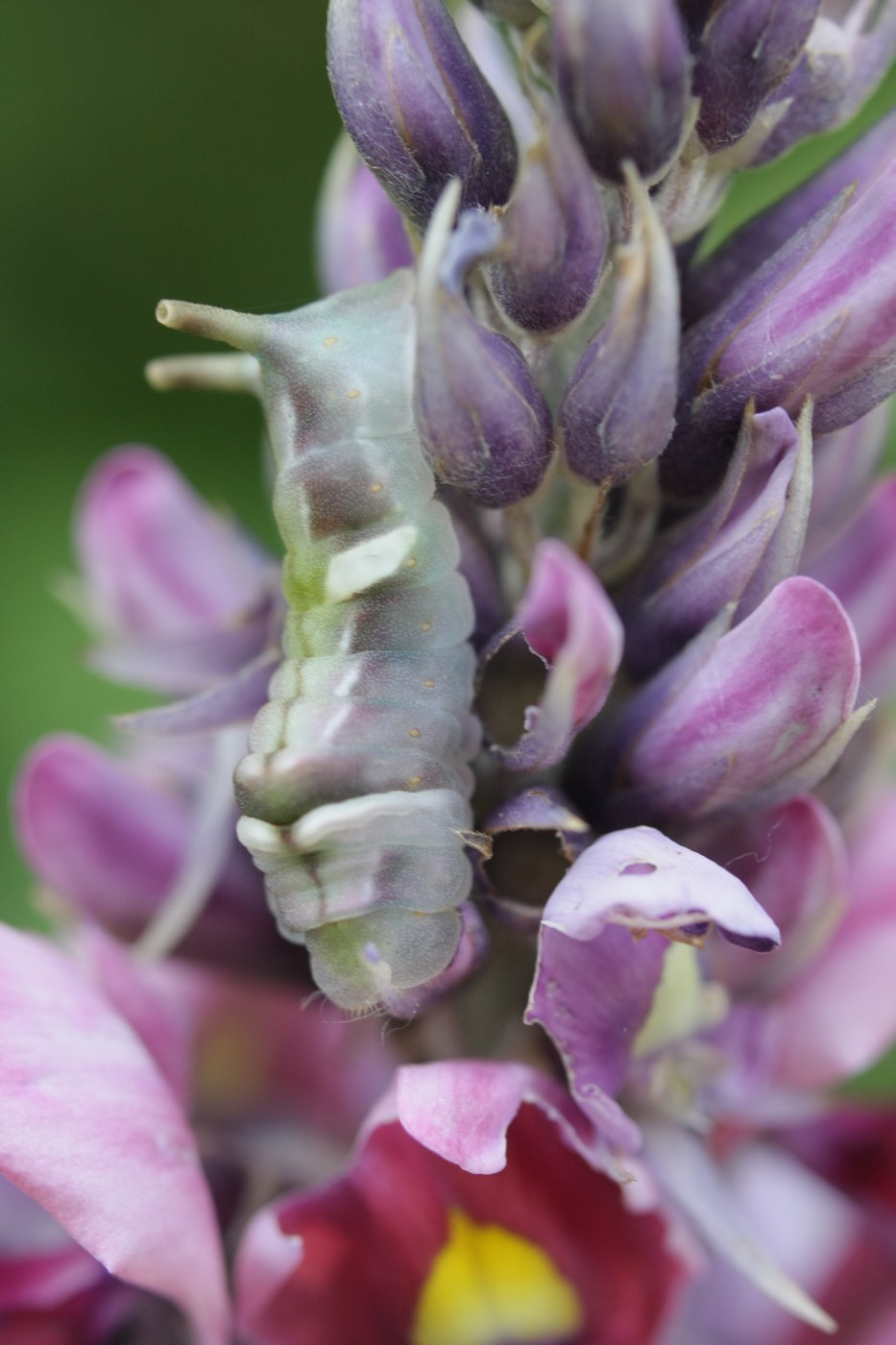
Key Identifying Features
Kudzu (Pueraria montana var. lobata) is an aggressive invasive vine famous for blanketing entire landscapes. Identify it by:
- Large compound leaves with three broad leaflets, often lobed
- Long, hairy, climbing and trailing vines that drape over trees and structures
- Fragrant purple flower clusters with a grape-like scent
- Flat, hairy, brown seed pods
Vines can grow up to a foot per day and cover whole trees and buildings.
Leaves & Stems
Each leaf is compound with three large leaflets (trifoliate). The central leaflet is symmetrical while the two side leaflets are lopsided, and the leaflets are often shallowly two- or three-lobed, broad, and covered with fine hairs, especially underneath. Leaves can be 3-8 inches across. Young stems are green and densely covered with golden-brown hairs; older vines become woody, ropey, and can be several inches thick. Kudzu spreads both by rooting at the nodes where vines touch soil and by a huge starchy taproot.
Flowers & Fruit
In late summer, kudzu produces upright clusters (racemes) of pea-like flowers that are reddish-purple to violet with a strong, sweet grape-soda fragrance — a memorable confirming feature. The flowers give way to flat, brown, hairy, bean-like seed pods clustered along the stalk, each containing a few seeds. As a legume, kudzu fixes nitrogen.
How to Tell It Apart from Look-Alikes
- Wild grape: A vine, but grape leaves are single and lobed, not trifoliate, and grape has tendrils; kudzu has three leaflets and no tendrils.
- Poison ivy: Also trifoliate, but poison ivy leaflets are smaller, smoother, and not lobed in the same broad way, and poison ivy lacks the dense golden hairs and grape-scented purple flowers.
- Porcelain berry / Virginia creeper: Different leaf structures (creeper has five leaflets).
- Other beans/legumes: Share trifoliate leaves and pea flowers, but kudzu's massive smothering habit and hairy lobed leaflets are distinctive.
The hairy three-leaflet leaves plus grape-scented purple flower spikes plus rampant smothering vines identify kudzu.
Where You'll Find It
Kudzu dominates the southeastern United States, smothering roadsides, forest edges, abandoned fields, fences, telephone poles, and entire trees. It thrives in full sun and disturbed ground, tolerating poor soils, and is one of the most notorious invasive plants in North America.
Quick ID Checklist
- Three broad leaflets per leaf, often lobed
- Hairy stems and leaf undersides
- Vines that smother trees, fences, and ground
- Purple pea-like flowers with grape scent
- Flat, hairy, brown seed pods
- Massive starchy taproot
A vigorously climbing, hairy vine with broad three-lobed leaflets and grape-scented purple flowers that blankets the landscape is kudzu.
Frequently asked questions
How fast does kudzu grow?
Under ideal summer conditions kudzu can grow up to about a foot per day and a vine can extend many feet in a season, which is how it rapidly smothers trees, fences, and even buildings.
How do I tell kudzu from poison ivy, since both have three leaflets?
Kudzu leaflets are large, broad, often lobed, and densely hairy, and the plant produces grape-scented purple flower spikes. Poison ivy leaflets are smaller, smoother, and almond-shaped, without dense golden hairs or showy purple flowers.
Do kudzu flowers really smell like grape soda?
Yes. The reddish-purple flower clusters have a strong sweet fragrance often compared to grape soda or grape candy, which is a helpful and memorable identification clue in late summer.
Kudzu identified by the community
Recent Kudzu specimens identified with Plant Identifier.