Marigold Identification Guide
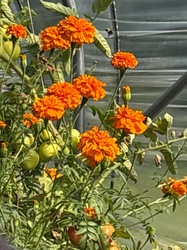
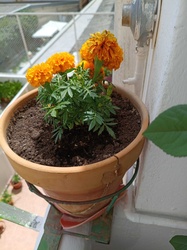
Identify marigolds by their dense yellow-to-orange pom-pom flower heads, finely divided pungent fern-like leaves, and bushy annual growth.
Read the full Marigold encyclopedia entry →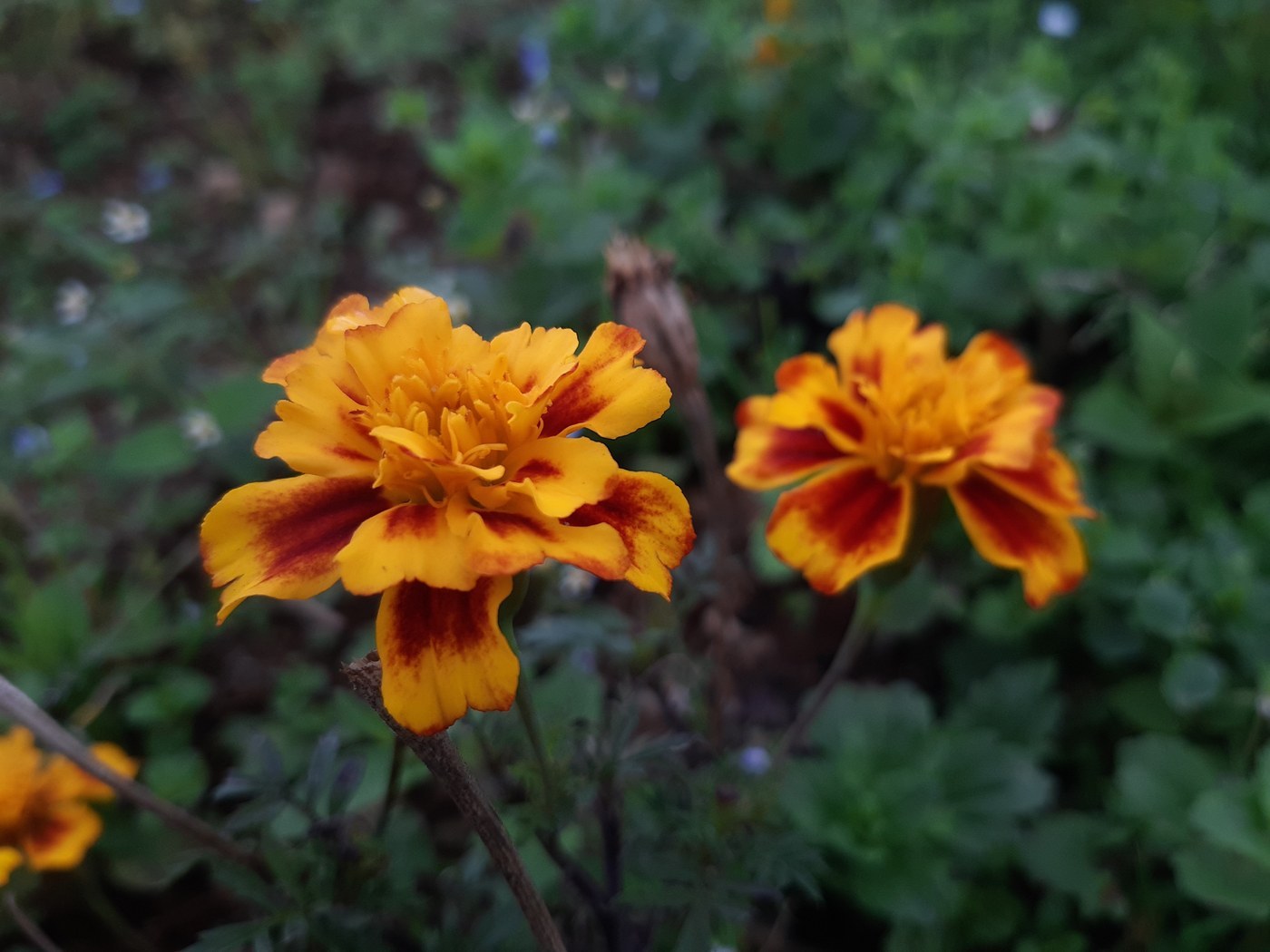
Key Identifying Features
Garden marigolds (Tagetes species) are bushy annuals in the aster family. Identify them by:
- Bright yellow, orange, gold, or mahogany flower heads, often dense and pom-pom-like
- Finely divided, fern-like (pinnate) leaves with many narrow toothed leaflets
- A strong, pungent, slightly musky scent when leaves are crushed
- Tiny oil glands visible as dots on the leaflets
- A compact, branching, bushy annual habit from 15-90 cm tall
Leaves & Stems
Marigold leaves are opposite or alternate and pinnately divided into many slender, lance-shaped, sharply toothed leaflets, giving a feathery look. Held to the light, the leaflets show translucent dot-like oil glands that release the characteristic odor. Stems are green, ribbed, branching, and somewhat brittle. African/American marigolds (T. erecta) are tall with large globe flowers; French marigolds (T. patula) are shorter and bushier with smaller single or double heads; signet marigolds (T. tenuifolia) have lacy foliage and small single flowers.
Flowers & Fruit
Each flower head is ringed by a smooth tubular cup of fused green bracts (involucre) at its base, a useful Tagetes trait. Heads range from single (a ring of broad ray petals around a small disk) to fully double pom-poms packed with ray florets in warm yellows, oranges, and reds, often bicolored. Bloom season is summer to first frost. Fertile florets produce slender black achenes tipped with a few scales or bristles (pappus). Deadheading prolongs bloom.
How to Tell It Apart from Look-Alikes
- Pot marigold / calendula (Calendula officinalis) is a different genus with simple, undivided, slightly sticky leaves, flatter daisy-like single flowers, and curved seeds; it lacks the pungent Tagetes smell.
- Chrysanthemums have lobed (not finely pinnate) aromatic leaves and a different, less acrid scent.
- Zinnias have simple opposite leaves and stiffer single stems.
- The marigold giveaway is feathery dotted strongly scented foliage plus a tubular bract cup beneath gold/orange pom-poms.
Where You'll Find It
Marigolds are planted in flower beds, borders, containers, and vegetable gardens (often as companion plants believed to deter pests) throughout the warm season. Native to the Americas, they thrive in full sun and average well-drained soil and bloom heavily until frost.
Quick ID Checklist
- Yellow to orange or mahogany pom-pom or single flower heads
- Finely divided fern-like leaves with toothed leaflets
- Pungent musky scent when crushed
- Translucent oil-gland dots on leaflets
- Smooth tubular cup of bracts under each head
- Bushy warm-season annual
Feathery aromatic foliage beneath warm-toned pom-pom flowers on a bushy annual marks a true marigold.
Frequently asked questions
Are marigolds and calendula the same plant?
No. True marigolds are Tagetes with finely divided pungent leaves, while pot marigold (Calendula) has simple, undivided leaves and flatter daisy-like flowers. They belong to different genera.
Why do marigolds smell so strong?
Tiny oil glands in the leaves release pungent aromatic compounds when crushed. Many gardeners value this scent for supposedly helping repel certain garden pests.
How can I tell French from African marigolds?
French marigolds (T. patula) are shorter, bushier, with smaller flowers often in red-and-yellow bicolors, while African marigolds (T. erecta) are taller with large solid-colored globe blooms.
What is the cup at the base of the flower?
It is the involucre, a smooth tube of fused green bracts that holds the florets. This continuous cup is a reliable feature of Tagetes marigolds.
Marigold identified by the community
Recent Marigold specimens identified with Plant Identifier.