Marigold
Tagetes
A cheerful, easy annual with pompom-like flowers in gold, orange, and red, and pungent foliage. Marigolds bloom all season and are popular for borders and companion planting.
- Light
- Full sun
- Water
- Moderate; let topsoil dry
- Difficulty
- Easy
Got a plant like this?
Identify any plant from a photo, free.
Overview
Marigolds (genus Tagetes) are fast, dependable annuals that flower nonstop from spring until frost in warm gold, orange, yellow, and mahogany tones. Compact French and taller African (American) types are the most common.
Their ferny, strongly scented foliage is part of their charm and is said to help deter some garden pests, making them a staple of companion planting.
Easy from seed and tolerant of heat and poor soil, marigolds are a go-to flower for beginners, children's gardens, and vegetable plots alike.
How to identify it
Identify a marigold by:
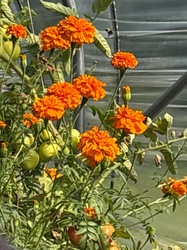
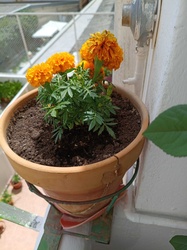
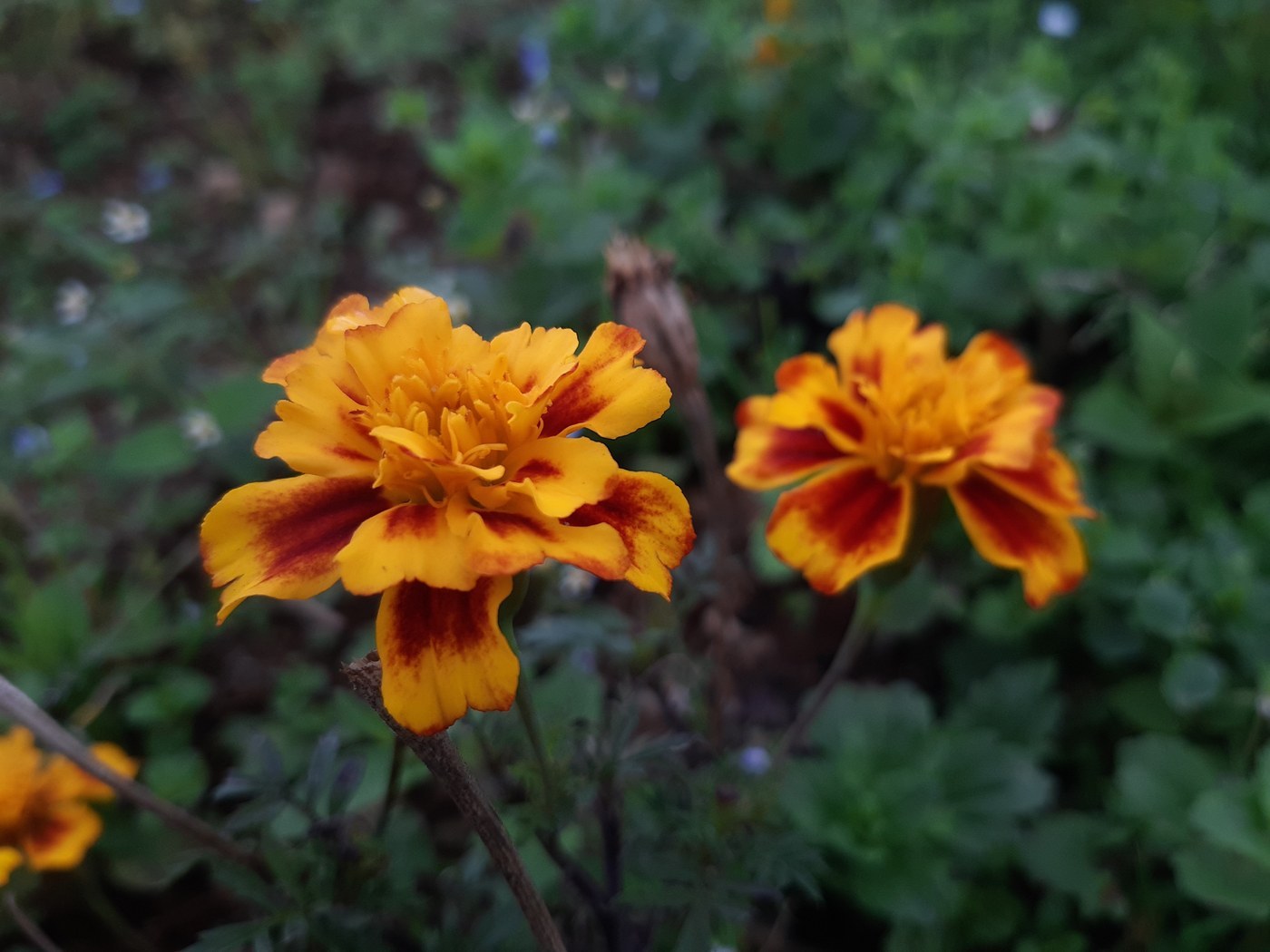
- Flowers: Dense, rounded, often double pompom or carnation-like blooms in gold, orange, yellow, and red-brown.
- Foliage: Deeply divided, fern-like leaves with a distinctive pungent scent when crushed.
- Habit: Bushy mounded annual, from compact 6-inch French types to 3-foot African types.
- Stems: Branching green stems that may become slightly woody at the base.
- Bloom: Continuous flowering all summer until frost.
Care & growing
Marigolds are among the easiest flowers to grow.
- Light: Full sun for the most abundant blooms.
- Water: Water moderately, letting the topsoil dry between; avoid wetting foliage to limit disease.
- Soil: Tolerant of most soils, even poor ones, with decent drainage.
- Temperature: Warm-season annual; sow or plant after frost danger passes.
- Feeding: Minimal; rich soil can produce leaves at the expense of flowers.
- Propagation: Very easy from seed; deadheading spent blooms keeps plants flowering.
Habitat & origin
Tagetes species are native to the Americas, particularly Mexico and Central America, where they grow in sunny, open habitats. They have deep cultural roots in Mexico, where they feature in Day of the Dead celebrations.
Now grown worldwide as warm-season annuals, marigolds are popular in gardens, containers, and vegetable plots, and are cultivated commercially in places like India for festival garlands and as a pigment source.
Frequently asked questions
Do marigolds really repel pests?
Certain marigolds can suppress soil nematodes, and their scent may deter some insects, but they are not a guaranteed cure-all for garden pests.
Should I deadhead marigolds?
Yes, removing spent blooms encourages the plant to keep producing flowers and tidies its appearance throughout the season.
Are pot marigolds and Tagetes the same?
No. The true Tagetes marigold differs from the pot marigold (Calendula); both are called marigold but belong to different genera.
Are marigolds annual or perennial?
Tagetes marigolds are warm-season annuals that complete their life cycle in one year, though they often self-seed and return.
Marigold guides
In-depth guides for identifying, growing, and caring for Marigold.
How to Care for Marigold
Grow bright, dependable marigolds with full sun, moderate water and steady deadheading for months of nonstop bloom.
Marigold Identification Guide
Identify marigolds by their dense yellow-to-orange pom-pom flower heads, finely divided pungent fern-like leaves, and bushy annual growth.
Marigold identified by the community
Real specimens identified with Plant Identifier.