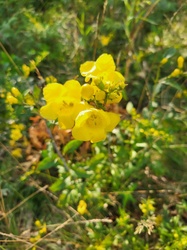
Monkey Flower Identification Guide
Identify monkey flowers by their two-lipped, often spotted tubular blooms and opposite leaves near water. This guide covers features and similar species.
Read the full Monkey Flower encyclopedia entry →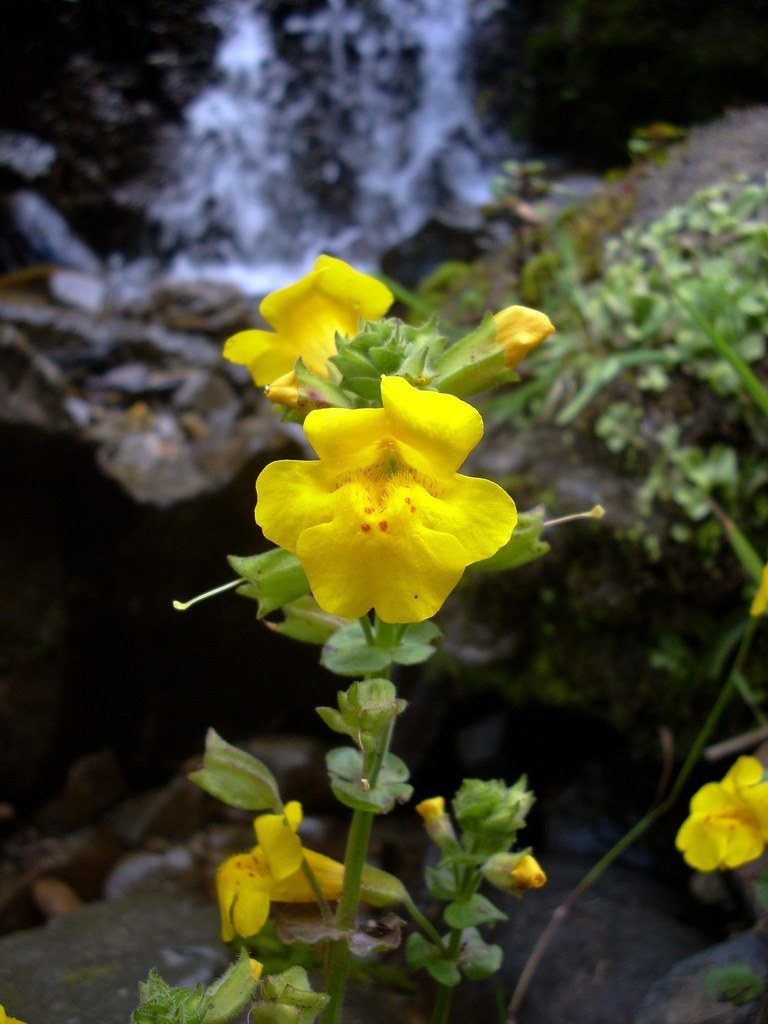
Key Identifying Features
Monkey flowers (genus Mimulus, now often Erythranthe and Diplacus) are annuals and perennials named for the grinning, face-like shape of their two-lipped flowers.
- Flowers: tubular, two-lipped (bilabiate) with an upper lip of 2 lobes and a lower lip of 3 lobes
- Color: yellow, red, pink, magenta or orange, frequently with darker spots or a contrasting throat patch
- Throat: often hairy and ridged, sometimes nearly closing the mouth
- Stamens: 4, hidden in the tube; the stigma is touch-sensitive and folds shut when brushed
- Calyx: five-angled, ribbed and often inflated
Leaves & Stems
Leaves are opposite, oval to lance-shaped, often toothed, and may be slightly sticky or smooth depending on species. Stems can be square-ish or rounded, sometimes succulent in wetland species like Erythranthe guttata (seep monkeyflower), which roots at the lower nodes. Sticky monkeyflowers of dry California slopes (Diplacus) have narrow, resinous, glandular leaves.
Flowers & Fruit
The ribbed, five-toothed calyx is a strong ID feature, often inflating around the developing capsule. The flower's snapdragon-like two-lipped form and spotted, hairy throat give it the "monkey face" look. A fun confirmation: gently touch the two-flapped stigma at the flower's mouth and watch it snap closed within seconds. The fruit is a capsule enclosed by the persistent calyx, splitting to release many tiny seeds.
How to Tell It Apart from Look-Alikes
- Snapdragon (Antirrhinum): similar two-lipped flowers but the mouth is closed (personate) and they grow in dry gardens, not wet seeps
- Toadflax (Linaria): spurred flowers, very narrow leaves
- Musk mallow / mimics: five separate petals, not a fused two-lipped tube
- Lopseed family relatives: lack the inflated ribbed calyx and touch-sensitive stigma
The inflated five-ribbed calyx + two-lipped spotted flower + opposite leaves + touch-sensitive stigma confirm monkey flower.
Where You'll Find It
Many monkey flowers, such as the common yellow seep monkeyflower, grow in wet places: stream banks, seeps, springs, ditches and moist meadows, especially in western North America. Sticky bush monkeyflowers grow on dry rocky slopes and chaparral. They bloom spring through summer and are widely grown in gardens and as ornamentals.
Quick ID Checklist
- Tubular two-lipped flower (2 upper, 3 lower lobes)
- Spotted or contrasting hairy throat
- Inflated, ribbed, five-toothed calyx
- Opposite, often toothed leaves
- Touch-sensitive stigma that snaps shut
- Wet habitat (most species) or sticky dry-slope foliage (bush types)
Frequently asked questions
Why is it called monkey flower?
The two-lipped, often spotted flowers resemble a grinning monkey face, with an upper lip of two lobes and a lower lip of three lobes framing a hairy throat.
What is the touch-sensitive stigma trick?
If you gently touch the two-flapped stigma at the flower's mouth it folds closed within seconds, a distinctive behavior that helps confirm a monkey flower.
How do I separate monkey flower from snapdragon?
Snapdragon flowers have a closed mouth and grow in dry gardens, while monkey flowers have an open spotted throat, an inflated ribbed calyx and usually favor moist habitats.
Where do monkey flowers grow?
Most grow in wet places such as stream banks, seeps and ditches, while sticky bush monkeyflowers grow on dry rocky slopes and chaparral in the western US.
Monkey Flower identified by the community
Recent Monkey Flower specimens identified with Plant Identifier.