Monkey Flower
Erythranthe guttata
A cheerful moisture-loving wildflower with snapdragon-like blooms, often spotted, whose grinning face inspired the common name monkey flower.
- Light
- Full sun to part shade
- Water
- High; keep moist to wet
- Difficulty
- Moderate
Got a plant like this?
Identify any plant from a photo, free.
Overview
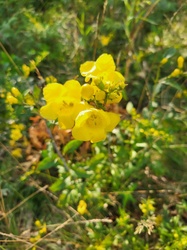
Monkey flower is the common name for plants in the genera Erythranthe and Diplacus (long classified under Mimulus), with the widespread yellow seep monkeyflower, Erythranthe guttata, among the best known. The name comes from the flower's whimsical, face-like appearance.
Native to western North America, these plants favor wet ground and bloom profusely through spring and summer. They are popular in bog gardens, pond margins, and rain gardens, and the genus has been important in scientific studies of plant evolution.
How to identify it
A soft, sprawling to upright herbaceous plant of damp places.
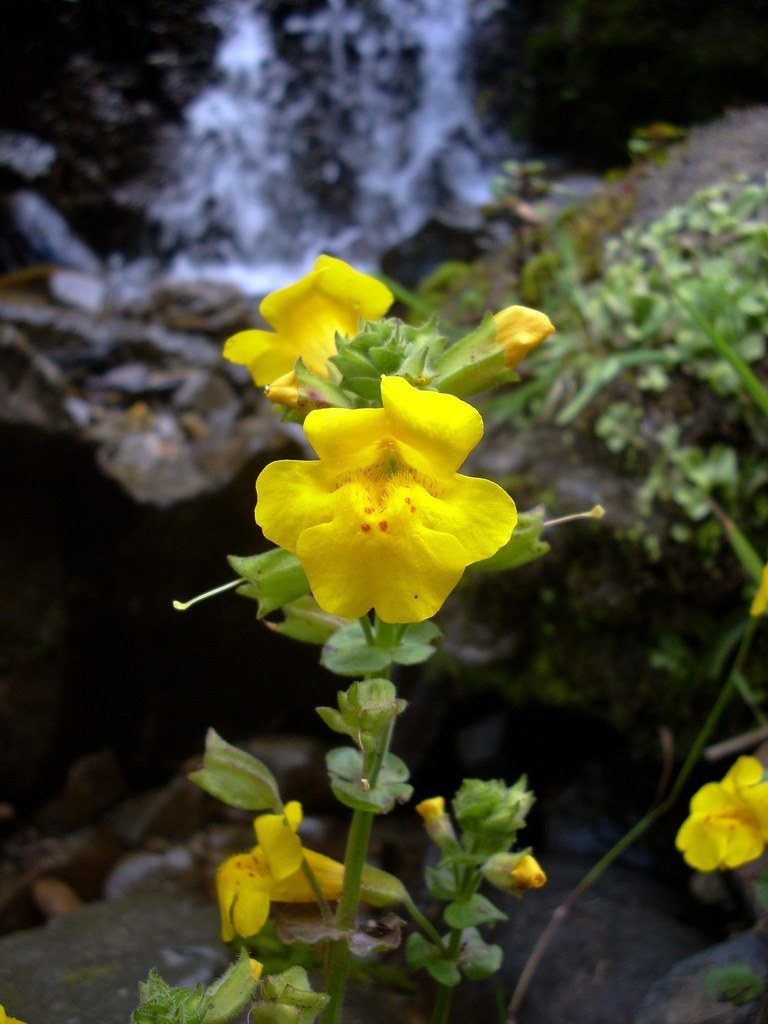
- Flowers: tubular, two-lipped snapdragon-like blooms, typically bright yellow often with red or maroon spots in the throat
- Shape: a flaring, lobed face that resembles a grinning monkey
- Leaves: oval to rounded, opposite, often toothed and slightly sticky
- Stems: somewhat fleshy and frequently rooting where they touch moist soil
- Height: 10-80 cm depending on species and conditions
Care & growing
- Light: full sun to partial shade; more sun where soil stays consistently moist
- Water: abundant; these are wetland plants that should never dry out and tolerate boggy ground
- Soil: rich, moisture-retentive soil; ideal at pond and stream margins
- Temperature: thrives in cool to mild conditions; many are short-lived perennials grown as annuals
- Feeding: light feeding during the growing season supports continued bloom
- Propagation: easy from seed, stem cuttings, or division; stems readily root at the nodes
Habitat & origin
Erythranthe guttata is native to western North America, from Alaska to Mexico, where it grows along streams, seeps, springs, and other consistently wet places.
It has naturalized in parts of Europe, New Zealand, and elsewhere along waterways. In gardens it is grown in bog gardens, rain gardens, and the margins of ponds and water features where its moisture needs are met.
Frequently asked questions
Why is it called monkey flower?
The flared, spotted face of the bloom was thought to resemble a grinning monkey, giving rise to the common name.
Has the scientific name changed?
Yes. Many species once placed in Mimulus are now classified in Erythranthe and Diplacus, though Mimulus is still widely seen in the trade.
Can monkey flower grow in standing water?
It loves wet feet and thrives in saturated soil and along water margins, tolerating shallow standing water.
Is monkey flower a perennial?
Many species are short-lived perennials but are often grown as annuals, especially in regions with cold winters or dry summers.
Monkey Flower guides
In-depth guides for identifying, growing, and caring for Monkey Flower.
How to Care for Monkey Flower
Monkey Flower is a cheerful moisture-loving perennial with bright yellow blooms, perfect for pond edges, bog gardens, and wet spots.
Monkey Flower Identification Guide
Identify monkey flowers by their two-lipped, often spotted tubular blooms and opposite leaves near water. This guide covers features and similar species.
Monkey Flower identified by the community
Real specimens identified with Plant Identifier.