Monstera Deliciosa Identification Guide
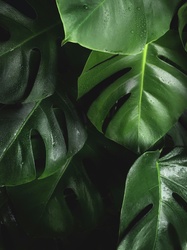
Identify Monstera deliciosa, the Swiss cheese plant, by its huge glossy leaves with both splits (fenestrations) and holes, plus aerial roots.
Read the full Monstera Deliciosa encyclopedia entry →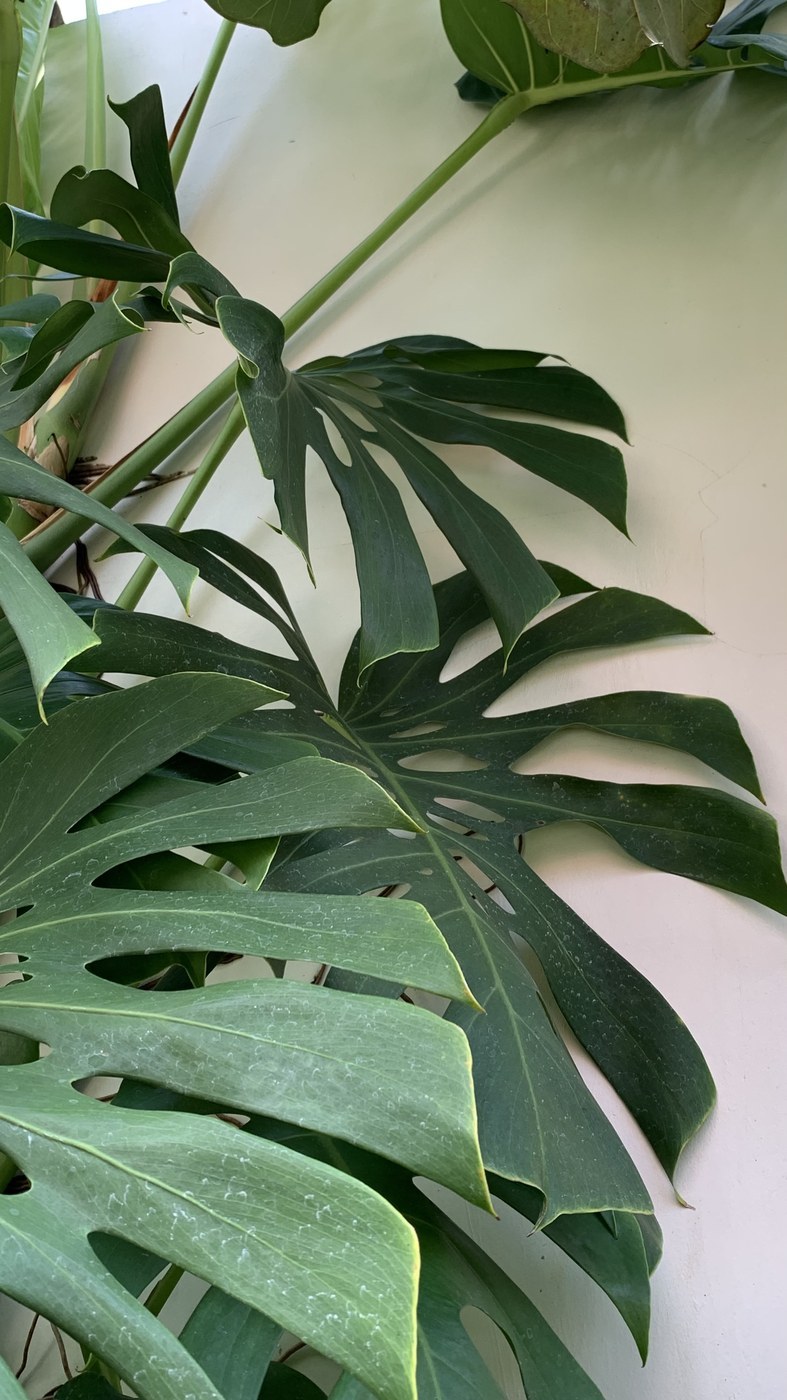
Key Identifying Features
Monstera deliciosa, the Swiss cheese plant, is among the most recognizable houseplants. Identify it by:
- Large, glossy, heart-shaped leaves that develop deep splits and oval holes (fenestrations) with age
- A climbing/trailing habit with thick aerial roots
- Stout green stems with prominent leaf scars
- Big size — mature indoor leaves reach 1-3 feet wide
The combination of edge splits AND interior holes on huge leaves separates it from most other plants.
Leaves & Stems
Juvenile leaves are small, entire (solid), and heart-shaped with no holes. As the plant matures, new leaves grow progressively larger and develop deep lobed slits from the margin plus separate oval to round holes flanking the midrib. Mature leaves are thick, leathery, deep green, and high-gloss. The stem is thick and segmented, producing long brown aerial roots that anchor the plant to trees (or moss poles indoors). A papery sheath protects each emerging leaf.
Flowers & Fruit
Indoors it rarely flowers, but in the wild or in greenhouses it produces a typical aroid bloom: a creamy-white spathe wrapped around a pale spadix. The spadix matures into a green, scaly, corn-cob-like fruit.
How to Tell It Apart from Look-Alikes
- Monstera adansonii has smaller, thinner leaves with holes only (no marginal splits) and a more vining, delicate habit.
- Split-leaf philodendron (Thaumatophyllum bipinnatifidum, formerly Philodendron selloum) has leaves that are deeply cut at the edges but lack interior holes, and forms a self-heading clump, not a climber.
- Rhaphidophora tetrasperma ("mini monstera") has small leaves split only from the margins and is far more compact.
If the big leaf has both holes and edge splits with a thick climbing aerial-root stem, it is M. deliciosa.
Where You'll Find It
Native to tropical rainforests of southern Mexico and Central America, where it climbs tree trunks. As a houseplant it's grown worldwide in bright, indirect light with a moss pole for support. Look for it as a large statement plant in homes, lobbies, and conservatories.
Quick ID Checklist
- Large glossy, leathery, heart-shaped leaves
- Both marginal splits AND interior oval holes on mature leaves
- Juvenile leaves solid (unfenestrated)
- Thick segmented stem with brown aerial roots
- Climbing habit, often on a moss pole
- Rare cob-like fruit with white spathe when flowering
Match these and you have Monstera deliciosa.
Frequently asked questions
How do I tell Monstera deliciosa from Monstera adansonii?
M. deliciosa has large, thick leaves with both marginal splits and interior holes, while adansonii has smaller, thinner leaves with holes only and no splits reaching the edge.
Why doesn't my young Monstera have holes?
Fenestrations develop with maturity and good light. Juvenile leaves are solid and heart-shaped; splits and holes appear as the plant grows larger and climbs.
Is it the same as a split-leaf philodendron?
No. The true split-leaf philodendron (Thaumatophyllum) has edge-cut leaves without interior holes and forms a non-climbing clump, whereas Monstera climbs with aerial roots and has holes.
Why does it have those dangling roots?
Those are aerial roots used to climb tree trunks in the wild; indoors they help anchor the plant to a moss pole and absorb moisture.
Monstera Deliciosa identified by the community
Recent Monstera Deliciosa specimens identified with Plant Identifier.