How to Care for Monstera
Grow the iconic Swiss cheese plant (Monstera deliciosa) with bright indirect light, weekly watering, and room to climb.
Read the full Monstera encyclopedia entry →
Monstera deliciosa, the Swiss cheese plant, is a beloved, easygoing tropical climber known for its dramatic split and holed leaves. Give it bright indirect light and a support to climb, and it grows quickly into a bold statement plant.
Light
Monstera thrives in bright, indirect light. A spot a few feet from a bright window, or near an east-facing one, is ideal. Too little light produces smaller leaves with fewer of the signature splits, while harsh direct midday sun can scorch the foliage. Rotate the plant every week or two for balanced growth.
Water
Water about weekly, letting the top 2 inches of soil dry out before watering again. Soak thoroughly until water runs from the drainage holes, then empty the saucer so roots never sit in standing water. Ease off in winter when growth slows. Drooping leaves and dry soil signal thirst; yellowing lower leaves often mean overwatering.
Soil & Potting
Use a chunky, well-draining aroid mix: general potting soil loosened with orchid bark, perlite, and a little coco coir. This gives the airy structure Monstera's roots prefer. Always plant in a container with drainage holes to avoid soggy roots.
Humidity & Temperature
As a tropical plant, Monstera enjoys warmth and humidity. Keep it between about 65-85F and away from cold drafts and heating vents. It tolerates average household humidity but grows lusher with 50 percent or higher; a humidifier, pebble tray, or grouping with other plants helps in dry rooms.
Feeding
Feed monthly during spring and summer with a balanced liquid houseplant fertilizer diluted to half strength. Suspend feeding in autumn and winter when growth naturally pauses. Avoid overfeeding, which can cause salt buildup and leaf-tip burn.
Propagation
Monstera roots readily from stem cuttings. Cut just below a node that includes an aerial root if possible, then root it in water or directly in moist mix. Roots usually form within a few weeks; once they are a couple inches long, pot the cutting into soil.
Repotting / Pruning
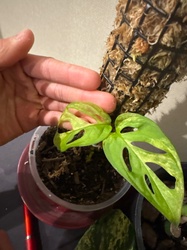
Repot every one to two years in spring, moving up one pot size when roots circle the container. Provide a moss pole or trellis so the plant can climb, which encourages larger, more fenestrated leaves. Prune to control size or remove damaged leaves, cutting just above a node. Guide aerial roots to the pole or tuck them into the soil.
Common Problems & Pests
Spider mites, mealybugs, scale, and thrips are the usual pests; wipe leaves and treat with insecticidal soap if they appear. Brown crispy edges suggest low humidity or underwatering, while yellow leaves and mushy stems point to overwatering. Lack of leaf splits usually means the plant needs more light and a support to climb.
Seasonal Care Tips
In spring and summer, resume feeding, repot if needed, and enjoy active growth. Wipe the large leaves occasionally to keep them dust-free and photosynthesizing well. In autumn and winter, reduce water and stop fertilizing, and keep the plant away from cold windows and drying heat.
Frequently asked questions
Why doesn't my Monstera have holes in its leaves?
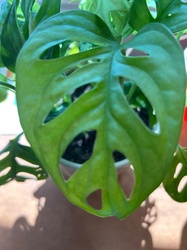
Fenestrations develop with maturity and adequate light. Young plants produce solid leaves, and low light delays splitting. Move it to brighter indirect light and give it a moss pole to climb to encourage larger, split leaves.
How often should I water my Monstera?
Roughly weekly during the growing season, once the top 2 inches of soil have dried. Water thoroughly, let it drain fully, and reduce frequency in winter.
Does Monstera need a moss pole?
It is not required, but a moss pole or trellis mimics the plant's natural climbing habit and encourages bigger, more fenestrated leaves and sturdier growth.
Why are my Monstera's leaves turning yellow?
Yellowing lower leaves most often indicate overwatering or poor drainage. Let the soil dry more between waterings, ensure the pot drains freely, and use a chunky aroid mix.
Monstera identified by the community
Recent Monstera specimens identified with Plant Identifier.