Monstera
Monstera deliciosa
Monstera deliciosa is a fast-growing tropical climber prized for its large, glossy leaves that develop dramatic holes and splits as they mature. It is one of the most popular houseplants worldwide and tolerates a wide range of indoor conditions.
- Light
- Bright indirect light
- Water
- Weekly; let top 2 inches dry
- Difficulty
- Easy
Got a plant like this?
Identify any plant from a photo, free.
Overview
Monstera deliciosa is an evergreen climbing aroid native to the rainforests of southern Mexico and Central America. In the wild it scrambles up tree trunks using thick aerial roots, eventually reaching heights of 20 feet or more.
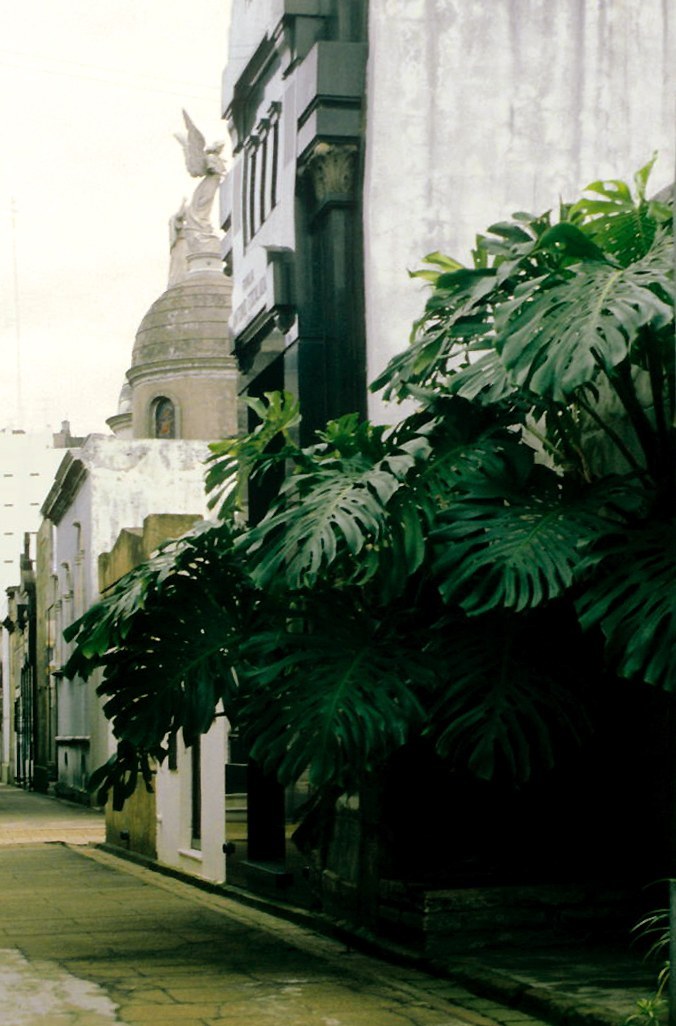
Its signature feature is the fenestration — the natural holes and slits that appear in mature leaves, thought to help the plant withstand heavy rain and dappled light in the forest canopy. Young plants produce solid, heart-shaped leaves and only develop fenestrations as they grow.
As a houseplant it is famously forgiving, making it a favorite for both beginners and collectors.
How to identify it
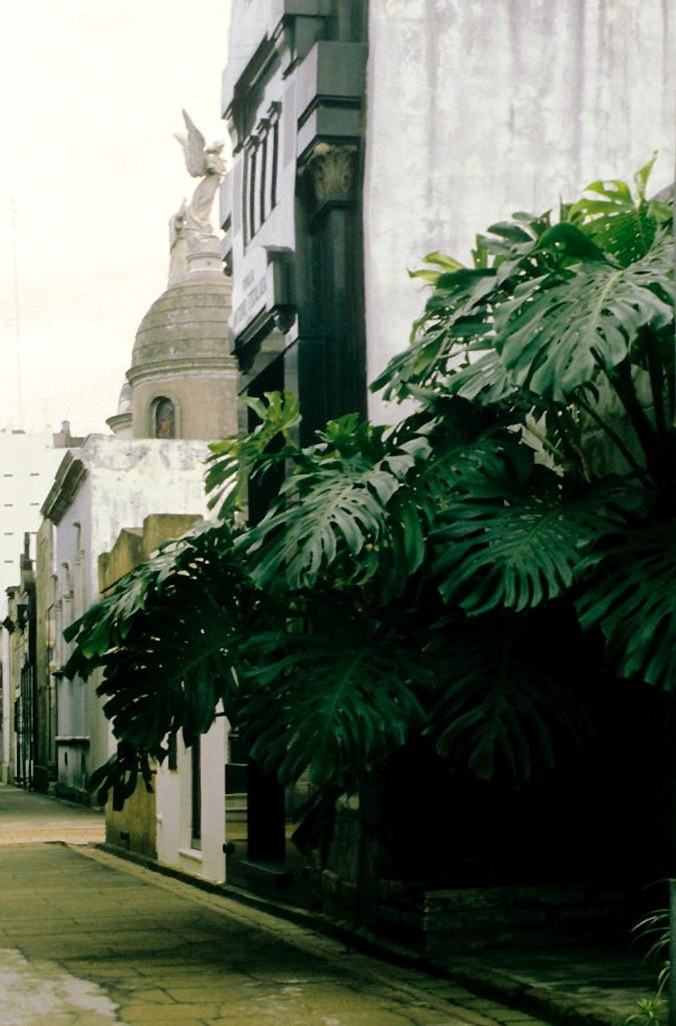
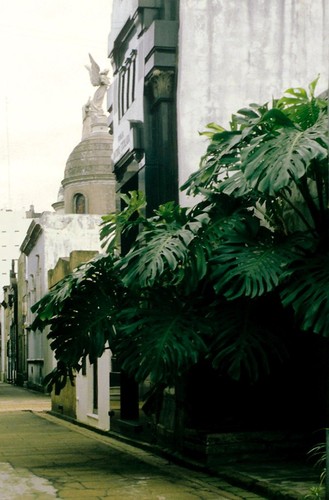
- Leaves: Large, glossy, heart-shaped and deep green, often 1-3 feet wide indoors, with characteristic oval holes and deep marginal splits in mature foliage
- Habit: Climbing or sprawling vine that produces thick brown aerial roots from the stem
- Stem: Stout green stems marked with leaf scars; supports itself with cord-like aerial roots
- Size: Reaches 8-10 feet indoors; far larger in the wild
- Flowers/fruit: Rarely flowers indoors; outdoors produces a creamy spadix enclosed by a pale spathe, followed by a cone-like fruit
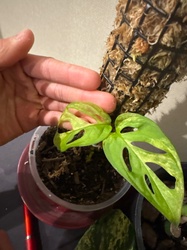
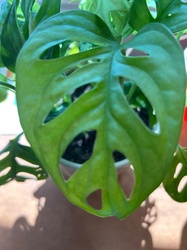
Do not confuse it with Monstera adansonii, which is smaller with more numerous, fully enclosed holes.
Care & growing
Light: Bright, indirect light is ideal. Tolerates medium light but grows slower and develops fewer fenestrations. Avoid harsh direct sun, which scorches leaves.
Water: Water when the top 1-2 inches of soil dry out, roughly weekly. Allow excess to drain; never leave it sitting in water.
Soil: A chunky, well-draining mix of potting soil, orchid bark, and perlite.
Temperature: Prefers 65-85°F (18-29°C) and moderate to high humidity.
Feeding: Balanced liquid fertilizer monthly during spring and summer.
Propagation: Easily propagated from stem cuttings with a node and aerial root, rooted in water or soil. Provide a moss pole for support and larger leaves.
Habitat & origin
Monstera deliciosa is native to the tropical rainforests of southern Mexico, Guatemala, and Panama, where it grows as a hemiepiphyte climbing on rainforest trees from sea level to around 6,500 feet.
It has naturalized in many tropical regions, including Hawaii and parts of Florida, and is cultivated outdoors in USDA zones 10-12. Worldwide it is one of the most widely grown indoor foliage plants.
Frequently asked questions
Why doesn't my Monstera have holes?
Fenestrations develop as the plant matures and receives adequate bright, indirect light. Young plants and those in low light produce solid leaves.
How often should I water it?
Roughly once a week, when the top 1-2 inches of soil feel dry. Overwatering is the most common cause of problems.
Do I need a moss pole?
It is not strictly required, but a moss pole supports the climbing habit and encourages larger, more fenestrated leaves.
Monstera guides
In-depth guides for identifying, growing, and caring for Monstera.
How to Care for Monstera
Grow the iconic Swiss cheese plant (Monstera deliciosa) with bright indirect light, weekly watering, and room to climb.
Monstera Identification Guide
How to recognize Monstera deliciosa by its split, hole-punched leaves, climbing habit, and aerial roots, and how to separate it from common look-alikes.
Monstera identified by the community
Real specimens identified with Plant Identifier.