How to Care for Mulberry Tree
Grow a vigorous, shade-giving Morus alba with full sun, deep occasional watering, and simple dormant-season pruning.
Read the full Mulberry Tree encyclopedia entry →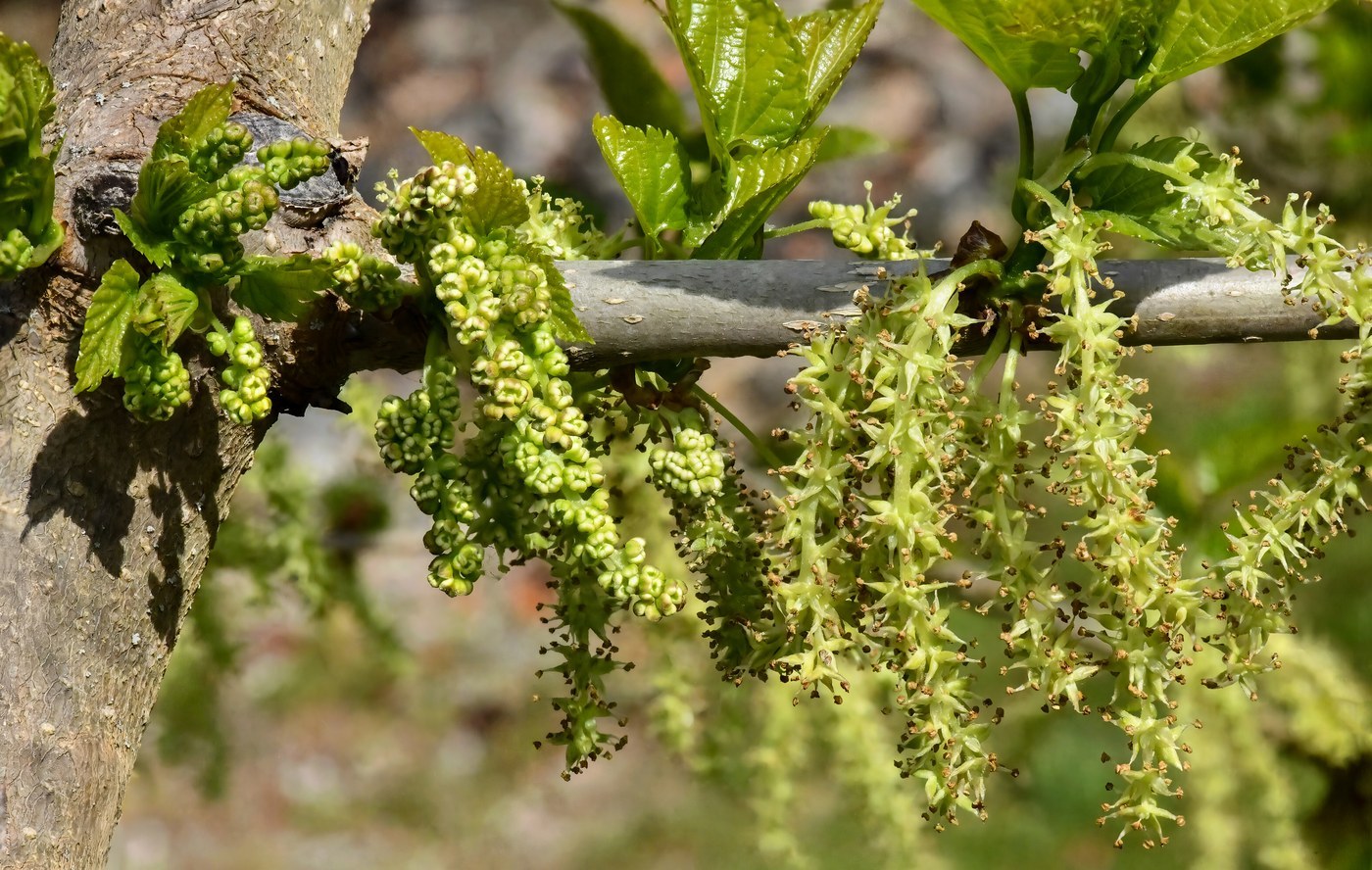
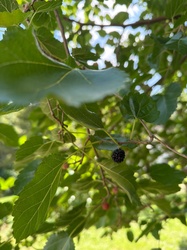
The white mulberry (Morus alba) is a fast-growing, resilient deciduous tree prized as an ornamental shade specimen and, in some settings, as a host for silkworm foliage. It adapts to a wide range of conditions, making it an easy tree for beginners once established.
Light
Mulberry performs best in full sun, where it develops a dense, rounded canopy and strong branch structure. It will tolerate part shade, but growth becomes leggier and the crown thins. Give it an open position with at least six hours of direct light for the fullest form.
Water
Water young trees deeply and regularly through their first two or three growing seasons to establish a broad root system. Once established, Morus alba is notably drought-tolerant and needs only moderate supplemental water during extended dry spells. Deep, infrequent soaking encourages roots to grow downward and outperforms frequent shallow watering.
Soil & Potting
Mulberry is unfussy about soil and thrives in loam, sand, or clay as long as drainage is reasonable. It tolerates a wide pH range from slightly acidic to alkaline. Avoid sites that stay waterlogged. If container-growing a young specimen, use a deep pot with a free-draining loam-based mix and expect to move it to the ground before it becomes root-bound.
Humidity & Temperature
This is a temperate tree that handles a broad temperature range and is fully hardy in most temperate zones once mature. It withstands summer heat well and does not require any special humidity. Young trees benefit from shelter from harsh, drying winds while they establish.
Feeding
Mulberry rarely needs heavy feeding. A single application of a balanced, slow-release tree fertilizer in early spring is plenty for most soils. Avoid excessive nitrogen, which pushes soft, weak growth. An annual mulch of compost around the root zone supplies steady, gentle nutrition.
Propagation
Mulberry propagates readily from hardwood cuttings taken in late autumn or winter and from softwood cuttings in early summer under mist. Many named forms are also grafted onto seedling rootstock. Seed germinates but seedlings are variable, so cuttings are preferred for reliable form.
Repotting / Pruning
Prune during full dormancy in late winter to shape the canopy, remove crossing or dead wood, and control size; mulberries bleed sap heavily if cut while in active growth, so avoid summer pruning of large limbs. The tree responds well to pollarding and hard renewal cuts. Keep container specimens root-pruned and top up fresh soil each year.
Common Problems & Pests
Mulberry is generally trouble-free. Watch for occasional scale insects, whitefly, and spider mites on stressed trees, and for fungal leaf spot or powdery mildew in humid, crowded conditions. Improve air circulation and avoid overhead watering to limit foliar disease. Dropping fruit can stain paving, so site accordingly.
Seasonal Care Tips
Plant bare-root trees in the dormant season. Feed and mulch in early spring as buds swell. Water attentively through the first summers, then rely on the tree's drought tolerance. Carry out structural pruning in the depth of winter. In autumn, clear fallen leaves to reduce overwintering disease spores.
Frequently asked questions
How fast does a mulberry tree grow?
Morus alba is one of the faster-growing shade trees, often adding one to two feet of height per year when young and given full sun and adequate moisture.
When should I prune my mulberry?
Prune only during full winter dormancy. Mulberries bleed sap heavily from cuts made in spring or summer, so save any major shaping for the coldest, leafless months.
Does a mulberry need a lot of water?
Only while young. Water deeply through the first two or three seasons to establish roots; after that it is quite drought-tolerant and needs extra water only in prolonged dry spells.
Can I grow a mulberry in a container?
Yes, a young tree grows well in a deep, free-draining pot, but it is vigorous and will eventually need planting out or regular root-pruning and hard canopy cuts to stay in scale.
Mulberry Tree identified by the community
Recent Mulberry Tree specimens identified with Plant Identifier.