Old Man Cactus Identification Guide
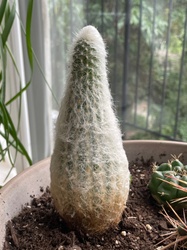
Spot the Old Man Cactus (Cephalocereus senilis) by its tall green column wrapped in long, shaggy white hair-like spines.
Read the full Old Man Cactus encyclopedia entry →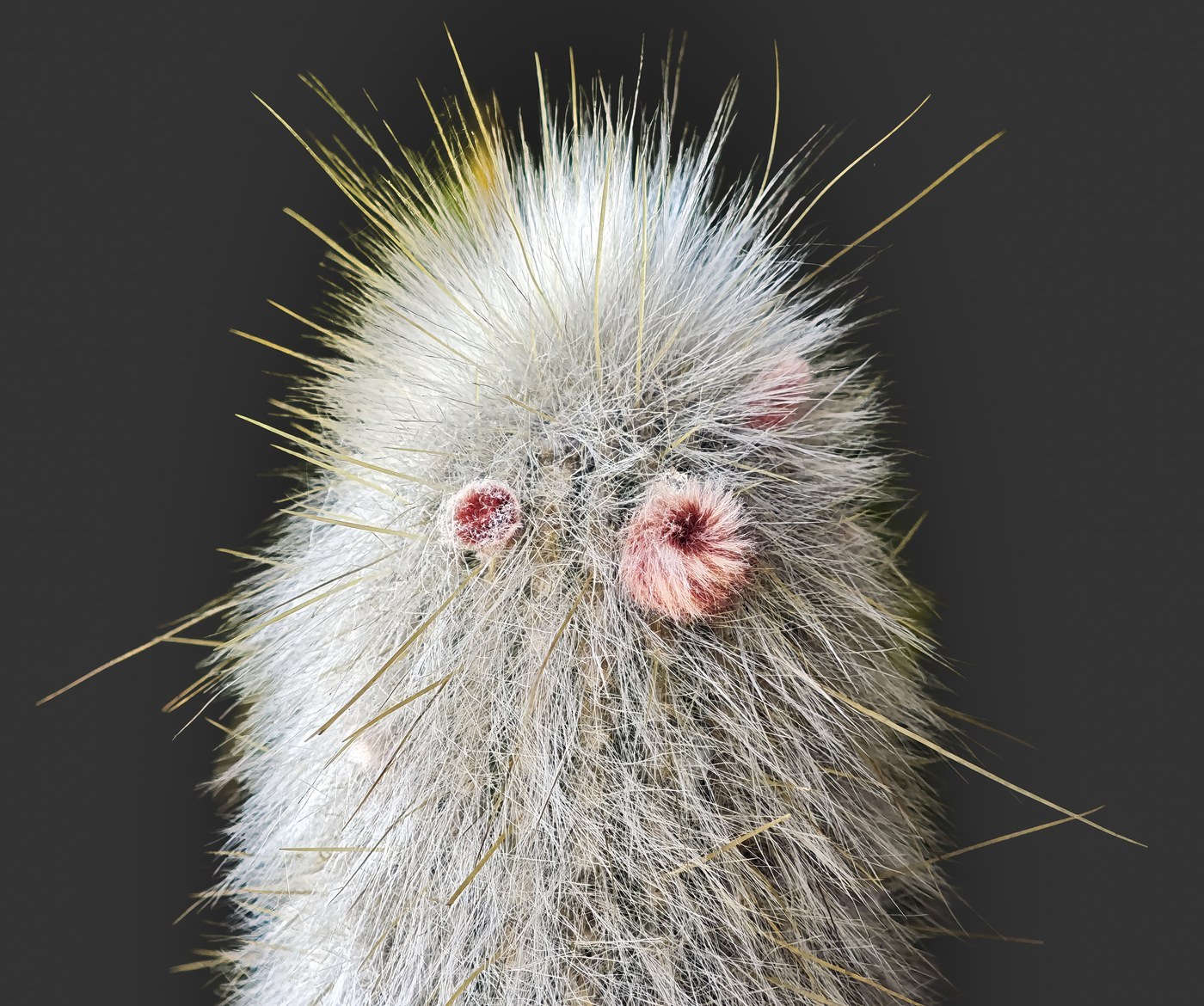
Key Identifying Features
The Old Man Cactus (Cephalocereus senilis) is a slow-growing columnar cactus famous for the long, woolly white hairs that cover it like the unkempt hair of an old man. In habitat it can reach 15–40 ft and centuries in age; as a houseplant it stays a manageable upright column for many years.
- Single erect green column, unbranched when young
- Dense covering of long, soft, silvery-white hairs wrapping the whole body
- Sharp yellow spines hidden beneath the hair — the wool conceals real spines
- Ribbed stem (typically 20–30 ribs) under the woolly coat
Leaves & Stems
Leafless. The stem is heavily ribbed with closely spaced areoles, each producing both the long white hairs (modified spines) and sharp, stiff yellowish central spines. Young plants are the hairiest; the white hairs are protection against intense sun and cold. With age the lower stem can become bare and corky, while the crown stays woolly. Indoor plants benefit from bright light to keep the hair dense and white.
Flowers & Fruit
Flowering occurs only on old, tall plants (often 10+ ft and many years old), so it is essentially never seen on houseplants. Mature specimens develop a cephalium (a woolly flowering zone) near the top, producing nocturnal, funnel-shaped yellowish to rose flowers followed by small fruits.
How to Tell It Apart from Look-Alikes
- Old Lady Cactus (Mammillaria hahniana): A small globular cactus with white hairs and tubercles, not a tall ribbed column — quite different in shape.
- Oreocereus (Old Man of the Andes): Also hairy and columnar but with more visible coarse spines and stouter form.
- Espostoa (Peruvian Old Man): Similar woolly column, but Cephalocereus senilis has finer, longer, more silken hair and is the classic Mexican species.
Where You'll Find It
Native to a limited area of eastern Mexico (Hidalgo and Guanajuato) on rocky limestone slopes, and now grown worldwide as an ornamental. It needs full sun, very well-drained gritty soil, and dry winters. Hardy to about USDA zones 9–11; elsewhere it is a sunny-windowsill houseplant.
Quick ID Checklist
- Tall, unbranched green column covered in long white hair
- Hair is soft and silvery; sharp spines hidden underneath
- Many vertical ribs beneath the wool
- Slow-growing; flowers only on very old, tall plants
- Mexican origin, full-sun lover
Frequently asked questions
Is the white hair soft or does it have spines?
The long white hairs are soft, but sharp yellow spines hide beneath them. Handle carefully — the hairy coat conceals real spines that can prick you.
How do I keep the hair white and clean?
Give it bright light and occasionally rinse dust off gently. Some growers carefully wash the hair with a soft brush; avoid letting it sit matted or damp.
Will my houseplant ever flower?
Almost certainly not indoors. Old Man Cactus only blooms once it is very old and tall (often 10+ feet) and forms a cephalium, which takes decades.
Why is the lower part going bare and brown?
Older stems naturally lose hair and become corky and woody at the base with age. The newest growth at the crown stays the hairiest and whitest.
Old Man Cactus identified by the community
Recent Old Man Cactus specimens identified with Plant Identifier.