Old Man Cactus
Cephalocereus senilis
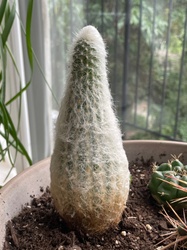
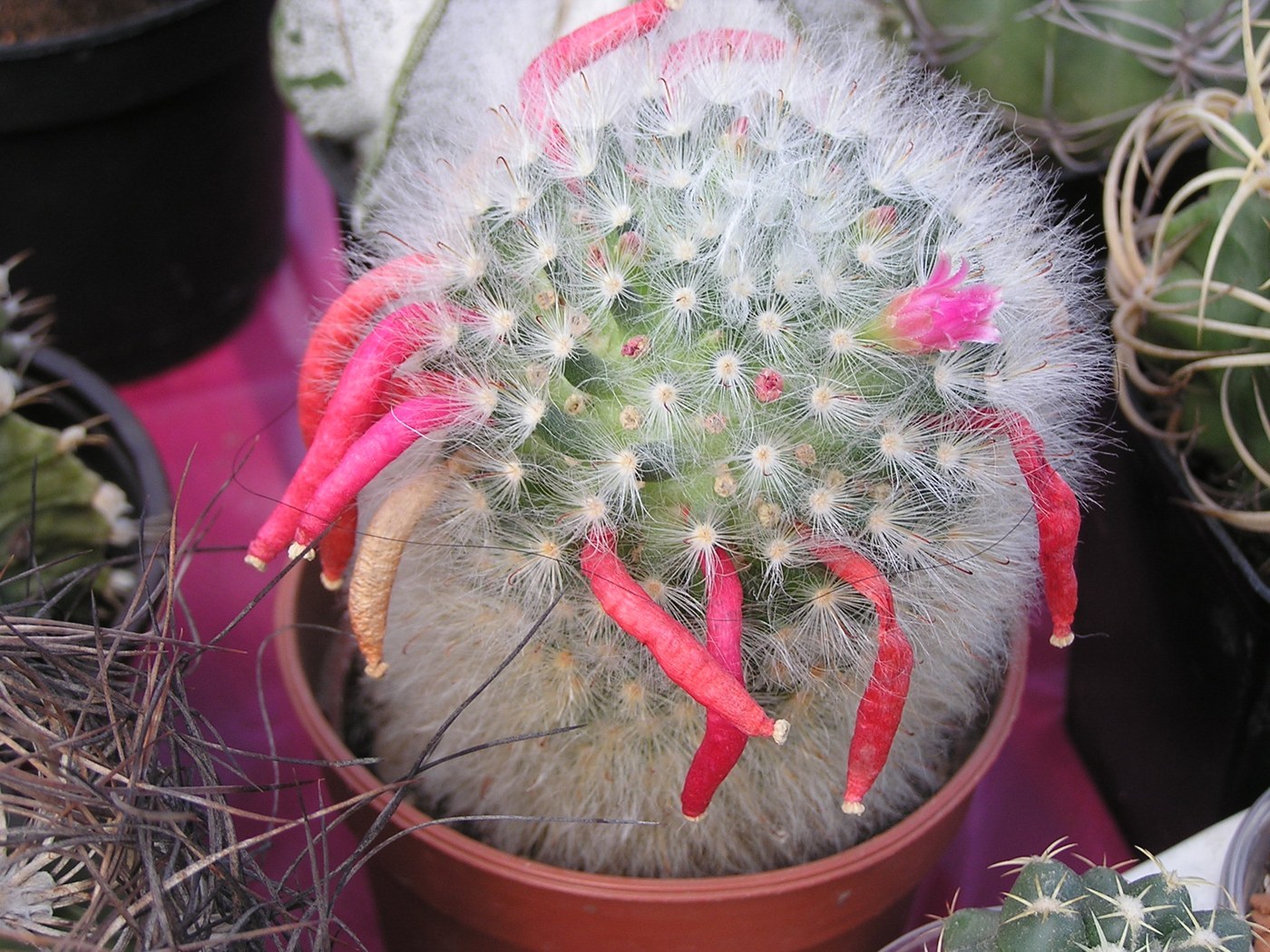
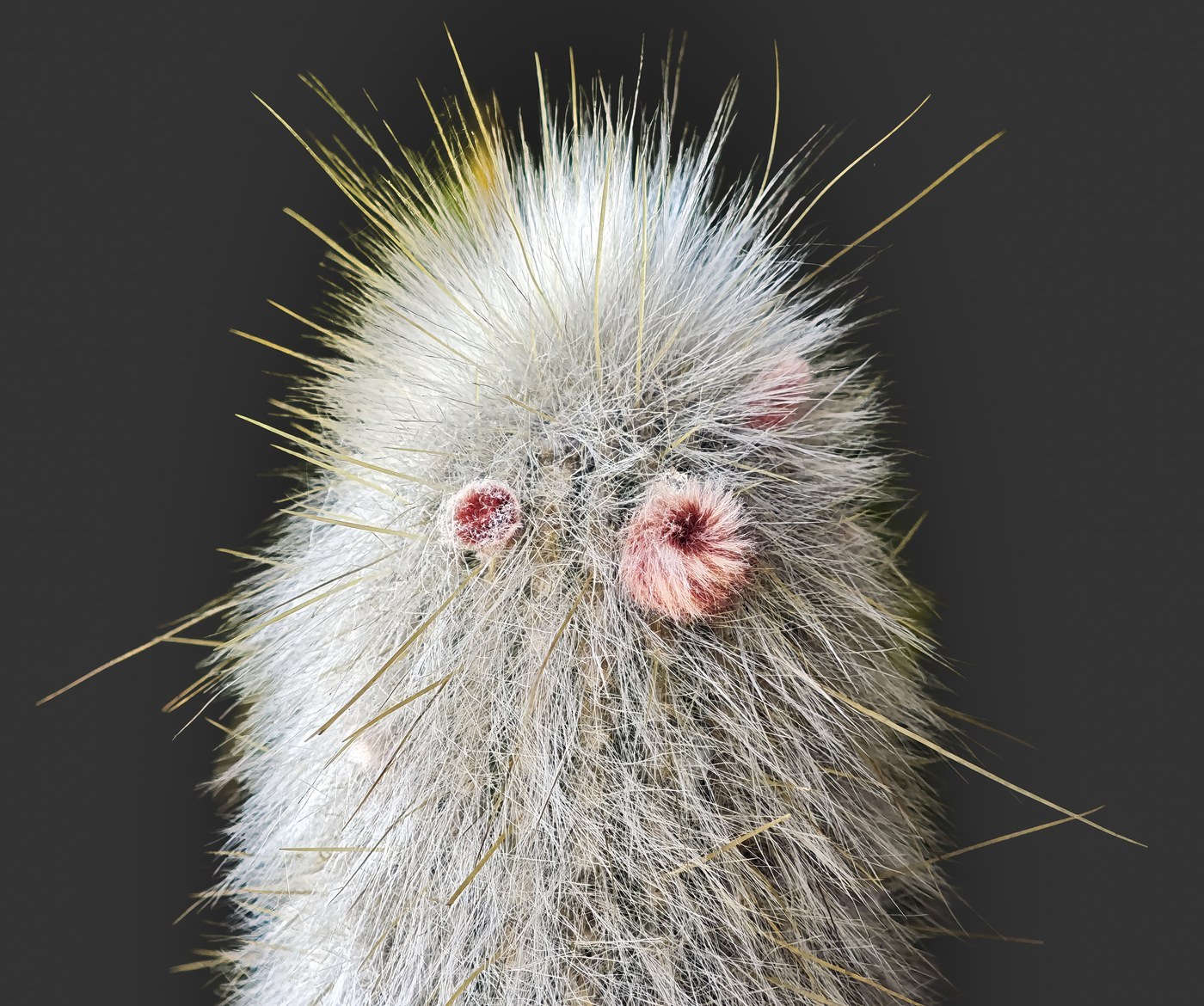
A columnar cactus famously cloaked in long, shaggy white hairs that resemble an old man's beard. The wool shields the plant from sun and cold while hiding sharp spines beneath.
- Light
- Full sun to bright light
- Water
- Very sparingly; drought tolerant
- Difficulty
- Moderate
Got a plant like this?
Identify any plant from a photo, free.
Overview
The Old Man Cactus is a slow-growing columnar cactus instantly recognizable by the dense covering of long, woolly white hairs that drape its green body. These hairs protect it from intense sun and frost in its native high-desert home.
Beneath the charming fuzz lie sharp yellow spines, so it should be handled with care. Over many decades a wild plant can reach 15 ft (4.5 m) or more, but indoors it stays small and slow.
Flowers - reddish nocturnal blooms - appear only on very old, mature plants and are rarely seen in cultivation.
How to identify it
- Body: Upright, ribbed, columnar green stem hidden under shaggy white hair
- Hair: Long, fine, woolly white-grey hairs covering the whole plant; can be gently shampooed if it greys
- Spines: Sharp yellowish spines beneath the hair
- Size: Very slow growing; a few inches indoors, up to 15 ft (4.5 m) in habitat over decades
- Flowers: Nocturnal reddish to pinkish blooms only on mature plants, rare in cultivation
Care & growing
Light: Full sun keeps the hair dense and white; insufficient light causes thin, sparse hair.
Water: Drought tolerant - water only when fully dry and keep dry in winter. Excess moisture mats the hair and invites rot.
Soil: Very gritty, sharply draining cactus mix.
Temperature: Loves heat; tolerates brief cold but keep above freezing.
Feeding: Occasional diluted cactus fertilizer in summer.
Propagation: Usually from seed, which is slow; offsets are uncommon.
Tip: Keep water off the hairs to avoid staining and rot.
Habitat & origin
Cephalocereus senilis is endemic to the arid mountains of central Mexico, notably Guanajuato and Hidalgo, where it grows on limestone slopes in hot, sunny, dry conditions.
It is now uncommon in the wild and protected, but is widely propagated and grown as a novelty ornamental cactus around the world.
Frequently asked questions
Can I wash the white hair if it gets dirty or grey?
Yes, you can gently clean it with a soft brush or a little diluted shampoo and let it dry fully, but keep water off the body to avoid rot.
Does the hair have spines under it?
Yes. Sharp yellow spines hide beneath the soft hairs, so handle the plant carefully.
Why is my Old Man Cactus losing its fuzziness?
Sparse hair usually means too little light. Give it more direct sun to keep the woolly coat dense and white.
Will it flower indoors?
Rarely. It only blooms when very old and mature, which seldom happens in indoor cultivation.
Old Man Cactus guides
In-depth guides for identifying, growing, and caring for Old Man Cactus.
How to Care for Old Man Cactus
Grow the shaggy, white-haired Old Man Cactus with blazing light, gritty soil and very sparing water for a slow, sculptural columnar specimen.
Old Man Cactus Identification Guide
Spot the Old Man Cactus (Cephalocereus senilis) by its tall green column wrapped in long, shaggy white hair-like spines.
Old Man Cactus identified by the community
Real specimens identified with Plant Identifier.