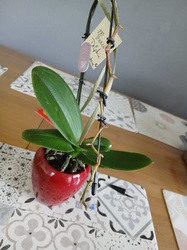
Orchid Identification Guide
A guide to identifying orchids by their distinctive bilateral flowers with a modified lip petal, fused column, and characteristic leaves and roots.
Read the full Orchid encyclopedia entry →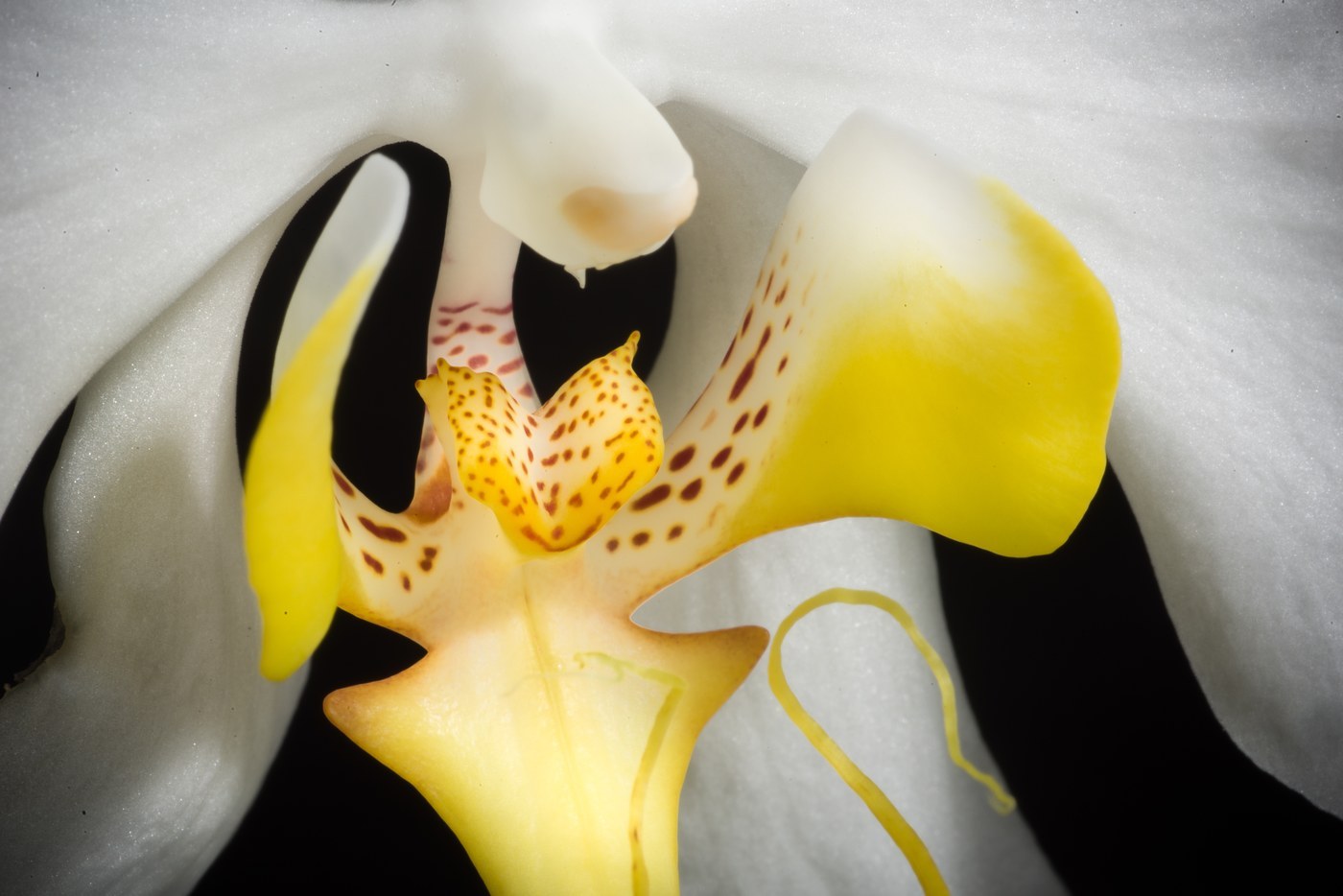
Key Identifying Features
Orchids (family Orchidaceae) are the largest plant family on Earth, but they share unmistakable floral architecture. Look for:
- A bilaterally symmetrical flower (one mirror line, like a face) with three sepals and three petals
- One petal heavily modified into a showy, often pouch-, lip-, or landing-pad-shaped labellum (lip)
- A central column where the male stamens and female pistil are fused into a single structure
- Pollen bound into waxy masses called pollinia rather than loose grains
- Often thick fleshy leaves and, in tropical types, prominent aerial roots with a silvery sheath (velamen)
Leaves & Stems
Orchid leaves vary widely but are commonly thick, leathery, and strap- or oval-shaped with smooth edges and parallel veins (orchids are monocots). Many popular houseplant orchids such as Phalaenopsis grow leaves in two opposite ranks from a short stem. Epiphytic orchids cling to bark with green or silvery aerial roots that photosynthesize and absorb moisture from the air. Some orchids have swollen storage stems called pseudobulbs at the base.
Flowers & Fruit
The flower is the surest ID. Despite enormous variety, every orchid flower has the 3+3 sepal-and-petal plan with a specialized lip and a column. Flowers may be single or arranged along an arching spike. Colors and patterns are extraordinarily diverse, often with spots, stripes, or spurs that hold nectar. After pollination orchids form a dry capsule packed with thousands of dust-like seeds. The presence of pollinia and a column distinguishes orchids from nearly all other flowering plants.
How to Tell It Apart from Look-Alikes
- Irises also have three-part symmetry but show six tepals in two sets with no fused column or modified lip-and-column structure.
- Lilies have radially symmetrical six-tepal flowers with six free stamens, not a single column.
- Peace lilies and other aroids have a spathe-and-spadix, completely different from an orchid flower.
- The decisive orchid traits are the single fused column and the differentiated lip petal.
Where You'll Find It
Orchids grow on every continent except Antarctica. Tropical species are mostly epiphytes perched on trees; temperate species are terrestrial, rooting in soil of meadows, bogs, and woodlands. As houseplants they are sold in bark-based mix, often in clear pots that show their green roots.
Quick ID Checklist
- Bilaterally symmetrical flower with three sepals and three petals
- One petal modified into a distinct lip or pouch
- Central fused column instead of separate stamens and pistil
- Thick, parallel-veined leaves
- Aerial silvery-green roots or pseudobulbs in many types
- Dust-fine seeds in a dry capsule
If a flower has a lip petal unlike its other parts and a single central column, you are looking at an orchid.
Frequently asked questions
What single feature confirms a flower is an orchid?
The fused reproductive column combined with one petal modified into a distinct lip (labellum). No other plant family shows this exact combination across all its members.
Are the green roots growing over my orchid pot a problem?
No. Those are normal aerial roots covered in a spongy tissue called velamen. They absorb moisture and even photosynthesize, and are a healthy sign in epiphytic orchids.
How do I tell an orchid from an iris?
Both have parts in threes, but an iris has six similar tepals and separate reproductive parts, while an orchid has a specialized lip petal and a single fused column.
Why are orchid seeds so hard to grow?
Orchid seeds are dust-fine and lack stored food, so in nature they depend on a partnership with specific fungi to germinate, which is why they are usually propagated by division instead.
Orchid identified by the community
Recent Orchid specimens identified with Plant Identifier.