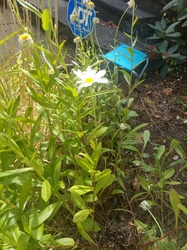
Oxeye Daisy Identification Guide
How to recognize the classic white-and-yellow Oxeye Daisy by its single flower heads, lobed leaves, and roadside habit, and how to tell it from cultivated Shasta daisies.
Read the full Oxeye Daisy encyclopedia entry →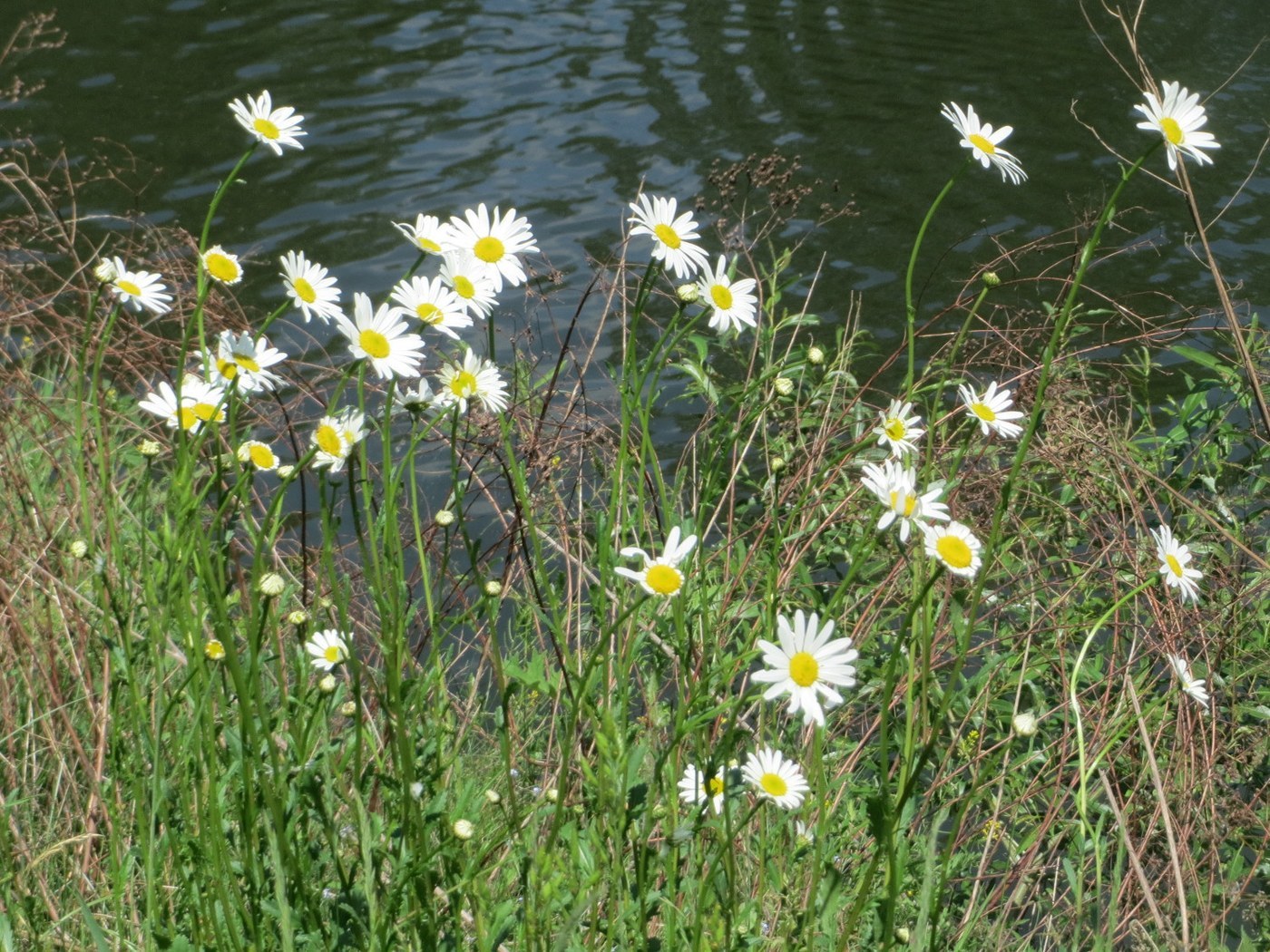
Key Identifying Features
The Oxeye Daisy (Leucanthemum vulgare) is the quintessential "he loves me, he loves me not" daisy of European origin, now naturalized across North America. Look for:
- A single flower head held on each upright, mostly unbranched stem
- 20-30 pure white ray florets ("petals") surrounding a flat, bright yellow center disk
- Flower heads 1.5-2 inches across
- Plants standing 1-3 feet tall, often growing in loose colonies
It is one of the easiest wildflowers to recognize, but the leaf detail below separates it from showier garden daisies.
Leaves & Stems
The leaves are dark green, spoon-shaped to lobed, and coarsely toothed, and they change dramatically up the stem:
- Basal leaves are stalked, rounded-spoon-shaped, and scalloped or lobed at the edges
- Stem leaves become smaller, narrower, and stalkless, clasping the stem as they ascend
- Stems are slender, ridged, and usually unbranched, sometimes branching near the top
The plant spreads by both seed and creeping rhizomes, which is why you find dense roadside patches. Foliage has a faintly sharp, slightly unpleasant smell when crushed.
Flowers & Fruit
Like all members of the aster family, each "flower" is actually a composite head: the yellow center is a cluster of tiny tubular disk florets, and each white "petal" is a single ray floret. The yellow disk is flat to slightly concave, not domed. Blooming runs late spring through summer (May-August). Seeds are small, ribbed, black, and lack the parachute-like fluff of dandelions, so they drop near the parent or hitch on tires and hooves.
How to Tell It Apart from Look-Alikes
- Shasta Daisy (Leucanthemum × superbum): a garden hybrid with larger heads (2-4 in) and broader, glossier, less deeply lobed leaves. If it is huge and tidy in a flower bed, it is likely Shasta.
- Fleabane (Erigeron spp.): has dozens of very thin, thread-like rays and multiple smaller heads per stem; daisies have fewer, broader rays and one head per stem.
- Chamomile / Mayweed: leaves are finely dissected and feathery, not toothed spoons.
The combination of one head per stem + toothed spoon-shaped leaves clinches Oxeye Daisy.
Where You'll Find It
Oxeye Daisy thrives in full sun and disturbed ground: roadsides, pastures, meadows, fencerows, ditches, and abandoned fields. It tolerates poor soil and is considered an invasive weed in many U.S. states and Canada, often forming large white sheets across grazed land.
Quick ID Checklist
- One flower head per upright stem
- ~20-30 white rays around a flat yellow disk
- Head about 1.5-2 in across
- Spoon-shaped, toothed/lobed basal leaves; clasping stem leaves
- Sunny disturbed habitat, often in colonies
- Blooms late spring to summer
Frequently asked questions
Is the Oxeye Daisy the same as a Shasta Daisy?
No. Shasta Daisy is a larger-flowered garden hybrid bred partly from Oxeye Daisy. Oxeye has smaller heads (1.5-2 in) and deeply toothed spoon-shaped leaves, while Shasta has bigger heads and broader, glossier leaves.
Is Oxeye Daisy a weed?
Yes, in much of North America it is a naturalized and often invasive weed of pastures and roadsides, spreading aggressively by seed and rhizomes, though many people enjoy it as a wildflower.
When does Oxeye Daisy bloom?
It blooms from late spring through summer, typically May to August, with peak flowering in June in temperate regions.
How can I distinguish Oxeye Daisy from fleabane?
Fleabane has dozens of very thin, thread-like rays and several smaller heads per stem, while Oxeye Daisy has fewer, broader white rays and a single head on each upright stem.
Oxeye Daisy identified by the community
Recent Oxeye Daisy specimens identified with Plant Identifier.