Oxeye Daisy
Leucanthemum vulgare
A classic white-and-yellow daisy native to Europe and naturalized across North America, the oxeye daisy is the wild ancestor of garden Shasta daisies. It thrives in meadows, roadsides, and disturbed ground.
- Light
- Full sun
- Water
- Low; drought tolerant once established
- Difficulty
- Easy
Got a plant like this?
Identify any plant from a photo, free.
Overview
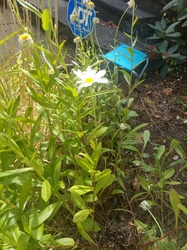
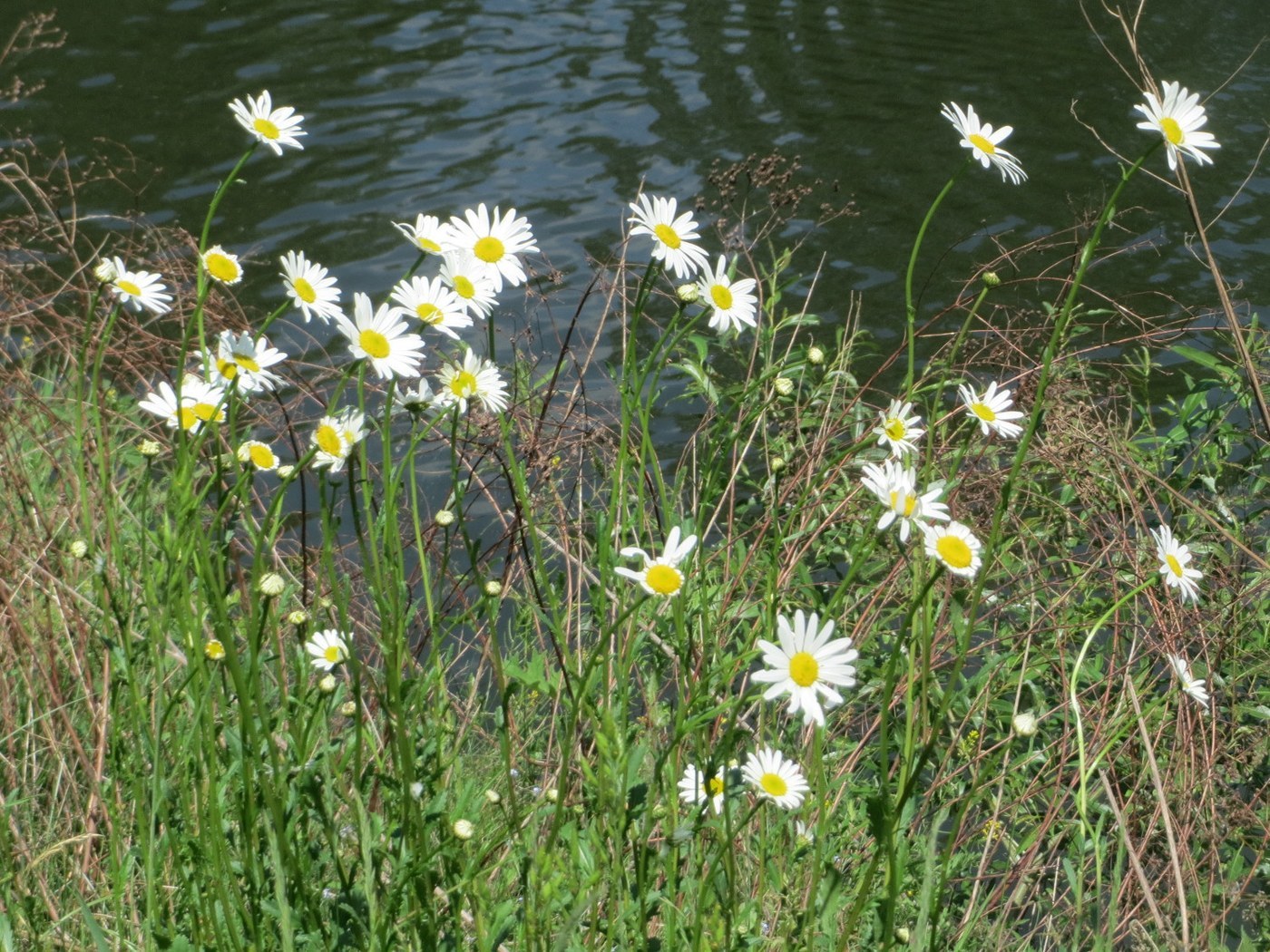
The oxeye daisy is the quintessential wild daisy, with bright white ray florets surrounding a sunny yellow center. Native to Europe and temperate Asia, it has naturalized widely across North America, where it is sometimes considered an invasive weed of pastures and roadsides.
Despite its weedy reputation, it is a cheerful, long-blooming perennial that supports pollinators and reseeds readily. It is the parent species behind many cultivated daisy hybrids, including the larger Shasta daisy.
How to identify it
- Flowers: Single composite heads 1-2 inches across, with white ray florets and a flat yellow central disk
- Leaves: Dark green, spoon-shaped at the base with rounded teeth; upper leaves narrower and clasping the stem
- Stems: Unbranched or sparingly branched, 1-3 feet tall, each bearing a single flower
- Habit: Rhizomatous perennial forming spreading clumps
- Bloom time: Late spring through summer
Care & growing
Oxeye daisy is exceptionally undemanding and tolerates poor soils.
- Light: Full sun for best flowering; tolerates light shade
- Water: Drought tolerant; water only during prolonged dry spells
- Soil: Adapts to almost any well-drained soil, including poor and rocky ground
- Temperature: Hardy in USDA zones 3-8
- Feeding: Rarely needed; avoid rich soil which encourages floppy growth
- Propagation: By seed or division; deadhead to limit aggressive self-seeding
Habitat & origin
Native to Europe and temperate Asia, the oxeye daisy was introduced to North America, Australia, and New Zealand, where it has become widely naturalized.
It favors meadows, pastures, roadside verges, and disturbed open ground. In many regions of the United States it is listed as a noxious weed because it spreads readily and can crowd out forage plants in grazing land.
Frequently asked questions
Is oxeye daisy invasive?
In many parts of North America it is considered invasive and is listed as a noxious weed in some states because it spreads aggressively by seed and rhizome and can outcompete pasture grasses.
What is the difference between oxeye daisy and Shasta daisy?
Shasta daisy (Leucanthemum x superbum) is a cultivated hybrid with larger flowers and a tidier habit. Oxeye daisy is the smaller, wild parent species that self-seeds prolifically.
Will it come back every year?
Yes, it is a hardy perennial that returns each year and also self-sows freely, often forming spreading colonies.
Does it attract pollinators?
Yes, the open flowers are an excellent nectar source for bees, butterflies, and beneficial hoverflies.
Oxeye Daisy guides
In-depth guides for identifying, growing, and caring for Oxeye Daisy.
How to Care for Oxeye Daisy
Oxeye Daisy (Leucanthemum vulgare) is an easy, sun-loving, drought-tolerant perennial with classic white-and-yellow blooms for meadows and borders.
Oxeye Daisy Identification Guide
How to recognize the classic white-and-yellow Oxeye Daisy by its single flower heads, lobed leaves, and roadside habit, and how to tell it from cultivated Shasta daisies.
Oxeye Daisy identified by the community
Real specimens identified with Plant Identifier.