Panda Plant Identification Guide
How to identify the Panda Plant by its fuzzy silver-green leaves edged with chocolate-brown felted spots.
Read the full Panda Plant encyclopedia entry →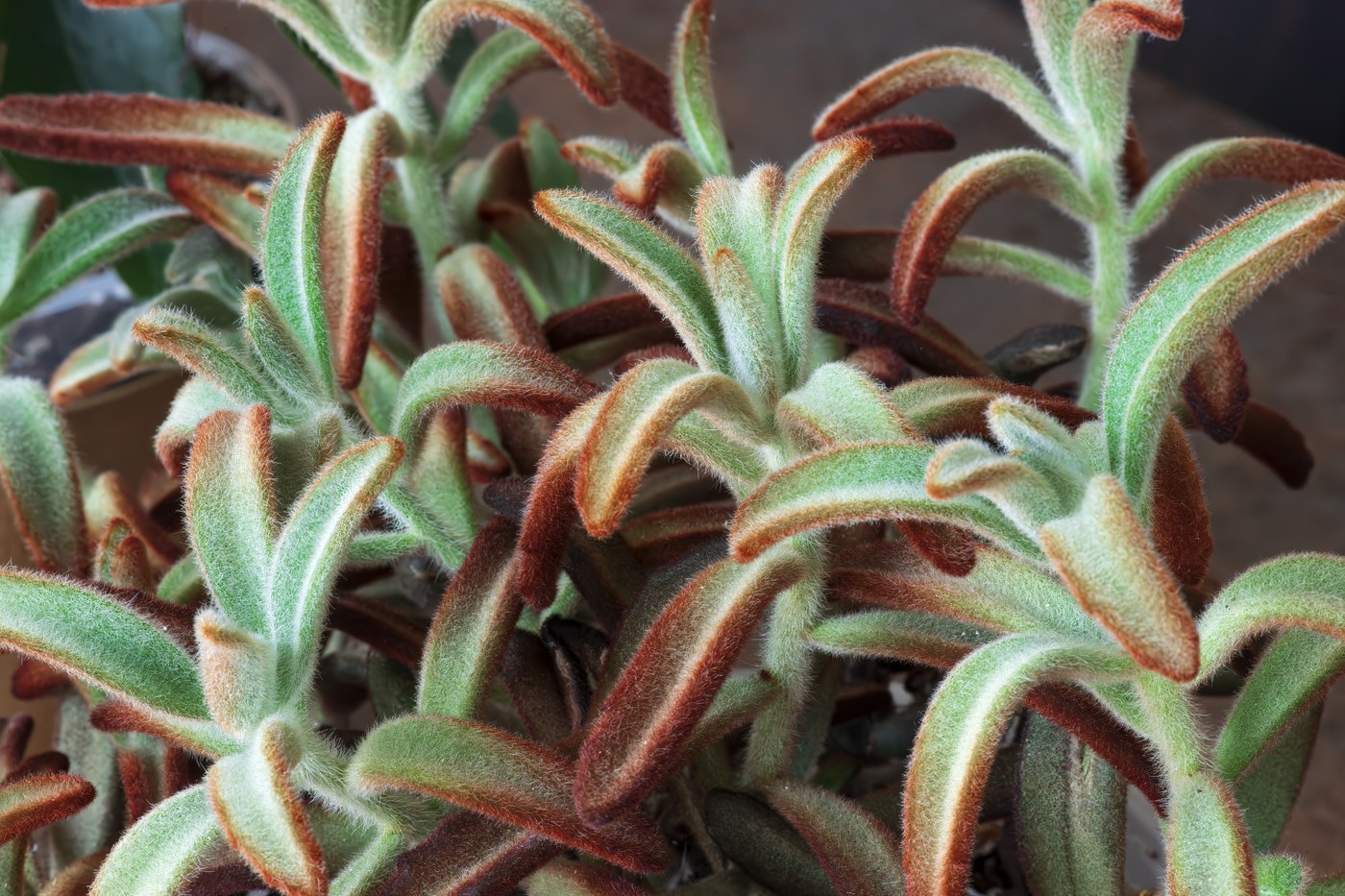
Key Identifying Features
The Panda Plant (Kalanchoe tomentosa) is a fuzzy, upright succulent loved for its velvety leaves trimmed in brown.
- Thick, oval to spoon-shaped leaves covered in soft fuzz
- Silvery green to blue-gray leaf color
- Chocolate-brown to rust felted markings along the leaf tips and edges
- Slow, upright shrubby growth to about 1–2 ft (30–60 cm)
Leaves & Stems
The leaves are the whole story: each is fleshy, plump, and densely covered in fine silvery hairs (trichomes) that give a soft, suede-like texture — hence nicknames like "pussy ears" and "chocolate soldier." The leaf tips and scalloped upper margins are stamped with dark brown "panda spots" of denser felt. Leaves grow in opposite pairs along fuzzy, branching stems that become woody and upright with age. The whole plant has a muted, dusty appearance.
Flowers & Fruit
Flowering is rare in cultivation, especially indoors. When it does bloom (typically on older plants in habitat), it produces tubular, bell-shaped, greenish to yellowish flowers flushed with brown or red, fuzzy on the outside like the leaves. Most growers identify the plant purely by foliage, since flowers seldom appear.
How to Tell It Apart from Look-Alikes
- Kalanchoe beharensis (Felt Bush): a relative with much larger, arrow-shaped fuzzy leaves; grows tree-like.
- Bear's Paw (Cotyledon tomentosa): also fuzzy, but leaves are chunkier with distinct "toothed" red claw-like tips, not flat ovals.
- Cotyledon / other felted succulents: lack the precise chocolate-brown edge spotting of the panda plant.
The silver-fuzzy oval leaves with crisp brown tip markings are the clincher.
Where You'll Find It
Native to Madagascar, it's grown worldwide as an easy indoor succulent and dish-garden plant. It prefers bright light, gritty fast-draining soil, and dry conditions; the fuzzy coating helps it tolerate strong light and reduce water loss. It is frost-tender and kept indoors in cold climates.
Quick ID Checklist
- Plump oval/spoon-shaped fleshy leaves
- Dense soft silvery fuzz over the whole leaf
- Brown/rust felted spots along tips and margins
- Leaves in opposite pairs on fuzzy stems
- Upright, slow shrubby growth
- Flowers rare indoors
Frequently asked questions
What are the brown spots on the edges of the leaves?
They're patches of denser brown felt (trichomes), a natural identifying trait of Kalanchoe tomentosa, not damage or disease.
Why are the leaves fuzzy?
The fine silvery hairs (trichomes) help the plant reflect intense light and conserve moisture in its dry Madagascar habitat.
How is the panda plant different from bear's paw?
Panda plant has flat, oval silver leaves with brown edge spots, while bear's paw (Cotyledon tomentosa) has chunkier leaves tipped with reddish tooth-like 'claws.'
Will my panda plant flower indoors?
Rarely. It blooms mostly on mature plants in ideal conditions, so most people identify and enjoy it for its foliage alone.
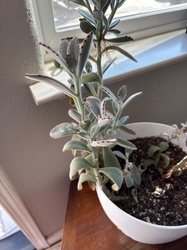
Panda Plant identified by the community
Recent Panda Plant specimens identified with Plant Identifier.