Panda Plant
Kalanchoe tomentosa
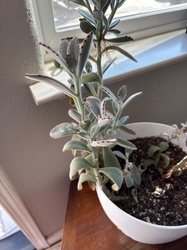
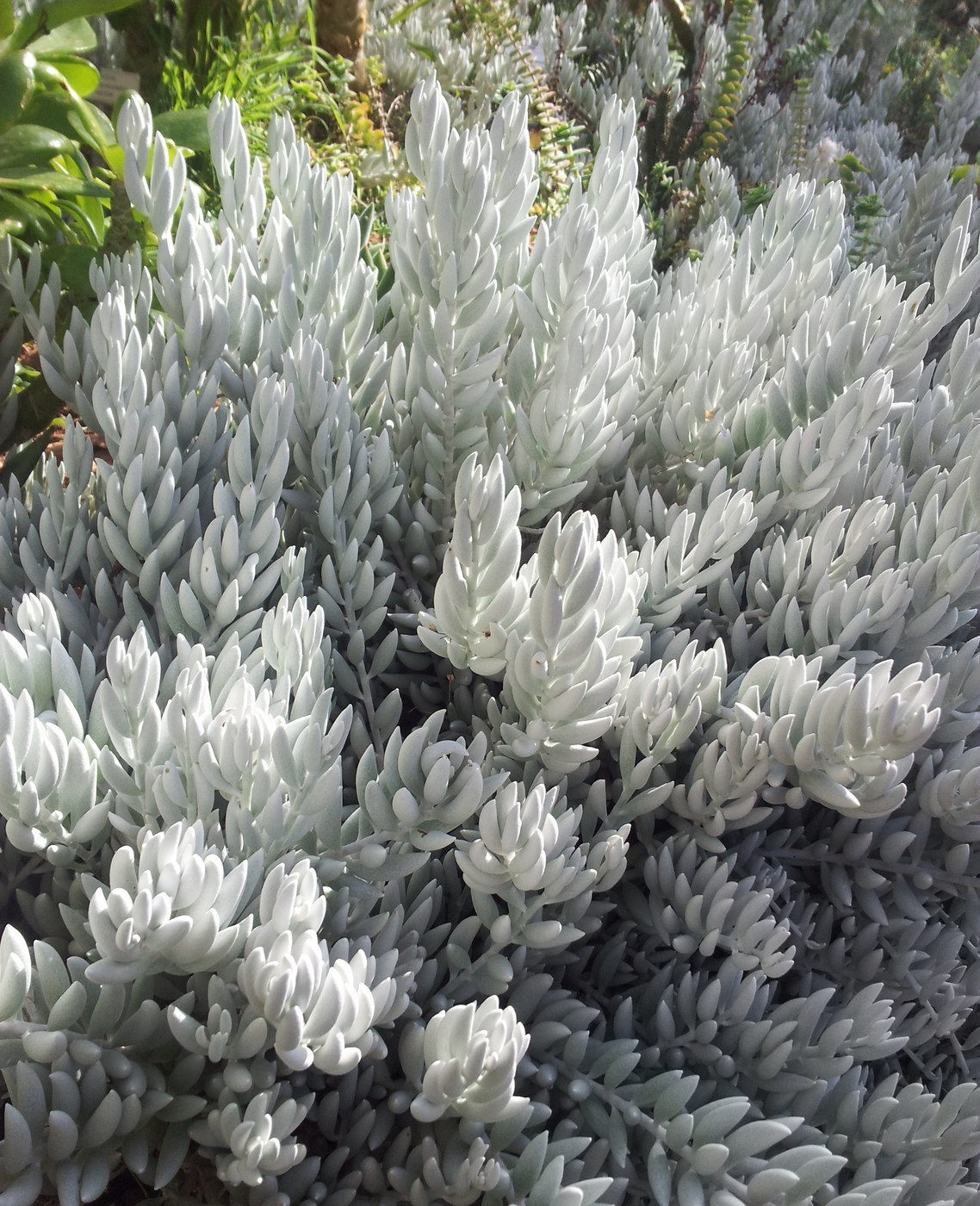
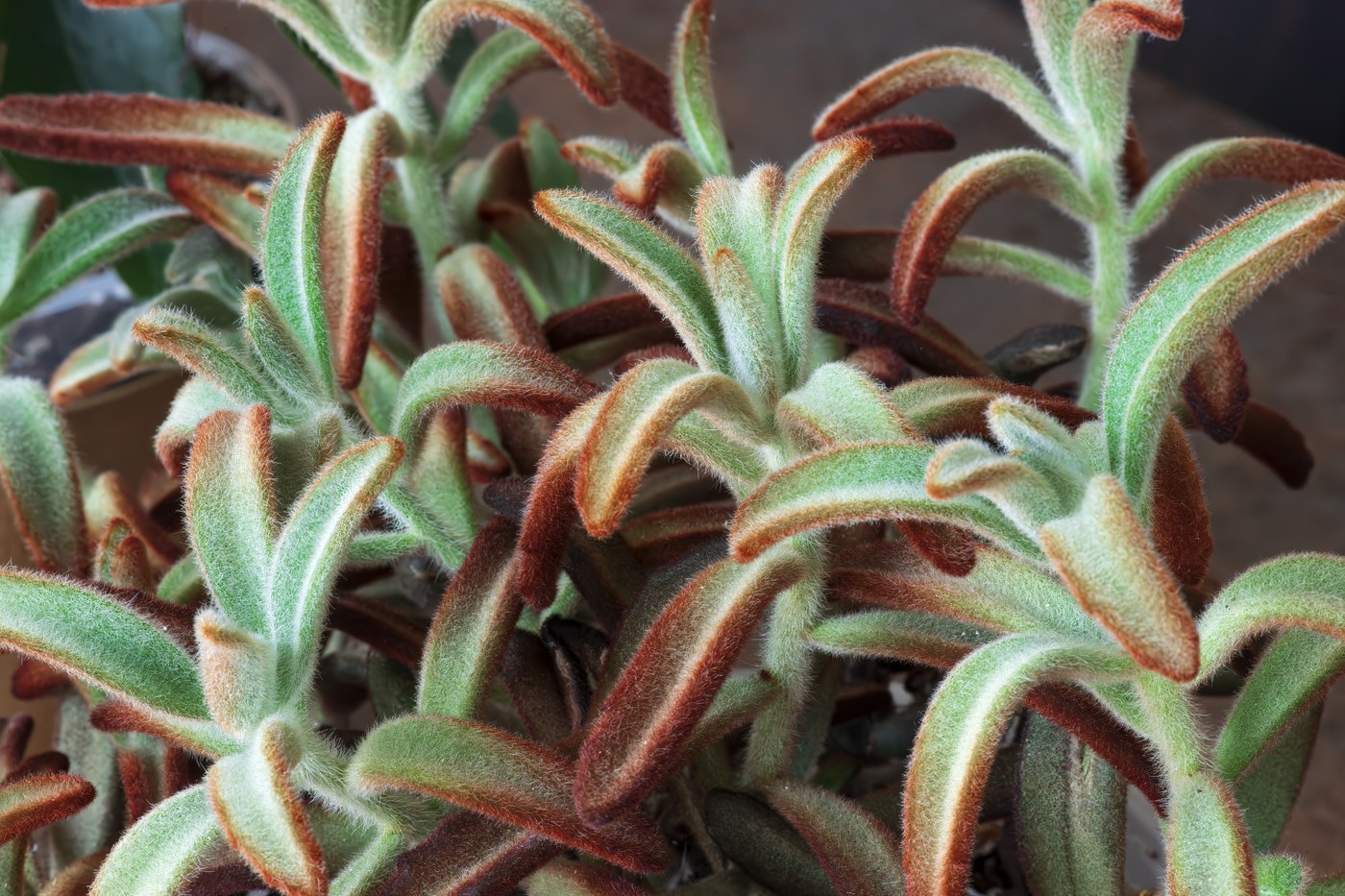
The panda plant is a fuzzy, felt-leaved succulent covered in soft silvery hairs with brown-tipped edges. Its plush, ear-like leaves make it a charming, low-maintenance houseplant.
- Light
- Bright indirect to some direct light
- Water
- Sparingly; let soil dry
- Difficulty
- Easy
Got a plant like this?
Identify any plant from a photo, free.
Overview
The panda plant (Kalanchoe tomentosa) is a soft-textured succulent prized for its thick leaves coated in fine, velvety hairs that give it a silvery, plush appearance. The species name tomentosa means 'covered in hairs.'
The leaf edges are marked with distinctive rusty-brown spots and 'teeth,' which inspire the nicknames 'panda bear plant' and 'chocolate soldier.' Indoors it stays compact, though it can slowly grow to a couple of feet over many years.
It is an easy, forgiving succulent that tolerates neglect, making it popular with beginners.
How to identify it
- Thick, oval leaves covered in dense silvery-grey felt-like hairs
- Leaf tips and edges marked with rusty brown to chocolate-colored spots and notches
- Upright, branching, somewhat woody stems with age
- Stays compact indoors, usually under a foot, but can reach 2-3 feet in ideal conditions
- Rarely flowers indoors; tubular fuzzy flowers appear on mature outdoor plants
Care & growing
- Light: Bright indirect light, with some direct sun tolerated; brings out leaf color
- Water: Water sparingly and let the soil dry fully; the hairy leaves dislike water sitting on them
- Soil: Fast-draining cactus or succulent mix
- Temperature: Warm; protect from frost, ideal above 50 F
- Feeding: Light feeding once or twice during the growing season
- Propagation: Easy from leaf or stem cuttings allowed to callus before planting
Habitat & origin
Native to Madagascar, where it grows on rocky, granite outcrops in seasonally dry conditions.
Like many Madagascan kalanchoes, it is now a widely grown houseplant around the world, valued for its texture and ease of care. In frost-free climates it can be grown outdoors.
Frequently asked questions
Why are the leaves getting soft or mushy?
That is usually overwatering. Let the soil dry out completely and reduce how often you water.
How do I propagate it?
Take a healthy leaf or stem cutting, let it callus for a day or two, then place it on or in dry succulent soil to root.
Can I get water on the fuzzy leaves?
It is best to water at the soil level. Water trapped in the leaf hairs can lead to spotting or rot.
Why is my panda plant growing leggy?
Stretching with widely spaced leaves signals too little light; move it to a brighter spot with some direct sun to keep it compact.
Panda Plant guides
In-depth guides for identifying, growing, and caring for Panda Plant.
Panda Plant identified by the community
Real specimens identified with Plant Identifier.